Mehdi Eker, Türkiye's nominee for director-general of the U.N. Food and Agriculture Organization (FAO), said his candidacy would provide an opportunity to reflect the country's approach to food security at the international level.
Türkiye believes it could contribute to making FAO more effective in addressing global food security and other challenges affecting food and agricultural systems, Eker told Anadolu Agency (AA).
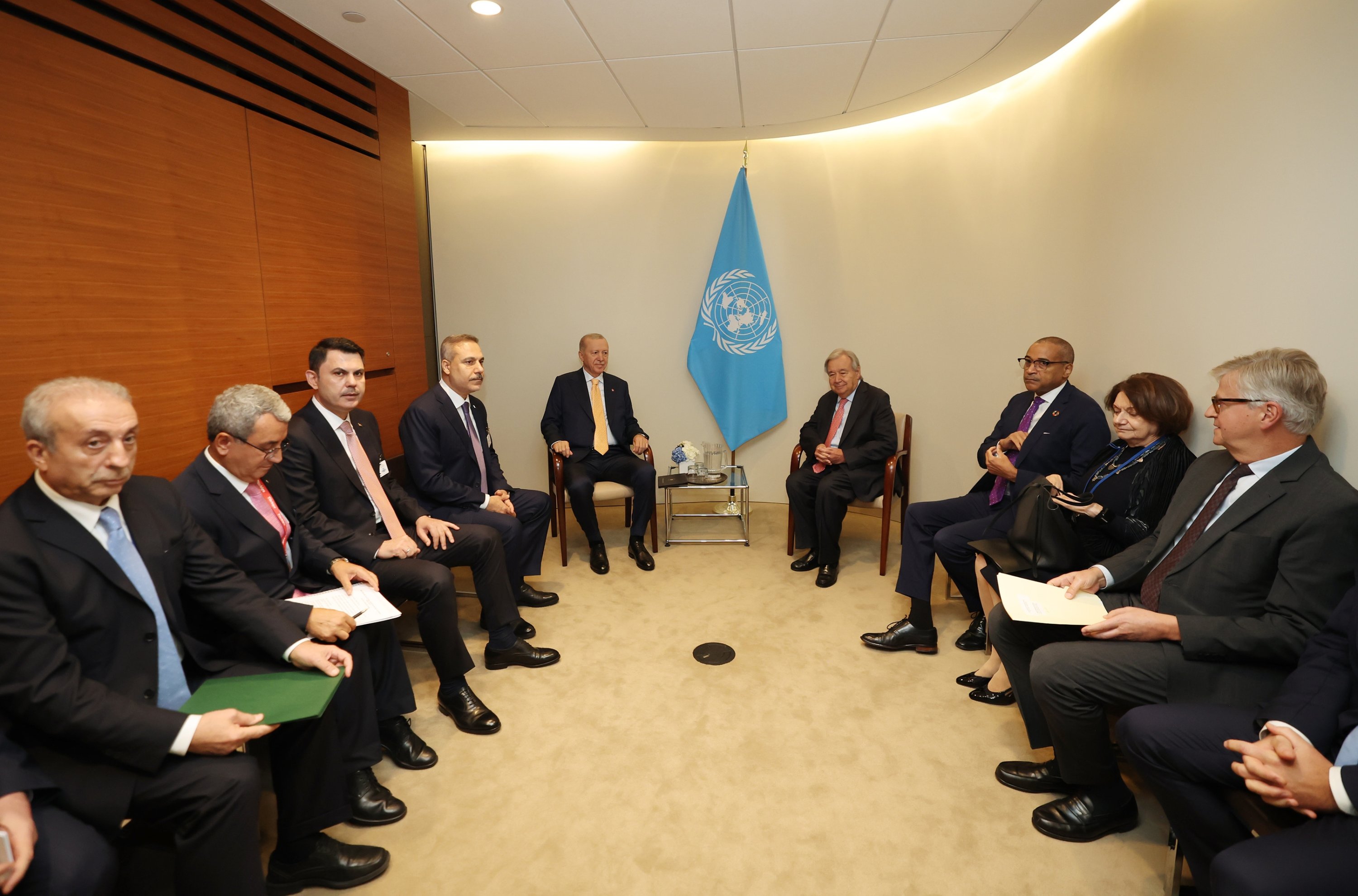
President Recep Tayyip Erdoğan and Foreign Minister Hakan Fidan sought support for Türkiye's candidacy this week during their diplomatic contacts on the sidelines of the U.N. General Assembly in New York.
In his address at the General Assembly, Erdoğan referred to food waste worldwide. "More than 2 billion metric tons of food are wasted every day. In a world where, on the one hand, metric tons of food are thrown away and, on the other, hundreds of millions of people scavenge for food in the trash, there can be no talk of justice," he said.
Erdoğan said Türkiye was ready to make every possible contribution, "both to efforts to prevent waste and to ensuring global food security."
"With this in mind, we have nominated Dr. Mehmet Mehdi Eker for the position of director-general of the Food and Agriculture Organization of the United Nations. I am confident that you will not withhold your support," he said.
Eker served as the minister of food, agriculture and livestock from 2005 to 2015, making him the longest-serving agriculture minister in the country's history. He is currently a member of the Presidential Agriculture and Food Policies Council.
Türkiye has been seeking direct engagement with FAO member states eligible to vote in the election, Eker said, adding that he had met representatives of nearly 100 countries since the campaign began.
Türkiye has received written or verbal pledges of support from a significant number of these countries, according to Eker, who said the country would intensify its diplomatic outreach as the election approaches.
"There are 193 U.N. member states. These are the countries that will make the choice at FAO. We are trying to establish face-to-face, one-on-one contact with as many of them as possible," he said.
Eker said Türkiye's approach is based on safeguarding food as a fundamental human right, and said food shortages can lead to population displacement and migration.
"Our approach is based on the principle that the right to access food must be guaranteed," he noted.
He said global food security faced serious challenges, citing what he described as widespread hunger, inadequate nutrition and obesity.
Eker said the world currently produces enough food to feed a population larger than its 8.3 billion people, yet millions remain food insecure, which he said pointed to problems within the global food system.
"Some 645 million people are going hungry worldwide, while 1.4 billion are obese, and 2.3 billion do not have enough food on their plates," he said, noting that the world produces enough food for 11 billion people.
"There's something wrong here – the issue of food security is one of global security, and ensuring global security will be very difficult so long as this is not resolved," he added.
He also highlighted the importance of food security in conflict zones, saying developments around the Black Sea, the Strait of Hormuz, Bab el-Mandeb and the Gulf of Aden had implications for global food security.
"Food is weaponized against people in Gaza, against children – this brutality, this oppression, must somehow come to an end, and the right to food must not be violated," he said.
Eker said FAO had three main areas of responsibility: establishing standards in food and agriculture, providing technical assistance and advice to developing countries and combating global hunger.
The organization develops international food standards through the Codex Alimentarius and establishes standards in areas including plant protection and quarantine. It also maintains a major global network of food, agriculture, livestock and fisheries statistics, Eker said.
He said technical assistance could help developing countries improve agricultural productivity, reduce food losses and strengthen efforts to combat animal diseases that can affect both food supplies and human health.
Eker described the fight against hunger as FAO's third major area of activity and said effective management of the organization was essential to addressing the issue.
"This is a matter of humanity, the future of humanity – it's impossible for the world to function and move forward amid such oppression, darkness, and brutality, when food is weaponized against vulnerable populations like children, women, and the elderly, who are dying of hunger,” he noted.
“As Türkiye, we believe the U.N. FAO, like all other U.N. agencies, will be engaged in more effective, efficient and beneficial work for humanity,” he added.
Eker said FAO was established 81 years ago and that nine different countries had so far produced its directors-general. Türkiye has not previously held the post.
If elected, Eker said, Türkiye's perspective on food security would be reflected in the organization's leadership.
"Türkiye's perspective, approach, understanding of humanity, and vision of civilization would be reflected in the governance of this organization," he added.
FAO's current director-general, Qu Dongyu of China, was reelected in 2023 for a second term running through July 31, 2027.
The next director-general is due to be elected at the FAO Conference in Rome in 2027 and will serve a four-year term.
Angola, Italy, Spain, and Ireland put forward their candidates for this position.