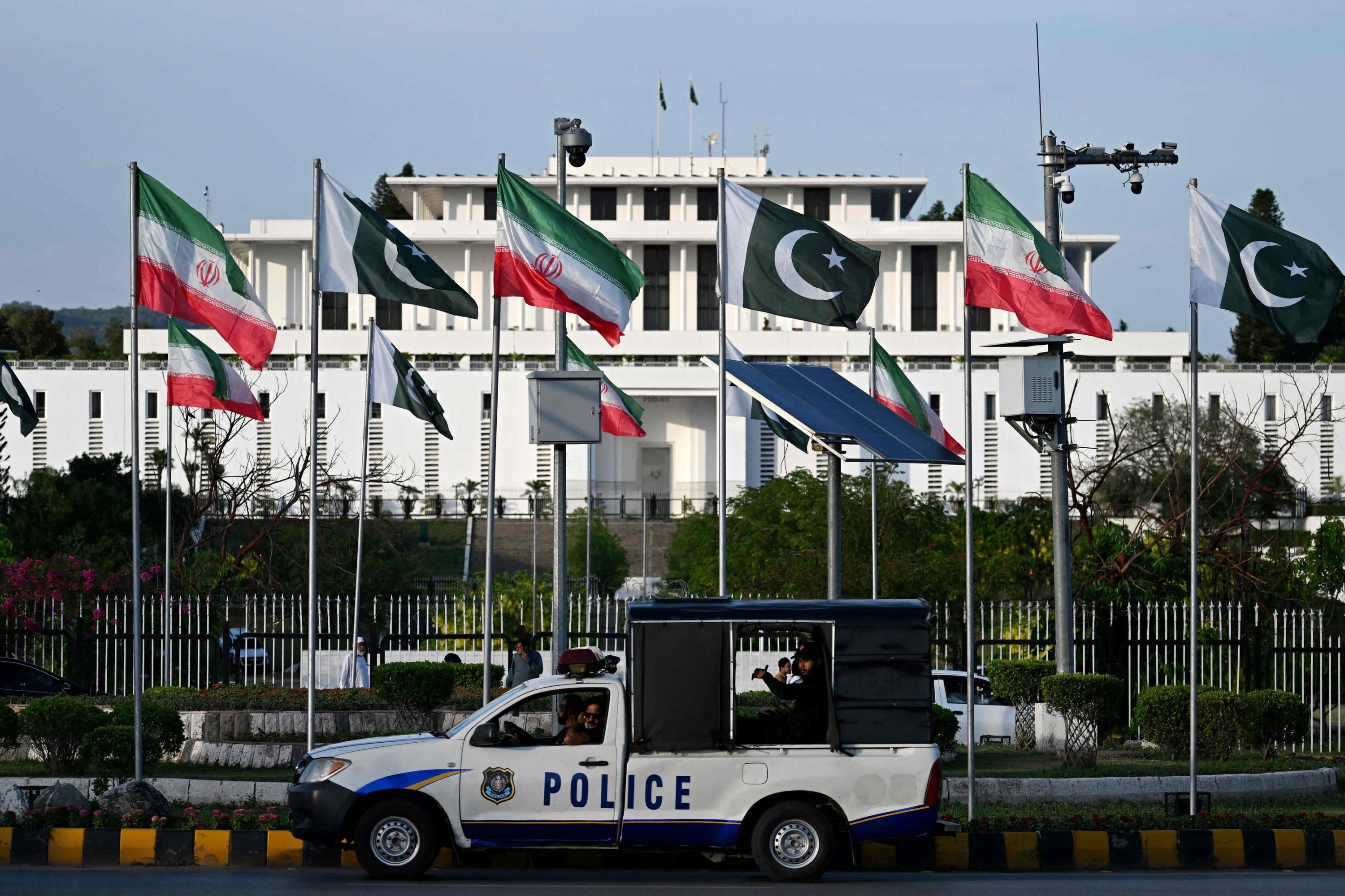
Pakistan’s role in facilitating dialogue between the United States and Iran has put it at the center stage of global diplomacy. While the most immediate objective has been to reduce tensions and prevent a wider regional conflict, the real question is whether Islamabad can leverage this position to gain tangible economic and strategic benefits.
The answer depends on whether Islamabad understands a simple reality. International praise is valuable only when it produces tangible benefits at home.
Pakistan has a direct interest in preventing conflict between the U.S. and Iran. Unlike other major powers, it would pay an immediate price for regional instability. More than 4 million Pakistanis work throughout the Gulf countries, sending home over $35 billion annually in remittances. Those inflows are a lifeline for Pakistan's economy. A wider regional conflict would threaten jobs, disrupt trade and create uncertainty across the Middle East.
The stakes are equally high when it comes to energy. Around one-fifth of the world's oil supply passes through the Strait of Hormuz. Every crisis in the Gulf sends shock waves through energy markets, pushing up prices for countries like Pakistan that depend heavily on imported fuel. Stability in the Gulf is therefore not just a foreign policy objective for Islamabad; it is an economic necessity.
This is why Pakistan's diplomatic role matters, especially for itself. It demonstrates that the country can be more than a spectator in regional affairs. In an increasingly divided world, nations that can talk to multiple sides are becoming more valuable. Pakistan maintains relations with the U.S., China, Iran, Saudi Arabia, Türkiye and other key regional players. Few countries enjoy that level of diplomatic access.
Pakistan has often struggled to convert geopolitical importance into economic strength. During different periods of its history, the country occupied a central position in global strategic calculations. Yet those moments rarely translated into sustained investment, industrial growth or economic transformation. Being important is not the same as being prosperous. This time, things must be done differently
The diplomatic goodwill generated by the U.S.-Iran talks should be used to deepen economic partnerships, particularly with Gulf states. The sovereign wealth funds of Saudi Arabia, the United Arab Emirates and Qatar collectively manage trillions of dollars in assets. Pakistan has already secured investment commitments in sectors ranging from mining to infrastructure. The challenge is ensuring those commitments become real projects rather than ceremonial announcements.
The country should also use this moment to revive discussions on regional connectivity. Geography has always been one of Pakistan's greatest assets; however, the infrastructure there is still not fully developed. Positioned between South Asia, Central Asia and the Middle East, Pakistan has the potential to serve as a commercial and transit hub linking major markets. A more stable region makes that vision more realistic.
There is also an opportunity to rethink relations with neighboring Iran. Despite sharing a long border, economic ties between the two countries remain surprisingly limited. Political tensions, sanctions and security concerns have prevented the relationship from reaching its potential. These enhanced ties could help both nations increase economic cooperation.
Perhaps the most important lesson from recent events is that Pakistan's foreign policy options are expanding. For years, analysts argued that countries would increasingly be forced to choose sides in a world defined by great-power competition. Yet the recent diplomacy suggests there is still room for countries that can engage with multiple actors simultaneously.
That does not mean Pakistan can solve every regional problem or become a major global power overnight. It does mean that Islamabad has an opportunity to position itself as a bridge between competing interests rather than a participant in rivalries.
Still, diplomacy alone cannot compensate for domestic weaknesses. Foreign investors are attracted by stability, policy consistency and economic reforms and not just by diplomatic optics. If Pakistan wants to capitalize on its growing international profile, it must continue addressing the structural challenges that have constrained growth for years.
The significance of Pakistan's role in the U.S.-Iran talks lies not in the mediation itself but in what it represents. It signals that Pakistan can contribute to regional solutions rather than merely manage regional problems.
For once, Pakistan is not being discussed because of a crisis within its borders. It is being discussed because it helped prevent a crisis beyond them. That is a welcome change. The challenge now is ensuring that diplomatic relevance becomes economic opportunity.