Türkiye marked on Monday 12 years since Recep Tayyip Erdoğan as Türkiye’s first president elected directly by popular vote, a period that has seen the country overhaul its system of government and expand its diplomatic and defense footprint.
Erdoğan was elected Türkiye’s 12th president on Aug. 10, 2014, following a 2007 constitutional amendment that allowed the president to be chosen directly by voters for the first time in the country’s history.
He won 51.79% of the vote, receiving more than 21 million of about 40.5 million valid ballots.
Presidential Communications Director Burhanettin Duran on Monday described the 2014 election as a major turning point in Turkish democratic history, saying the direct election of the president strengthened the role of the popular will in governing the country.
Duran said Erdoğan’s election marked the beginning of a new period in which Türkiye increasingly determined its own priorities and shaped its future through the will of its people.
He said that process continues under Erdoğan’s “Century of Türkiye” vision.
“Türkiye is resolutely advancing toward a more effective, more independent and stronger position in its region and the world,” Duran said.
Erdoğan’s presidency has coincided with a fundamental transformation of Türkiye’s system of government.
On April 16, 2017, voters approved constitutional amendments replacing the country’s parliamentary system with an executive presidential system. The referendum passed with 51.41% voting in favor and 48.59% against.
Türkiye held its first presidential and parliamentary elections under the new system on June 24, 2018.
Erdoğan, backed by the governing Justice and Development Party (AK Party) and its Nationalist Movement Party (MHP) ally, won the presidential election. He was later sworn in as the first president under the new system, and the first Cabinet under the presidential system was unveiled in July 2018.
Türkiye returned to the polls for presidential and parliamentary elections in May 2023.
Erdoğan finished first in the initial presidential vote on May 14 with 49.52%, followed by then-main opposition leader Kemal Kılıçdaroğlu with 44.88%. Neither candidate secured the majority required to win outright.
Erdoğan defeated Kılıçdaroğlu in the May 28 runoff, winning 52.16% of the vote against his rival’s 47.84%, securing another term as president.
Foreign policy has become a major component of Erdoğan’s presidency, with Türkiye seeking a more active role in regional and international crises.
Ankara has pursued diplomatic initiatives surrounding the Russia-Ukraine war and Israel’s attacks on Gaza, while also engaging in regional diplomacy amid tensions involving Iran. Türkiye was also a major supporter of Azerbaijan during its conflict with Armenia over Karabakh.
Most recently, Erdoğan hosted NATO leaders in Ankara for the alliance’s 36th summit on July 7-8.
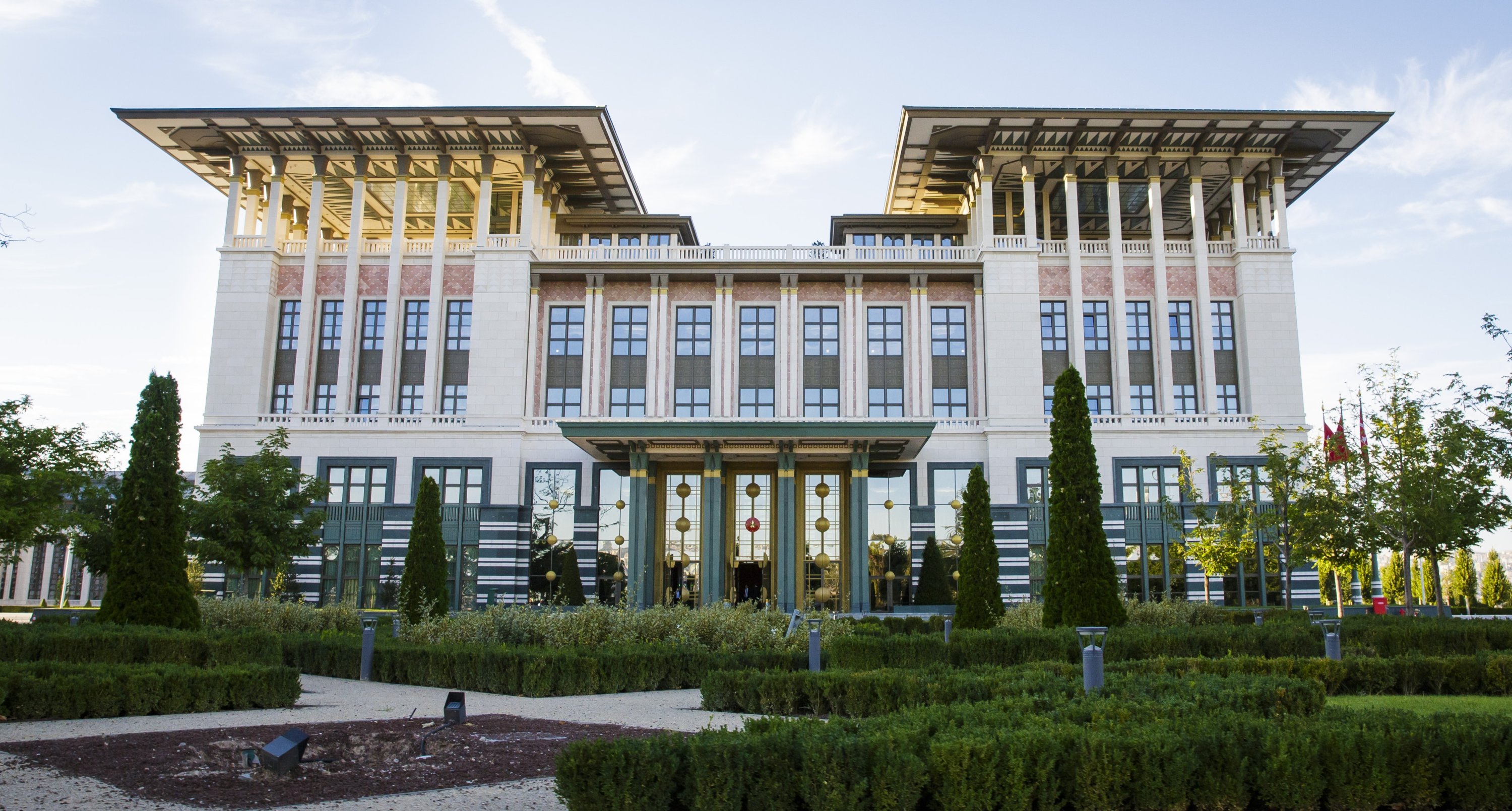
The gathering at the Presidential Complex brought together leaders from NATO’s 32 member countries, with Erdoğan holding a series of bilateral meetings on the sidelines as Ankara sought to underline Türkiye’s role in the alliance and regional security.
Erdoğan also signed a trilateral defense agreement in Mecca on Aug. 7 with Saudi Crown Prince Mohammed bin Salman and Pakistani Prime Minister Shehbaz Sharif.
The Mecca Joint Defense Agreement is aimed at strengthening defense cooperation, burden-sharing and collective security among the three countries, according to Turkish officials.
Türkiye has also expanded its domestic defense industry during Erdoğan’s presidency, increasing production of drones, missiles, naval platforms and other domestically developed systems.
The country has emerged as an increasingly prominent defense exporter and now ranks among the world’s top 15 countries in terms of defense production capacity.
Duran pointed to advances in the defense industry, domestic technology, energy, the “Blue Homeland” maritime strategy and space technologies as examples of Türkiye’s transformation over the period.
The government has also focused on reconstruction following the devastating earthquakes that struck southeastern Türkiye on Feb. 6, 2023.
More than 455,000 independent housing and commercial units have been completed in the earthquake-hit region as authorities continue rebuilding areas affected by the disaster.
Domestic security has meanwhile taken center stage with the government’s “Terror-free Türkiye” initiative, which authorities say is aimed at ending decades of terrorism and strengthening national unity.
A parliamentary commission established as part of the process began work under the name National Solidarity, Brotherhood and Democracy Commission.
On Aug. 8, Parliament’s Justice Committee approved proposed legislation on strengthening national solidarity and social integration as part of the initiative.
Duran said the process reflected the government’s broader emphasis on national unity, security and political stability.
“The strong will demonstrated by our nation is inspiring not only development initiatives but also the goal of a terror-free Türkiye, which strengthens our national unity and solidarity and prioritizes peace and security,” he said.
Twelve years after the landmark 2014 vote, Erdoğan remains at the center of Türkiye’s political system as his government pursues what it describes as a more independent foreign policy, expanded defense capabilities and the “Century of Türkiye” agenda.