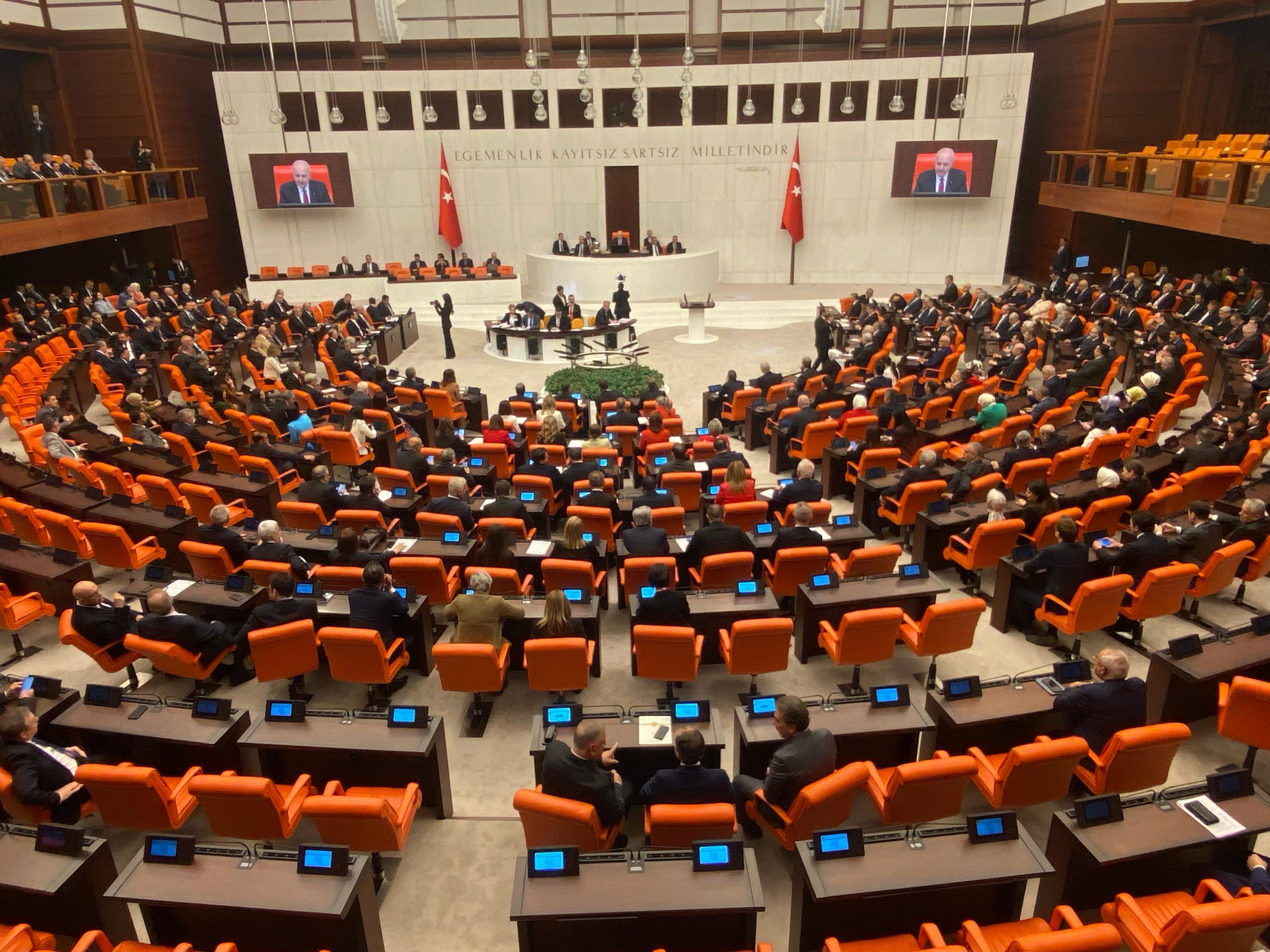
For 14 days, lawmakers will engage in an intense schedule at Parliament where the 2026 budgets of public institutions, ministries and the Presidency will be discussed.
Parliament’s General Assembly will launch the budget talks on Monday with its first session on the matter. Between Dec. 8 and Dec. 21, Parliament will be off-limits to visitors as lawmakers will discuss the budget. MPs will vote on the budget after they have been allocated time to discuss the final touches on Dec. 21.
Ministries and Parliament itself presented its 2026 budget in another lengthy period of talks that spanned over more than 40 days and ended on Dec. 2. The budget talks gave a rare chance to the opposition to confront and grill ministers as each minister presented their budget. The longest they spent was while discussing the budget of the Ministry of Environment, Urban Planning and Climate Change, for more than 13 hours.
In October, Vice President Cevdet Yılmaz presented the 2026 draft budget to Parliament, foreseeing TL 18.93 trillion ($445.14 billion) in expenditures and TL 16.22 trillion in revenues.
Back then, Yılmaz said that the budget, which he said was prepared with an inclusive and sustainable development perspective, was a "stability and prosperity" budget. He suggested that the budget was completed with the contributions of all ministries, as well as affiliated and relevant public institutions and organizations, in line with the vision and instructions set by President Recep Tayyip Erdoğan. "We have made significant progress in our country's physical infrastructure over the last 23 years, particularly through investments in transportation, energy, health care and digitalization. Today's priority is to make public infrastructure investments more effective and strengthen the production and trade infrastructure to support private sector investments," he said.
The vice president underscored that the budget was prepared "considering the needs and demands of all segments of society." He also said that the reconstruction in earthquake-affected regions and creating disaster-resilient cities would continue to be their priorities in this budget.
"We implement fiscal policy without compromising budget discipline by implementing measures to increase the effectiveness and efficiency of public expenditures and to reduce informality on the public revenue side," he added.