Amid media reports regarding a new plan for the status of divided Cyprus, Türkiye renewed its pledge to stand with Turkish Cypriots. “Our country’s stance on resolving the Cyprus question is clear and unchanged. Any initiative ignoring the rights of Turkish Cypriot people and aiming to disrupt the delicate balance on the island is unacceptable. The security of the Turkish Republic of Northern Cyprus is the security of Türkiye,” the ministry said in a statement on Thursday.
Cyprus has been divided for decades, and talks between Greek and Turkish Cypriots failed to produce a result for the island’s status. Türkiye, a guarantor state on the matter, stands with the Turkish Republic of Northern Cyprus in its quest for a sovereign Turkish Cypriot state on the island. The TRNC is not recognized internationally, while the Greek Cypriot administration managed to secure a self-styled sovereignty on the southern part of the island years ago.
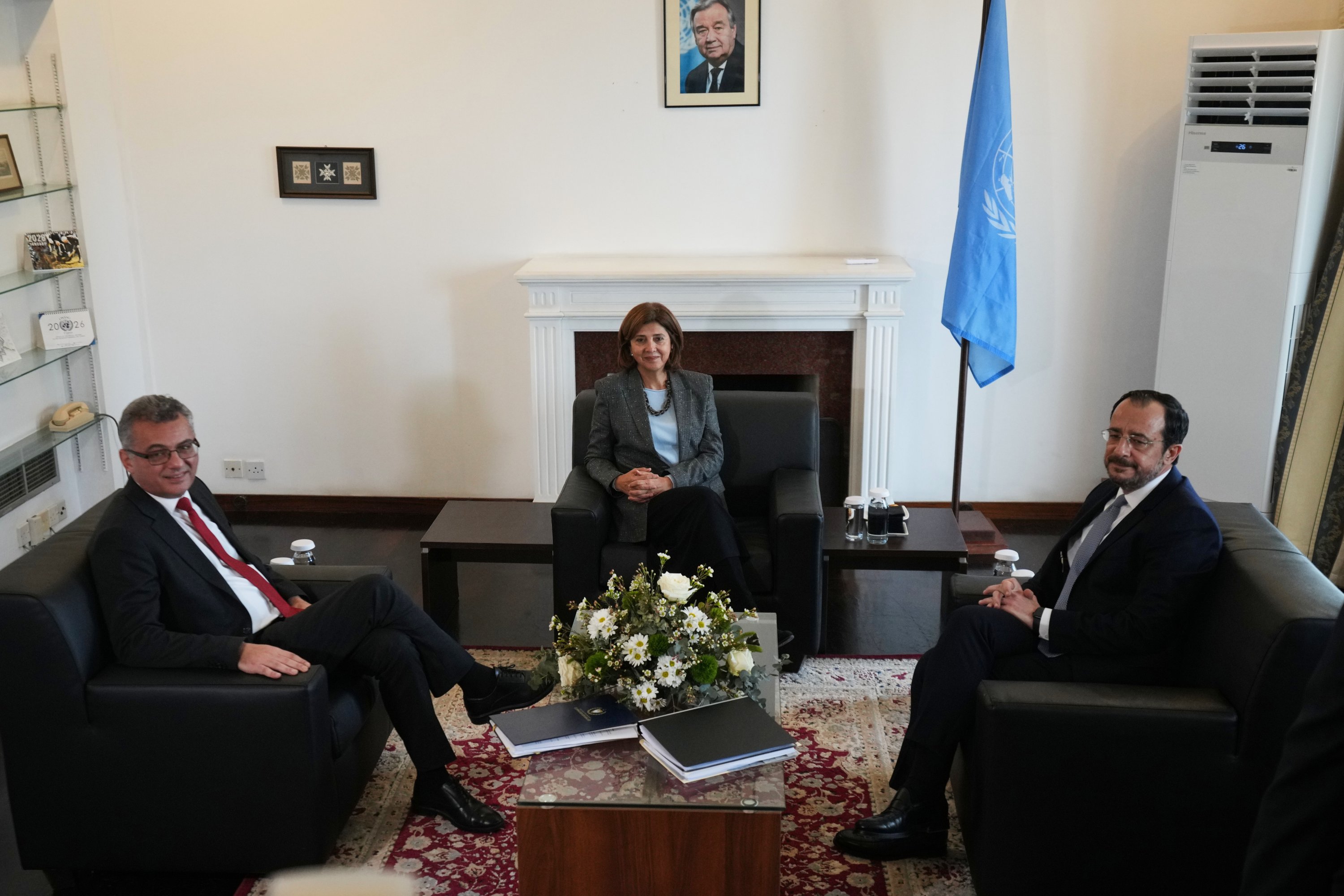
According to a report in the Greek Cypriot press, the solution model discussed during the recent contacts of the U.N. secretary-general's personal envoy for Cyprus, Maria Angela Holguin Cuellar, does not envisage a return to the "heavy federation" concept that had been discussed in previous years. It was claimed that the model under discussion is a "loose federation" approach aimed at reconciling the Greek Cypriot side's position of a bi-zonal, bi-communal federation with the Turkish Cypriot side's demands for sovereign equality and equal international status under a single framework.
The report stated that the proposed structure could be described by Greek Cypriots as a federation and by Turkish Cypriots as a confederation. It further alleged that the discussions centered on the previously debated concept of "territory in exchange for recognition and political equality." Within this framework, it was suggested that areas such as Varosha, Morphou (Güzelyurt), and the Mesaoria region were included in various scenarios, similar to the maps discussed during the Crans-Montana process. In return, it was reportedly intended that the political equality of the Turkish Cypriot side would be recognized not merely verbally but in a functional manner within the state mechanism.
The report further claimed that the model envisages a state structure shaped by loose ties between two constituent states. Unlike previous federal proposals that included approximately 120 shared competencies, the new approach reportedly aims to significantly reduce common powers, leaving most day-to-day governance to the constituent states. The central authority would be limited to powers necessary for the effective representation of the new state internationally and within the European Union. According to the report, the system under consideration would include two constituent states, two separate legislatures, and a federal structure that would primarily serve a supervisory role for federal matters. Instead of an elected federal parliament, a body resembling the Council of Europe model and composed of Greek Cypriot and Turkish Cypriot representatives was allegedly being considered. This body would deal only with matters that the two constituent states could not decide independently. The aim, it was argued, would be to address Greek Cypriot concerns about governmental deadlock caused by veto powers while also alleviating Turkish Cypriot concerns stemming from the Greek Cypriot population majority.
Within this framework, it was reportedly being considered that the presidency would rotate in favor of the Greek Cypriot side on a 2-to-1 or 3-to-1 basis. The formula was said to seek a more flexible understanding of political equality than the traditional rotating presidency model. It was also suggested that Greek Cypriot leader Nikos Christodoulides might be open to discussing such a model if the rotating presidency were limited to a symbolic federal presidency, while actual executive authority remained with a Greek Cypriot prime minister.
The Turkish Cypriot side, meanwhile, was said to regard as an essential element of political equality the requirement that at least one Turkish Cypriot minister vote in favor of decisions taken by the Council of Ministers.
Turkish Cypriot President Tufan Erhürman flatly rejected plans in a statement on Thursday and said neither they nor Türkiye would approve such a plan.
“There is no room for doubt or hope. It is all in vain. Are there still people who think that we, who have said from the beginning that we would conduct this process seriously, patiently, calmly, and decisively, would react emotionally or make statements under manipulation? If anyone is wondering, let me say this: We do not engage in manipulation through the media, nor will we. Instead, we have convened our Political Parties Council, our Youth Coordination Desk, and we will meet with our trade unions and economic organizations. We are meeting with members of the media in groups. We are providing accurate information about the current stage of the process, and we will continue to do so."
"We will neither be drawn into games nor provoked. We will continue to inform our people through proper methods and at the appropriate time, and we will never compromise our seriousness, patience, calmness, or determination. Let me say once again: Our people should rest assured,” he said.
Türkiye’s Defense Ministry echoed Erhürman’s statements and said a fair, lasting solution on the island should be based only on two states, a solution where Turkish Cypriots’ sovereign equality and equal international status were confirmed.
“We are determined to safeguard the Turkish Cypriot people. As a guarantor state, our country will protect peace, security and stability in Cyprus based on its legitimate rights and authority stemming from international agreements and international laws,” the ministry said.