Over the past two decades, Türkiye has undergone not only political and economic transformations but also a deep cultural shift. What has often been described as a “culture war” has turned cinema and television into battlegrounds of identity. On one side, conservative representations; on the other, secular urban narratives. On one hand, nostalgia for Yeşilçam; on the other, the fresh language of digital platforms.
Among the productions that emerged from this tension, "Gassal" has arguably become the first to open a space for a possible cultural peace. It was neither framed solely as a “national and local” project, nor confined to the niche of alternative art-house followers. On the contrary, it spoke to a wide audience across social segments, using universal themes such as death, loneliness, belonging and inner reckoning. In this way, "Gassal" became a compelling attempt at building a shared cultural ground that Türkiye has long yearned for but struggled to find.
For this reason, the appearance of the "Gassal" team at the TRT 12 Punto event was not just a television-related gathering, but a symbolic moment for Türkiye to come to terms with its own cultural narrative.
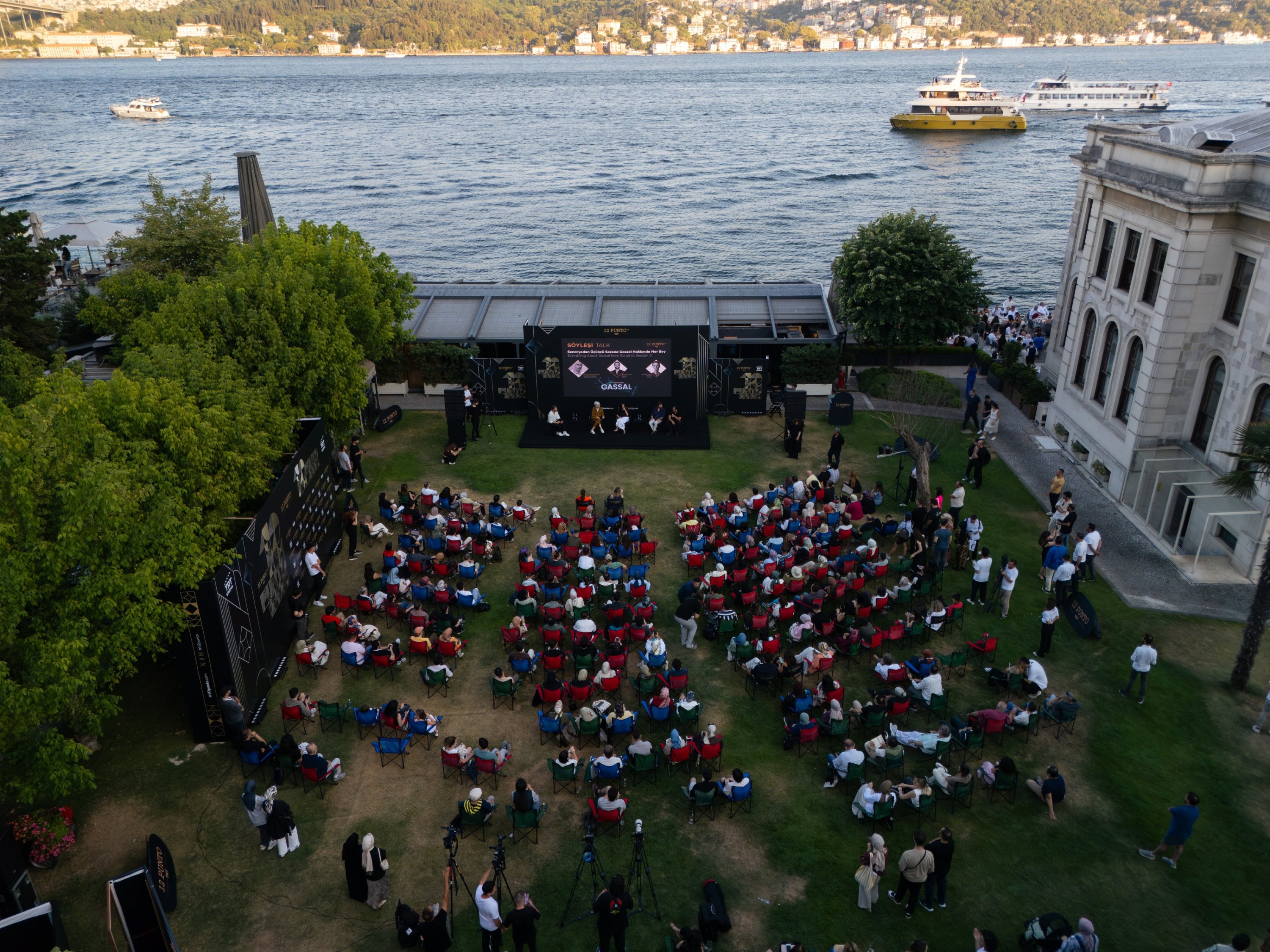
TRT 12 Punto script development days were once again held this year on the Bosporus shore in Feriye, Istanbul. The event brought together not only industry professionals but also audiences and young people taking their first steps into the field. Through film screenings, actor talks and experience-sharing sessions, the gathering offered insights not only into the world of screenwriting and production but also into Türkiye’s evolving cultural landscape.
On the evening of July 14, the cast and creators of "Gassal," one of Türkiye’s most talked-about recent series, met with viewers. Lead actor Ahmet Kural, screenwriter and director Sümeyye Karaaslan and actor Hande Soral joined the event. Registration had filled up days in advance, and the atmosphere was charged with excitement. However, this meeting was about much more than just the creation of a TV show – it became a platform to explore the transformation of an actor and the broader narrative shifts in Turkish society.
Kural was at the center of the evening. Known for his work in box office hits like Düğün Dernek and cult series like Işler Güçler, he has earned a reputation as Türkiye’s “Jim Carrey.” But his journey has not been without controversy. Following a highly publicized period in his private life, Kural faced attempts at cultural cancellation. However, he returned quietly to his work, got married, became a father, and reintroduced himself to the public through his performances. His presence on stage was a testament to how deeply Turkish audiences value authenticity, resilience and the possibility of starting over.
During the conversation, Karaaslan offered striking insights. “To write a good script,” she said, “you have to connect with everyday people. Maybe screenwriters shouldn’t be too rich – because when you lose touch with a dramatic life, you lose the people’s stories too.” Her words resonated as a quiet critique of the industry: comfort can distance a storyteller from truth.
Actors like Kural succeed in maintaining a close but respectful distance with their audiences. This ability is crucial not only for performers but for understanding Türkiye’s broader cultural evolution. For decades, intellectuals and artists sent abroad slowly grew disconnected from the public, creating a chasm filled with mutual misunderstanding. What we now witness is a new profile: artists who listen, who remain rooted in their own narrative, yet speak with confidence to the world. In this sense, "Gassal" acts as a bridge.
The setting of the event – Feriye – was more than a venue. Located next to Galatasaray University, one of the symbolic institutions of Turkish modernization, it evoked layers of memory and transformation. During the Ottoman period, tribal schools operated along this same shore. The gathering at Feriye, therefore, was not just about a TV series – it was a moment of collective cultural reflection and reckoning.
One of the evening’s unexpected guests was Bayhan, the artist behind "Gassal’s" music. Humbly referring to himself as “Ahmet Kural’s inner voice,” Bayhan played a key role in shaping the show’s emotional atmosphere. Once the subject of harsh public criticism, he now stands as an example of reinvention, using his voice to connect with a broader audience.
Perhaps the most powerful message of the evening was this: Türkiye is ready to tell its story to the world – truthfully and with dignity. TRT’s recent productions no longer rely solely on historical narratives, but instead, they embrace scripts that allow for personal and national confrontations. Shows like Gazi, also starring Kural, focus on reckoning with the past while envisioning the future.
The old stereotype of the melancholic, inward-looking, self-alienated Turkish intellectual may finally be giving way to a new figure – joyful, self-reflective, confident. In this light, 12 Punto was more than a professional event; it became a symbolic threshold where Türkiye redefined its relationship with its artists, its stories and its people.