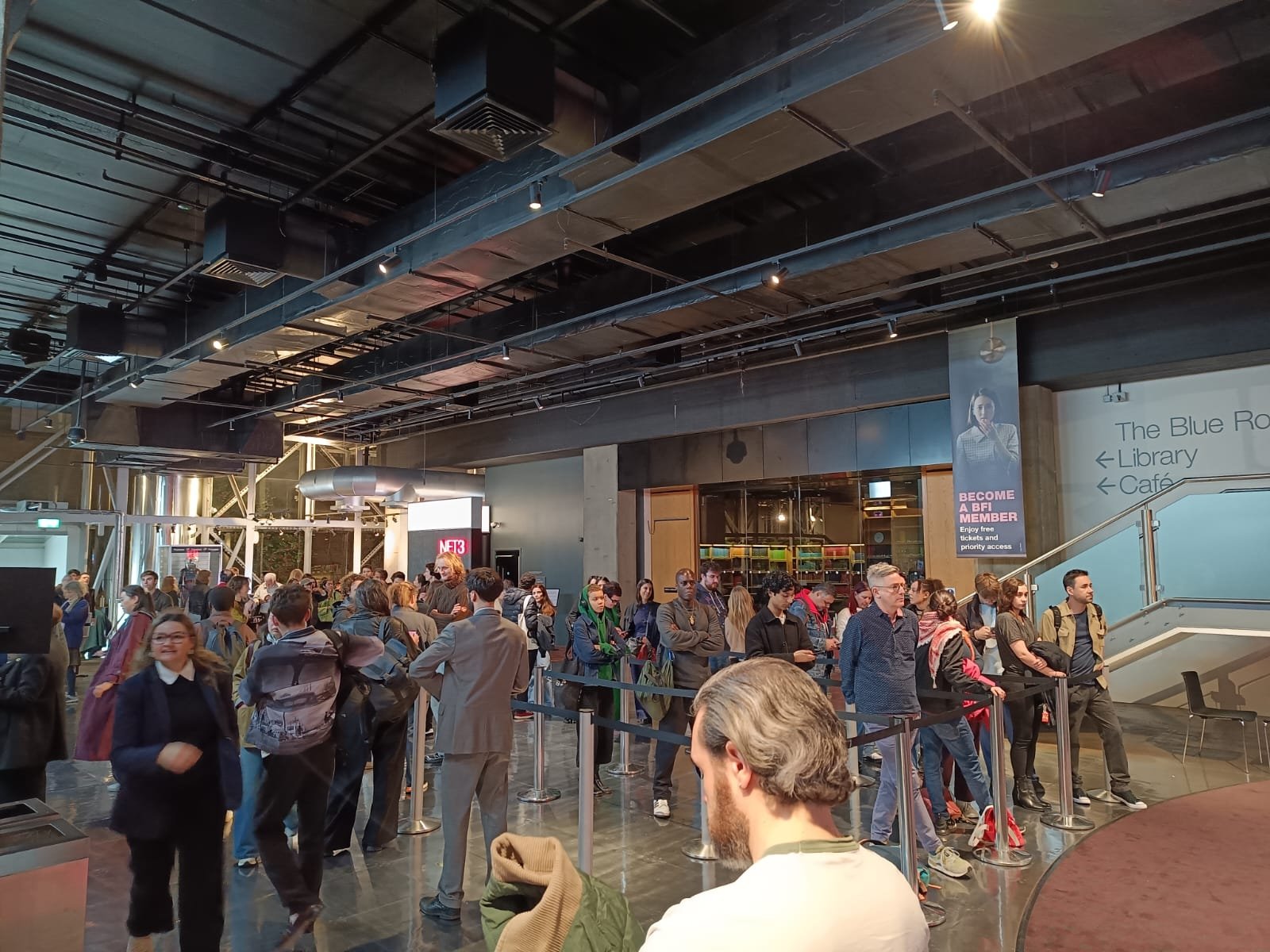
The BFI London Film Festival wrapped up on Oct. 19, after 10 days of red carpets, screaming fans and ticket lines. London hosts premieres of blockbusters. The BFI has programs that highlight indie cinema throughout the year, so a festival on top of that may feel excessive. Yet, local and international film goers flock to the event, and the selection of films you can access depends on how early you try to book press or public screenings.
This Hunger Games-style festival viewing has its advantages. When you hunt for the hyped-up films and someone has already gotten the last ticket, you are left to choose among the unknown or lesser-known titles. And this is how I got to see my two favorites of the festival: "Lady" and "The Retreat," both British films that take place in manor houses. "Lady" by Samuel Abrahams is about Lady Isabella’s efforts to get herself filmed at her stately home and the relationship she strikes up with the director she has "hired" to do the job. "The Retreat" is about a community of deaf people living in a beautiful house in the English countryside. Then a young German woman joins them, and the story spirals into a thriller about the lengths people will go to protect their community.
Another favorite of mine was "The Boy and the Sea," which I had the chance to watch on the virtual screening library on evenings when I had run out of steam. A very different British film from "Lady" or "The Retreat," it is a heartwarming story by Stroma Cairns of two London boys taking a weekend off from their worries and traveling to Scotland. They get involved in the lives of two deaf brothers in the fishing village they’re visiting. Although there is an element of crime involved, it was singularly lacking in toxic male behavior and was a sweet reminder that we should sometimes make art about the world we want to live in and not the world we fear.
A companion piece to this all white film was Bradley Banton’s all Black extravaganza "More Life." A film shot in "Live Reel" style, it follows three Black young men filming their conversation in their artist friend’s studio, while the comments keep flowing on the screen. The audience is free to follow either the often funny, sometimes tense banter of the friends or the jokes running in the comments to learn some new slang, in my case, "yakna." Like in "The Boy and the Sea," the conversation never turns toxic, and there’s fun, silliness and tension to be had with no racist, sexist or violent jokes.
Another, more modest film about British boys is "Ish." It follows Ishmael, who has recently lost his mother. In this case, we are dealing with preteen anxieties and the need to belong. Ish’s best friend is Maram, whose favorite pastime is building a stakeout in the nearby woods. Ish helps him build it, and only halfway through the film does Maram say, "We need to be ready when the IDF comes." It is then that we understand Maram is Palestinian. We see Maram endure police violence, and he acts as a warning to Ish, who is then more drawn to his own family’s life. The politics of this is a bit vague, but with this black and white film, Imran Perretta seems to be finding his voice – the scenes where Ish sees the world as if through a security camera/video game are particularly interesting.
The two big films about Palestine at the festival were "The Voice of Hind Rajab" and "Palestine 3." While the story of "The Voice of Hind Rajab" is known to anyone who has been following the genocide in Gaza, and indeed, has been watching film news, "Palestine 36" had been more of a connoisseur’s item until the LFF, having made its debut in Toronto in September. Although I loved the Tunisian filmmaker Kaouther Ben Hania’s "Four Daughters," which also rehashes a family trauma, Hind Rajab’s story is far too recent for me to engage at a "fictional" level. If the film helps audiences who were not aware of what happened to Hind get to know her story, it will have served a purpose.
"Palestine 36," on the other hand, as the name signals, is historical fiction. It is, of course, a very personal story to the Palestinian filmmaker Annemarie Jacir, who opens the film with the caption "the year you were born." It chronicles the Palestinian villagers’ realization that the European Jewish settlers are not merely new neighbors and how the Arab revolt, once used to dismantle the Ottoman Empire, finds a new reiteration in trying to claim Palestinian land for Palestinians. The film shows settlers' and Europe’s methods of violence have not changed for decades, and that the "problem" did not start on Oct. 7, 2023.
Before going to London, I was disappointed about not seeing "Palestine 36" because I wouldn’t be there for the press screening, and the public screenings were all booked. I went to Curzon Mayfair to get a bit of the atmosphere, and indeed, there were people with Palestine pins lining up for extra tickets. I was able to get a glimpse of both Husam Zumlot and Jeremy Irons (Annemarie Jacir has been able to recruit some big names for her epic), entering the venue. However, the star for me remains the graceful lady who left the theater hall after minutes of applause and gave her ticket to me, which broke the resolve of the ushers who would not let me in. I am guessing it must’ve been one of the actors who had seen the film already, but it was dark and I was running on adrenaline, so I can’t really remember her face. Whoever you are, thank you.
I engaged in the line ritual also for Riz Ahmed’s "Hamlet" and managed to secure a seat. I can’t think of a more engaging British actor to play Hamlet; however, I don’t think the script did Ahmed’s acting enough justice. The play is reimagined in a British Asian setting, keeping most of Shakespeare’s language. What does not work in Aneil Karia’s adaptation is conflating some of the characters and giving their lines to each other. I left the theater thinking there is at least one more Hamlet left in Ahmed.

My other favorites include "Is This Thing On?," an American film about relationships that didn’t have a single false note and had us rooting for all the characters, largely due to its stellar cast, including Bradley Cooper, Will Arnett and Laura Dern. I’d forgotten that Americans made films that took place outside the Marvel Universe. One other find on the Virtual Screening site was "The Blue Trail," a Brazilian film by Gabriel Mascaro. It is a speculative road movie where a grandmother, in a dystopia where the elderly are sent to a colony to not burden society, finds her route to freedom.