Daily Sabah logo

Politics
Diplomacy Legislation War On Terror EU Affairs Elections News Analysis
TÜRKİYE
Istanbul Education Investigations Minorities Expat Corner Diaspora
World
Mid-East Europe Americas Asia Pacific Africa Syrian Crisis Islamophobia
Business
Automotive Economy Energy Finance Tourism Tech Defense Transportation News Analysis
Lifestyle
Health Environment Travel Food Fashion Science Religion History Feature Expat Corner
Arts
Cinema Music Events Portrait Reviews Performing Arts
Sports
Football Basketball Motorsports Tennis
Opinion
Columns Op-Ed Reader's Corner Editorial
PHOTO GALLERY
JOBS ABOUT US RSS PRIVACY CONTACT US
© Turkuvaz Haberleşme ve Yayıncılık 2026

Daily Sabah - Latest & Breaking News from Turkey | Istanbul

  • Politics
    • Diplomacy
    • Legislation
    • War On Terror
    • EU Affairs
    • Elections
    • News Analysis
  • TÜRKİYE
    • Istanbul
    • Education
    • Investigations
    • Minorities
    • Expat Corner
    • Diaspora
  • World
    • Mid-East
    • Europe
    • Americas
    • Asia Pacific
    • Africa
    • Syrian Crisis
    • Islamophobia
  • Business
    • Automotive
    • Economy
    • Energy
    • Finance
    • Tourism
    • Tech
    • Defense
    • Transportation
    • News Analysis
  • Lifestyle
    • Health
    • Environment
    • Travel
    • Food
    • Fashion
    • Science
    • Religion
    • History
    • Feature
    • Expat Corner
  • Arts
    • Cinema
    • Music
    • Events
    • Portrait
    • Reviews
    • Performing Arts
  • Sports
    • Football
    • Basketball
    • Motorsports
    • Tennis
  • Gallery
  • Opinion
    • Columns
    • Op-Ed
    • Reader's Corner
    • Editorial
  • TV
  • Arts
  • Cinema
  • Music
  • Events
  • Portrait
  • Reviews
  • Performing Arts

Paris exhibitions explore how Monet chased light, captured time

by Şirin Bayraktar

Oct 28, 2026 - 10:48 am GMT+3
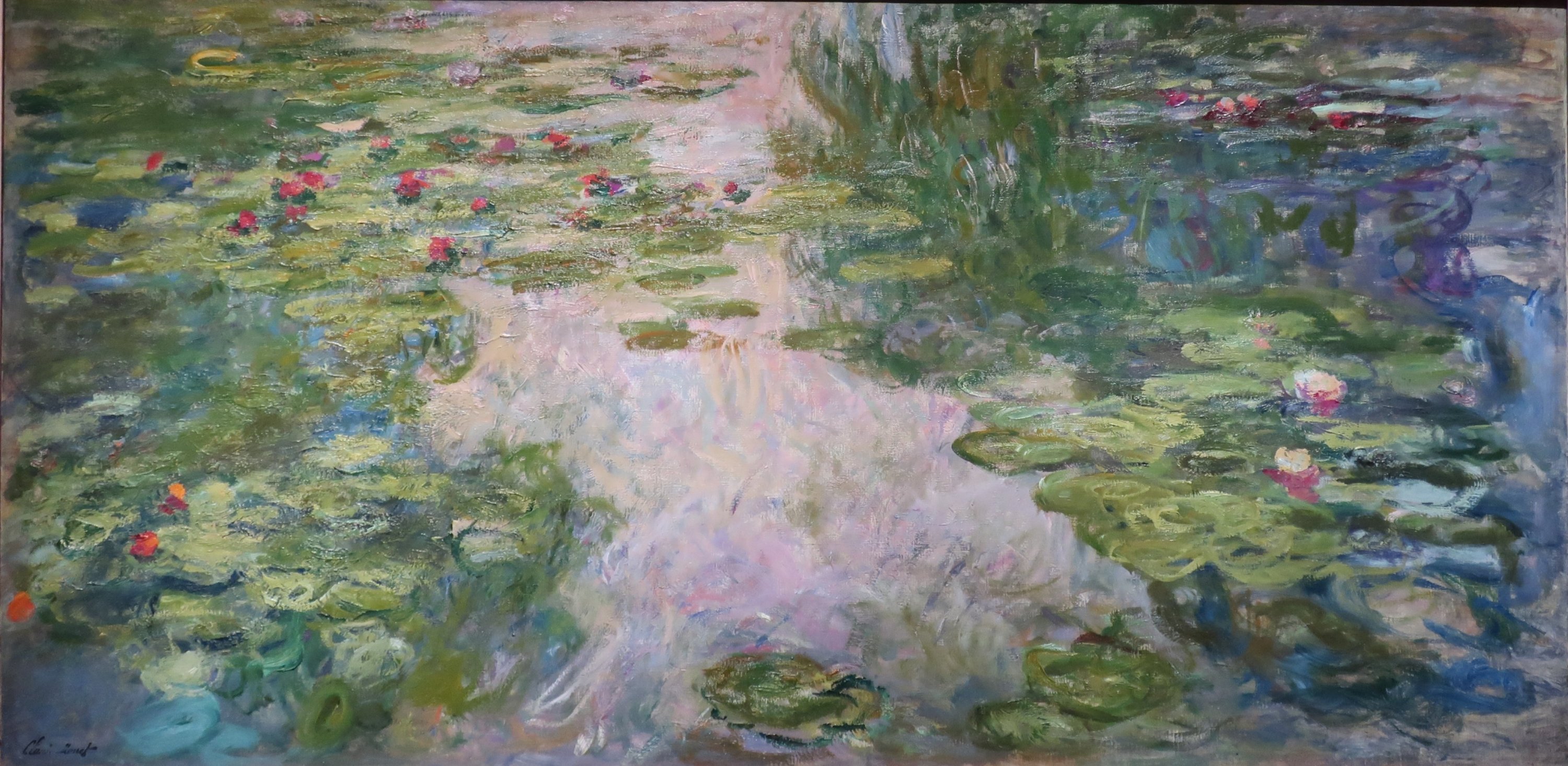
An illustration of Claude Monet's famous "Water Lilies" (1917-1919). (Shutterstock Photo)
by Şirin Bayraktar Oct 28, 2026 10:48 am

A century after his death, two Paris exhibitions revisit how Claude Monet chased fleeting light, captured the passage of time and redefined the art of seeing

In 2026, 100 years after Claude Monet’s death, Paris commemorates the artist with two exhibitions at the Musée de l’Orangerie and Musée d’Orsay.

At the Musée de l’Orangerie, "Monet, peindre le temps" (“Monet: Painting Time”), on view from Sept. 30, 2026, to Jan. 25, 2027, explores Monet’s relationship with time through around 40 paintings. His celebrated series of poplars, haystacks, Rouen Cathedral, the Houses of Parliament and Water Lilies reveal his efforts to capture changing light and atmosphere across different moments.

This pursuit often required him to work quickly. While painting the poplars along the Epte River in 1891, Monet reportedly remarked that a particular effect of light might last only a few minutes. As the conditions changed, he switched between canvases, trying to capture each variation. The trees themselves were also under threat: after a timber merchant bought them at auction, Monet reached an agreement with him to keep them standing long enough for the artist to finish his paintings.
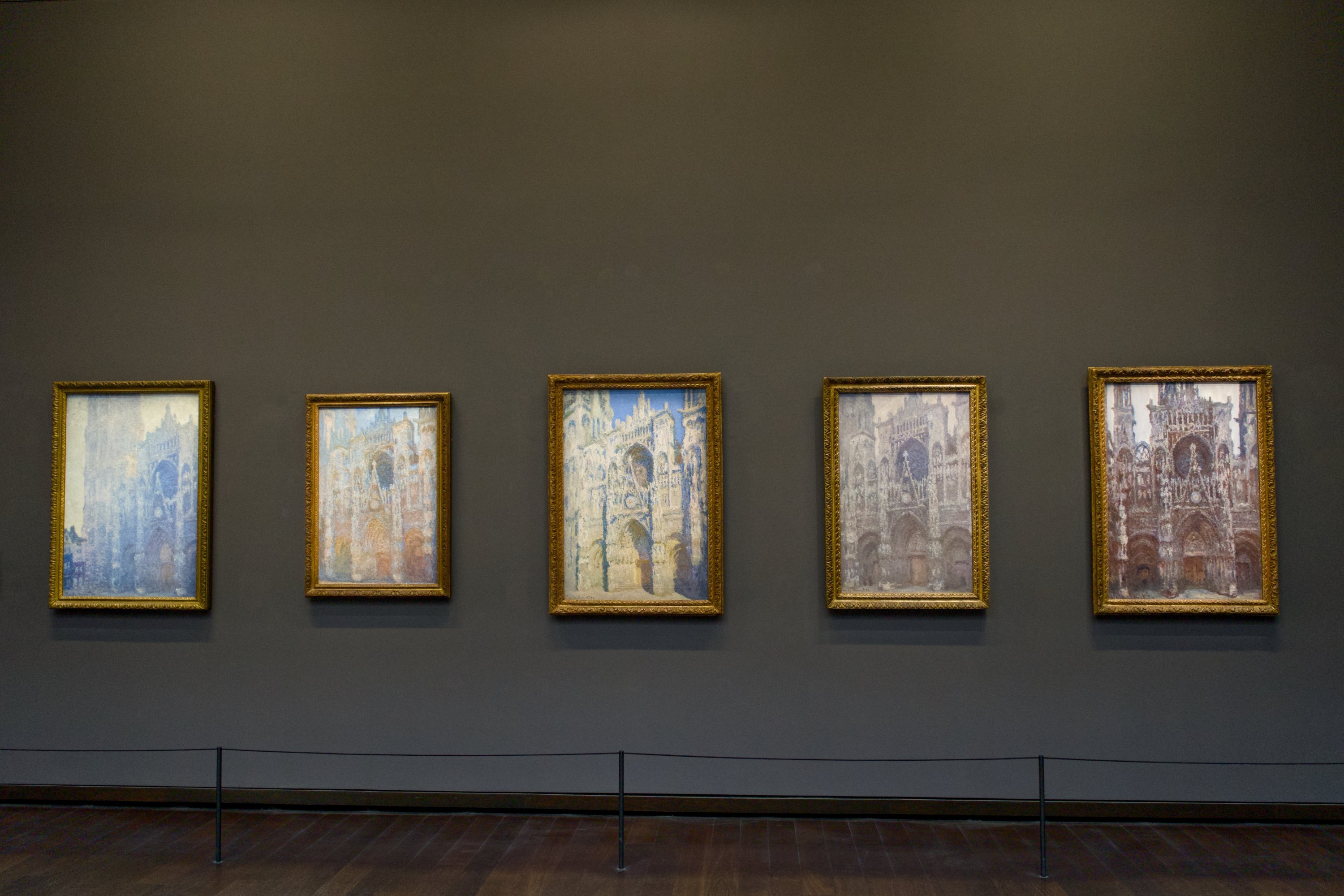
Claude Monet's Rouen Cathedral series displayed in ornate frames across a dark gallery wall at the Musee d'Orsay, Paris, France, Sept. 4, 2026. (Shutterstock Photo)

His work on Rouen Cathedral brought similar challenges. In a letter to his wife, Alice, in March 1892, Monet wrote that he had worked on nine canvases in a single day, moving between them as the light shifted across the façade. But his process did not end there. He continued to rework the paintings in his studio, and 20 works from the series were eventually dated 1894, although his main painting campaigns in Rouen had taken place in 1892 and 1893.

Monet carried this approach to London, where he began nearly 100 views of the Thames between 1899 and 1901. The series included Waterloo Bridge, Charing Cross Bridge and the Houses of Parliament, which he continued to work on at his studio in Giverny. In 1903, he told his dealer, Paul Durand-Ruel, that he needed to have the entire group of paintings in front of him as he worked. London’s coal smoke and industrial pollution intensified the city’s famous fog, dissolving buildings and bridges into the colored haze Monet painted.
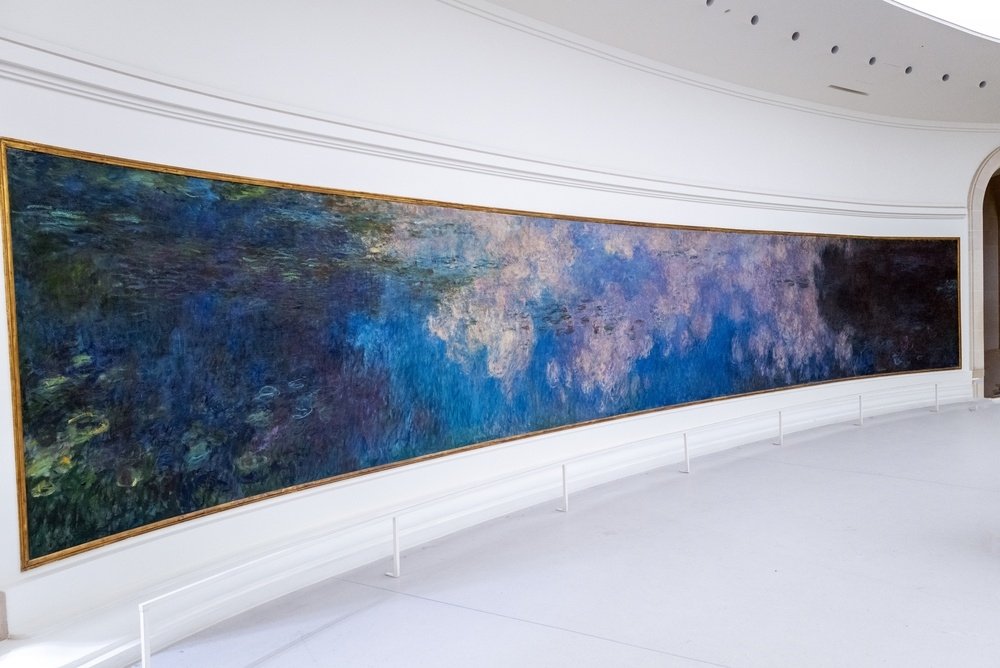
Claude Monet’s “Water Lilies” series is displayed at the Musée de l’Orangerie in Paris, France, Jan. 13, 2026. (Shutterstock Photo)

The paintings may seem spontaneous, but research by the Centre for Research and Restoration of Museums of France has revealed the revisions and pentimenti – traces of earlier work beneath the final surface – that lie beneath them. This process of observation and adjustment took on a different character in Monet’s Water Lilies, a series that occupied him for nearly three decades. As he gradually removed the horizon from his compositions, water, vegetation and clouds merged in reflections, making time less a matter of capturing a passing moment than of observing a scene as it continually changed.

At the Musée d’Orsay, "Je passe ma vie à peindre" (“I Spend My Life Painting”), on view from Sept. 30, 2026, to Jan. 24, 2027, approaches Monet’s work from another angle. The exhibition presents five paintings that have recently been restored or reexamined, focusing on the artist’s technical experimentation.

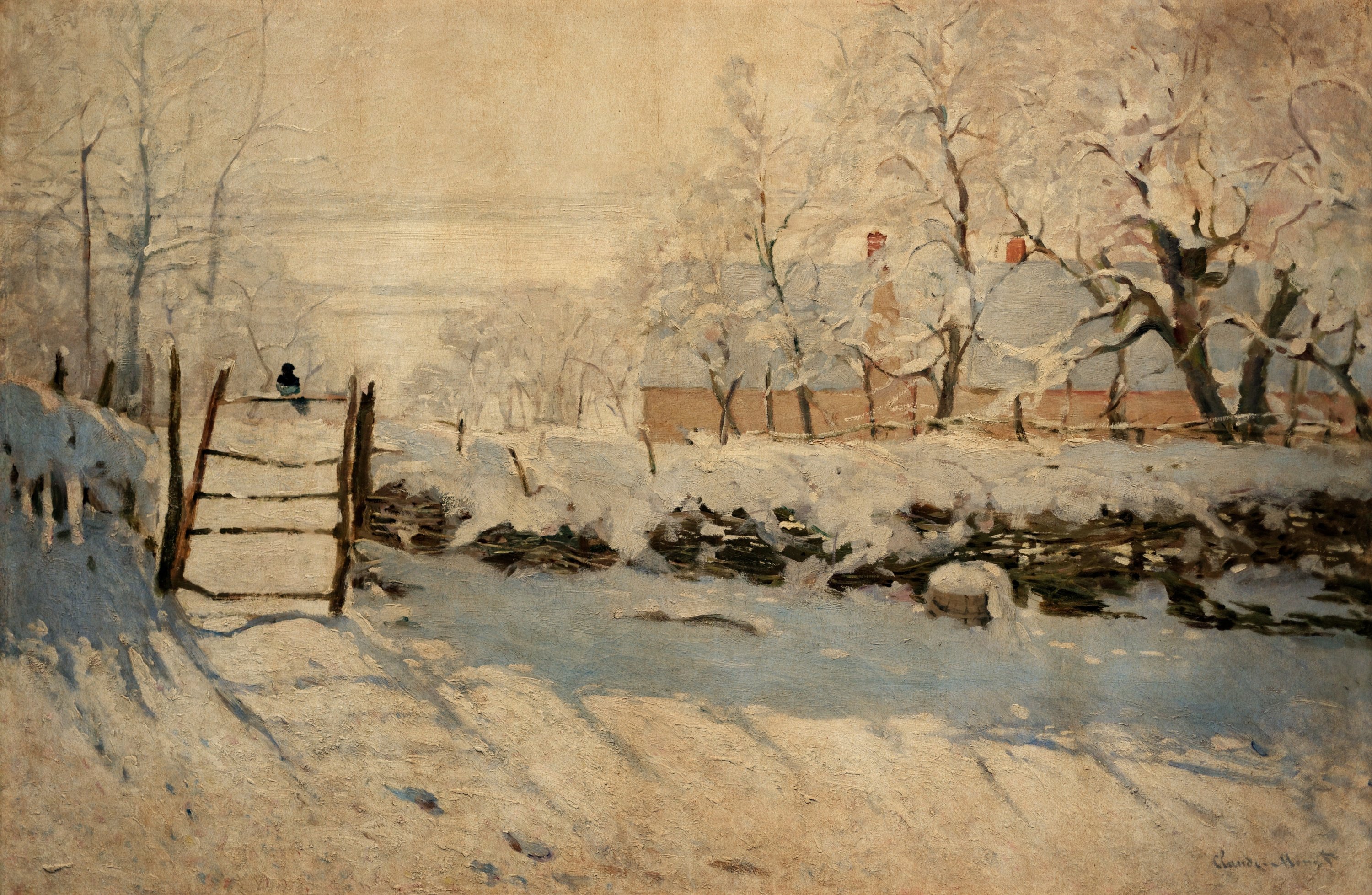
One of the works on display is The Magpie, painted near Étretat during the winter of 1868-1869. The landscape is quiet and motionless, governed by snow and the soft light of winter. At the center of the composition, a small black magpie perched on a gate interrupts the snowy landscape.
An illustration of Claude Monet's famous painting
An illustration of Claude Monet's famous painting "The Magpie" (1868-1869). (Shutterstock Photo)

The painting also shows how Monet broke with the conventions of his time. Monet didn’t use flat, pure white to depict snow. He introduced blue and violet hues into the shadows. This approach departed from academic expectations, and the painting was rejected by the official Salon in 1869. Recent restoration has removed layers of aged, yellowed varnish, revealing brighter whites and bringing sense of freshness.

Seen together, the exhibitions shed light on the process behind Monet’s paintings. At the Orangerie, his repeated observations show how he worked to capture fleeting changes in light. At the Orsay, restoration and technical research reveal the decisions behind the final image. A century after his death, there is still more to discover in the way Monet approached his art.


  • shortlink copied
  • Last Update: Oct 28, 2026 1:47 pm
    KEYWORDS
    claude monet paris exhibitons musee dorsay musee de lorangerie orsay museum
    The Daily Sabah Newsletter
    Keep up to date with what’s happening in Turkey, it’s region and the world.
    You can unsubscribe at any time. By signing up you are agreeing to our Terms of Use and Privacy Policy. This site is protected by reCAPTCHA and the Google Privacy Policy and Terms of Service apply.
    No Image
    Lake Suğla in Türkiye's Konya shrinks amid drought
    PHOTOGALLERY
    • POLITICS
    • Diplomacy
    • Legislation
    • War On Terror
    • EU Affairs
    • News Analysis
    • TÜRKİYE
    • Istanbul
    • Education
    • Investigations
    • Minorities
    • Diaspora
    • World
    • Mid-East
    • Europe
    • Americas
    • Asia Pacific
    • Africa
    • Syrian Crisis
    • İslamophobia
    • Business
    • Automotive
    • Economy
    • Energy
    • Finance
    • Tourism
    • Tech
    • Defense
    • Transportation
    • News Analysis
    • Lifestyle
    • Health
    • Environment
    • Travel
    • Food
    • Fashion
    • Science
    • Religion
    • History
    • Feature
    • Expat Corner
    • Arts
    • Cinema
    • Music
    • Events
    • Portrait
    • Performing Arts
    • Reviews
    • Sports
    • Football
    • Basketball
    • Motorsports
    • Tennis
    • Opinion
    • Columns
    • Op-Ed
    • Reader's Corner
    • Editorial
    • Photo gallery
    • DS TV
    • Jobs
    • privacy
    • about us
    • contact us
    • RSS
    © Turkuvaz Haberleşme ve Yayıncılık 2021