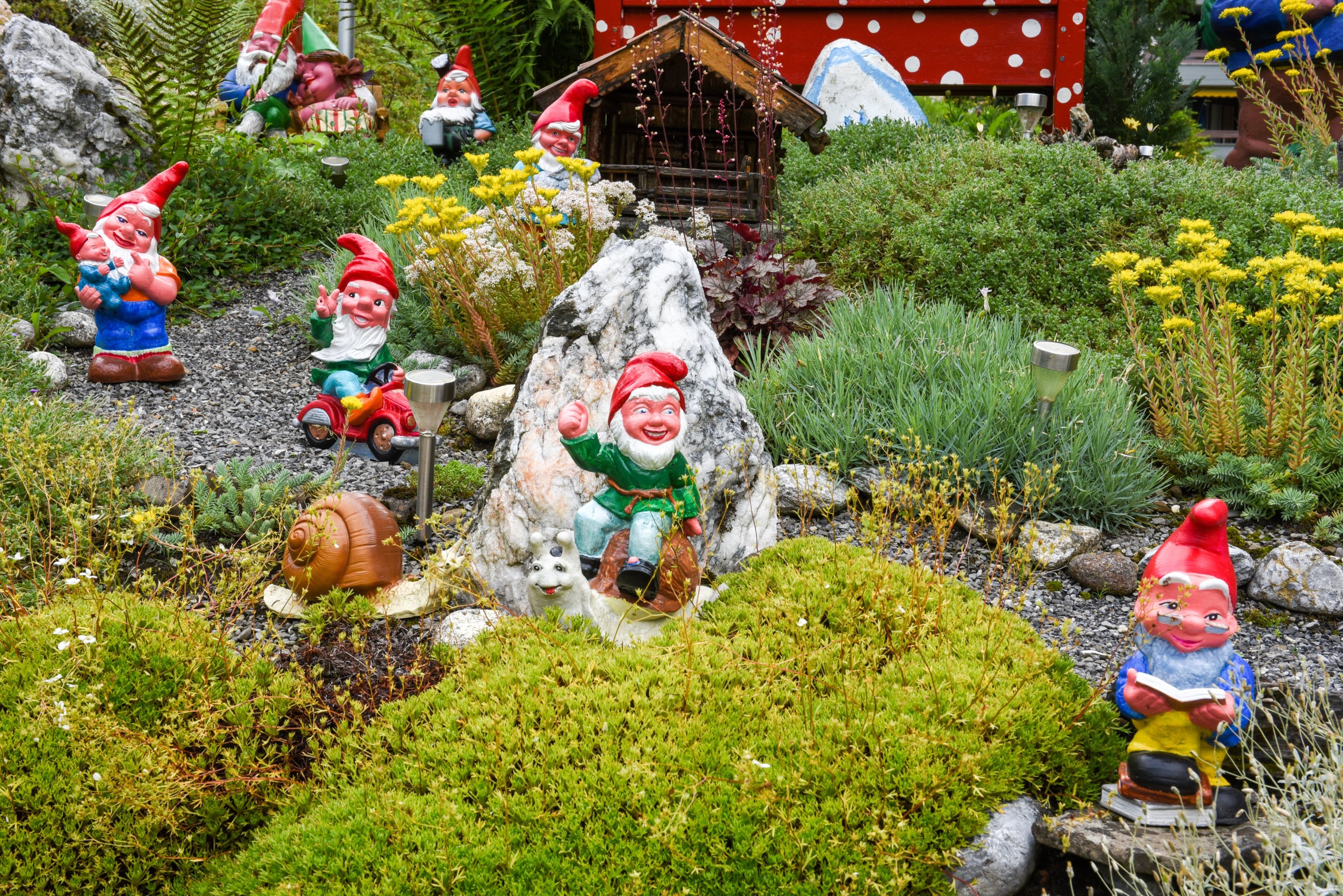
With their red pointy hats and socks worn with sandals, cute garden gnomes are still prevalent in some gardens and lawns throughout the Western world, especially in Germany.
Peeping out from under rose bushes in front yards, hidden between pumpkins in the vegetable patch or scattered across the lawn, the little figurines can be found in many a self-respecting – ahem tasteless - German garden.
Indeed, all over Europe gnomes continue to find their way into gardens, to the joy of millions and the disgust of millions more.

For those who have never had the privilege, garden gnomes come in all sizes and colors, and models range from the traditional dwarf wearing a red pointed cap and pushing a wheelbarrow to those clad in the colors of their owner's favorite football club.
Variably made from plaster, clay, ceramics or plain plastic, garden gnomes are often considered the epitome of kitsch. For others, the figurines have long gained cult status. No wonder, since the gnomes have a rich history that dates back to pre-modern times.
Gnomes are mythological creatures and diminutive spirits in Renaissance magic and alchemy. Introduced by Swiss philosopher Paracelsus in the 16th century for the first time, gnomes were used as a synonym for the Pygmy people.
For centuries, gnomes have featured in sagas, fairy tales and myths as eager helpers with access to rich treasures and magical powers. In ancient Greece, for example, Homer and Hesiod wrote about the Pygmy people who farmed the land.

Gnomes also took place in Romanticist and modern collections of fairy tales as well as modern fantasy literature. Likewise, gnomes frequently feature in Brother Grimm's fairy tales (1812), such as "Snow White" or "Rumpelstiltskin."
"In the period from 1870 to 1920, the gnomes had their greatest heyday," cultural scientist Esther Gajek once wrote in an essay. The obsession with the figurines was sparked by the fairy tale movement during neo-romanticism in the late 19th and the early 20th century, according to the researcher.
Diminutive statues of gnomes introduced as lawn ornaments during the 19th century grew in popularity during the 20th century and came to be known as garden gnomes.
Figurines and statues have been put up in royal gardens across Europe since the Baroque period. The sculptures in Salzburg's Zwergelgarten (which translates as a dwarf garden), made of white marble, are over 320 years old, for example. They date back to copperplate caricatures by the French graphic artist and Florence court painter Jacques Callot from the beginning of the 17th century.
At the end of the 18th century, garden gnomes were already widely known; the German poet Johann Wolfgang von Goethe wrote in the bourgeois epic "Hermann and Dorothea" about a garden with its "colored gnomes" that was famous "throughout the whole region."

Towards the end of the 19th century, the first garden gnomes were mass-produced in and around Gräfenroda in Thuringia, Germany - and sold to customers as far away as Great Britain.
Back then, the manufacturing steps were manifold: hand-casting in molds, drying and baking, painting and varnishing. "Some gnomes consisted of ten individual parts (aprons, beards, pipes, etc.), each with its own mold," writes Gajek.
For a long time, the figurines were prized upper-class objects. In his novel "Felix Krull", German writer and Nobel prize winner Thomas Mann describe the protagonist's family's "graceful manor" as follows: "The sloping garden was liberally decorated with gnomes, mushrooms, and all manner of deceptively imitated animals made of earthenware."
Today, many garden gnomes are plastic gnomes, which first became available in the 1960s, and they are no longer limited to the upper classes. It's not rare for neighbors to engage in a serious argument over one's garden gnome - particularly if it's a figurine making an obscene gesture.
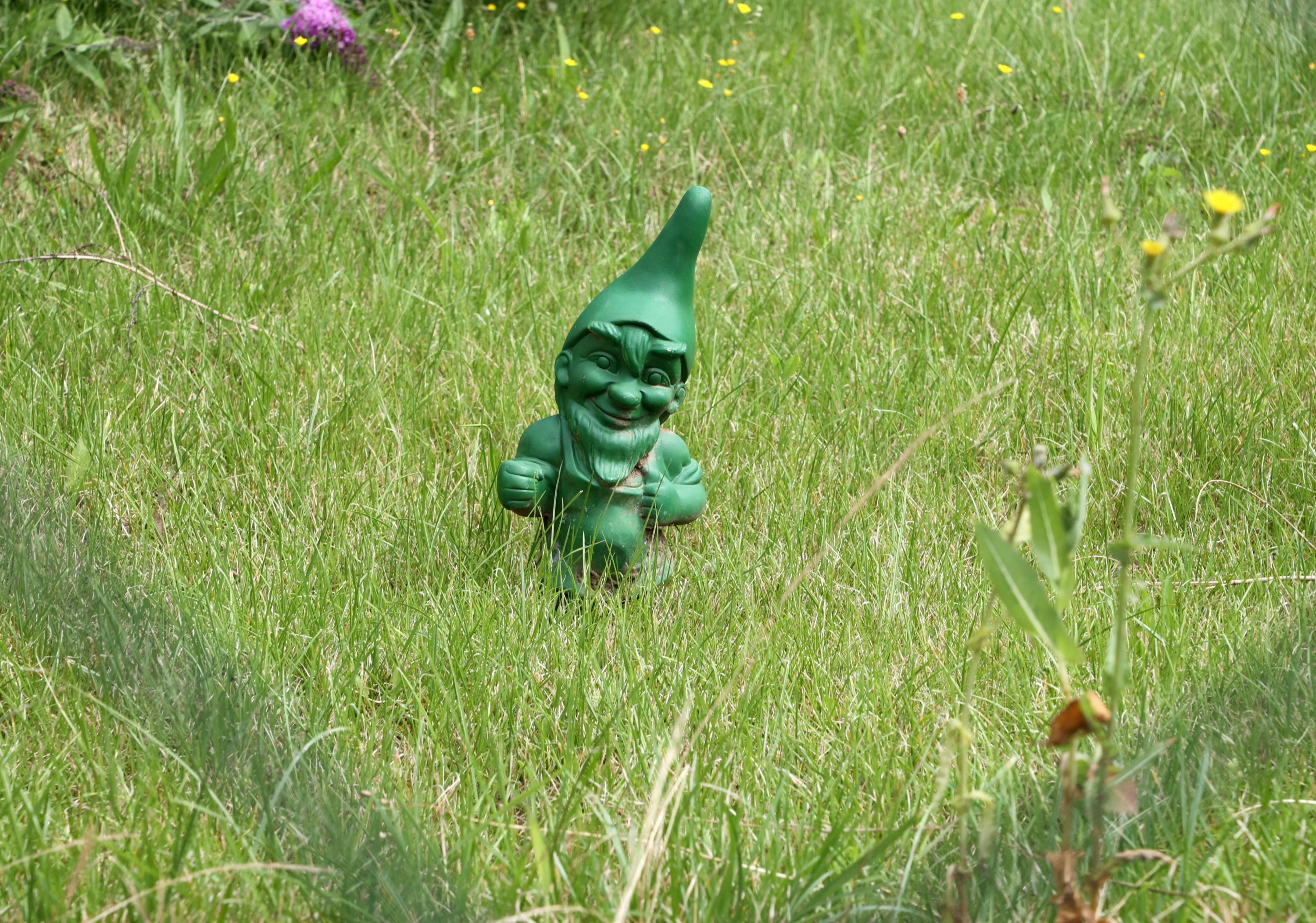
According to the International Association for the Protection of Garden Gnomes (it's a thing!) in the Swiss city of Basel, real garden gnomes - whether with male or (now also) female features - wear a pointed cap and engage in "a nature-oriented or friendly activity." And they are made of natural materials such as clay, loam or wood. According to the gnome association, models made from plastic aren't genuine.
If you thought that this figurine fetish is home to the German-speaking world only, you are mistaken, however. In the spring of 2021, Britain was suffering from a gnome shortage, the BBC reported after more and more people had taken up gardening during the coronavirus pandemic. Due to the fast-growing demand as well as supply issues related to the Suez canal blockage that spring, garden gnomes were in short supply for a long time in the country.