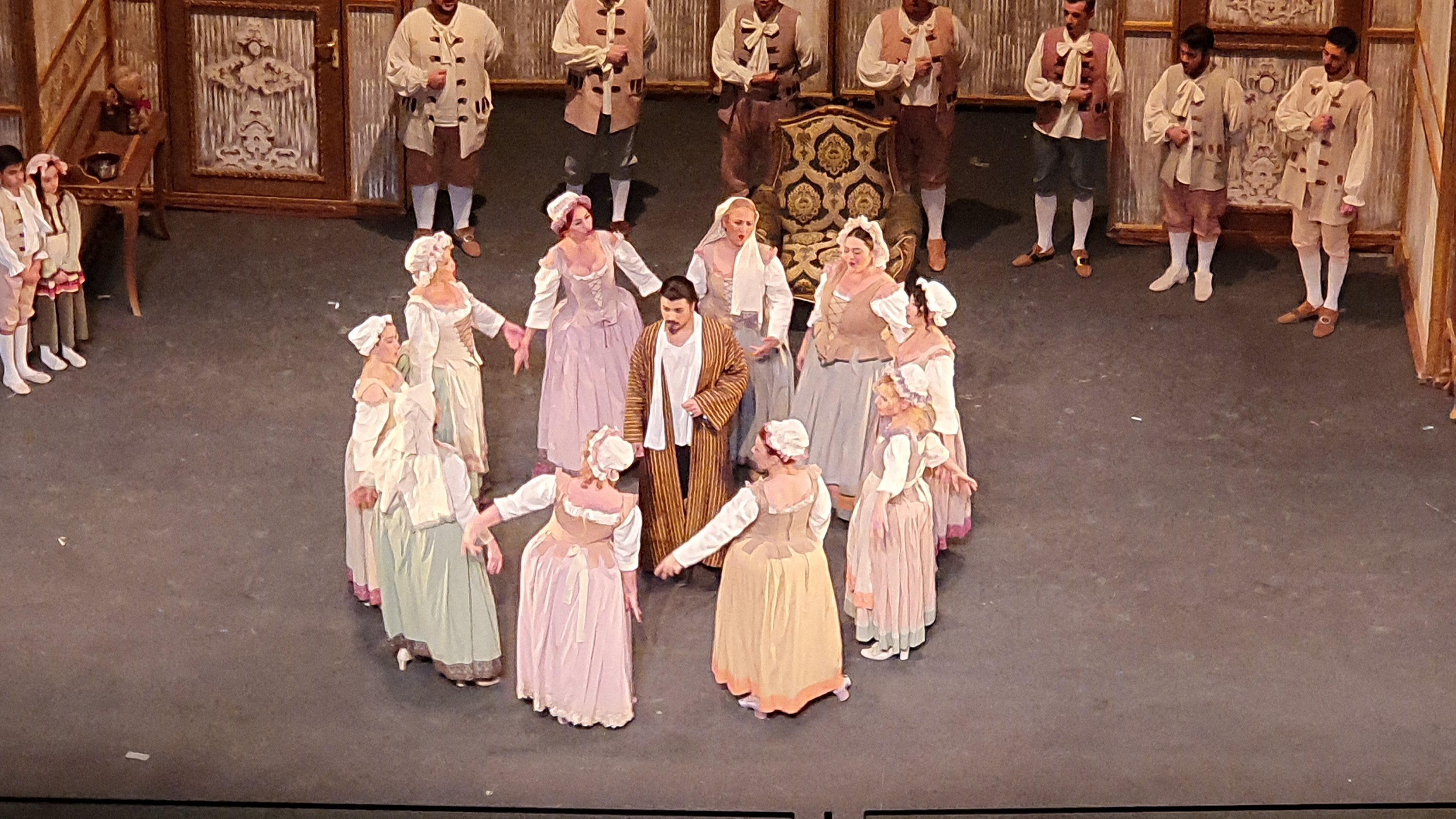
I was in Izmir to watch “The Marriage of Figaro,” the opera that I also explored in my novel “Soprano.” I followed Mozart’s work closely – a piece that flows from beginning to end, allows its characters to speak through music and conceals social tensions within comedy. Yet I watched with disappointment as what unfolded on stage became a chain of mistakes that turned the evening into something resembling a comedy within the art itself: the long-standing weaknesses of Turkish opera in stage direction, irregularities in role casting and performers attempting to interpret Mozart without fully grasping his style.
The stage itself appeared dusty, with piles of paper and trash visible to the audience. Creating art in such an environment must also be difficult for the performers. At this point, I would also like to draw the attention of the opera’s director to this issue. It seems the Izmir director may not even be aware of these problems. Since the period in which ballet dancers and instrumentalists began to be appointed as directors of Turkish opera houses, the quality of productions has reached its lowest point. Because such administrators are unfamiliar with opera itself, the historical development of works and the criteria for casting roles, they cause more harm than benefit. Opera houses must first free themselves from dancer and instrumentalist administrators. In my view, these managers have overseen one of the worst periods in the history of opera.
The set design resembled something inspired by Scheherazade’s “One Thousand and One Nights,” There was neither the atmosphere of a castle nor the splendor of a count’s chamber. In scenes between master and servant, it was often unclear who was the master and who the servant. The director seemed to be presenting highlights of an opera one after another rather than constructing a coherent dramatic flow. Although the chorus demonstrated discipline in musical terms, they remained fixed in place on stage and could not truly become part of the action. If they had been given more room, they might have contributed to the layered structure of the work. In short, the problem here appeared to lie in insufficient direction.
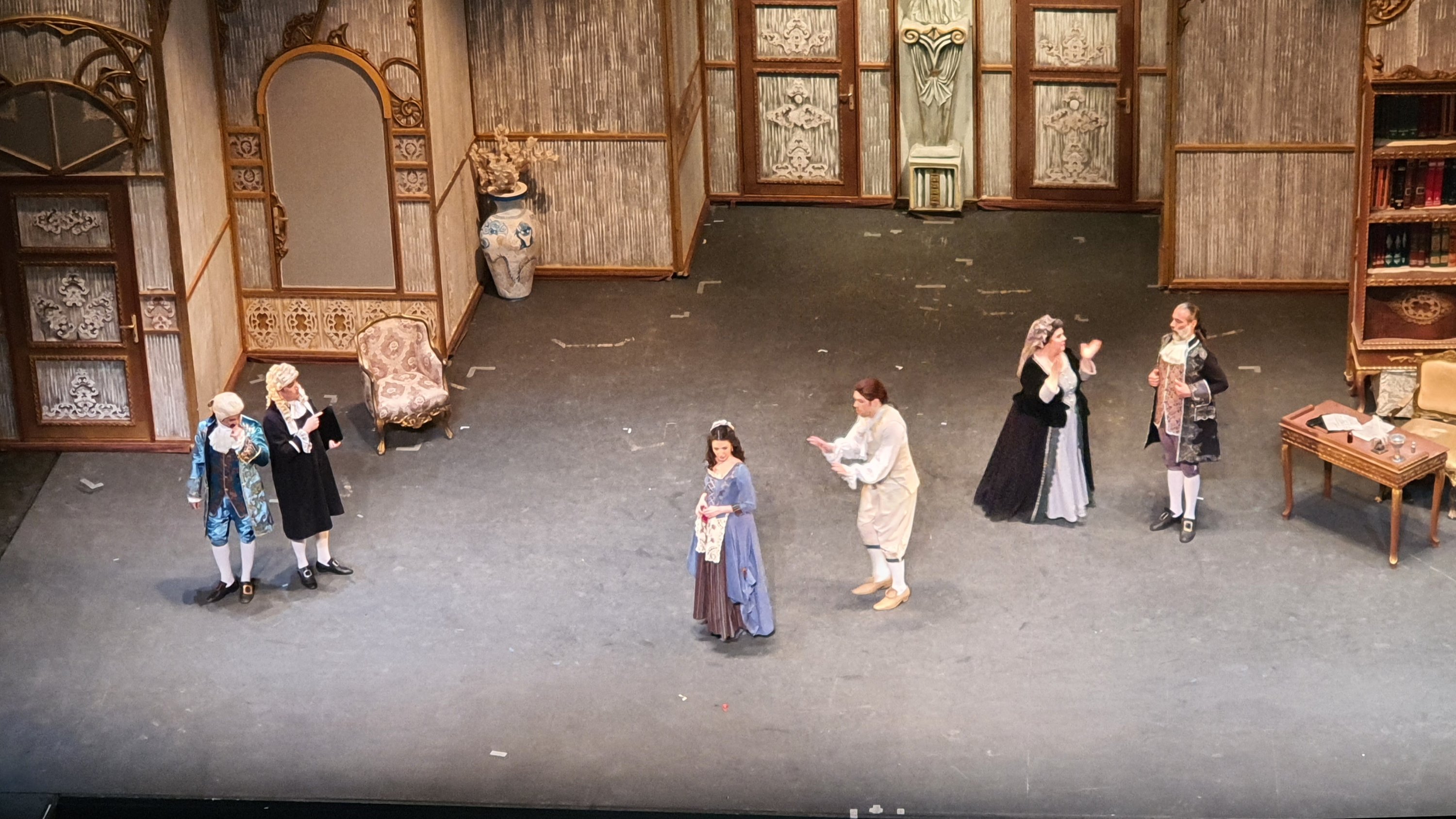
Turning to the performance itself, Ignas Melnikas delivered an inadequate interpretation of Figaro. He displayed the typical traits of an Eastern European singer whose voice begins to crack in the upper register and who relies heavily on chest and throat pressure. His acting also seemed aimed more at showcasing himself than embodying the role. His voice remained too lyrical for Figaro, and his lower register was barely audible within ensembles. In some phrases, the timbre became dull, and his portrayal lacked the character’s necessary complexity. As a result, Figaro – who should carry the dramatic momentum of the opera – almost disappeared from the stage. When performing alongside the Count and the Countess, he projected the confidence of someone who was himself the Count. Someone clearly needed to remind him that Figaro is, after all, the servant.
Ayşe Şenoğul, performing as Susanna, did not share strong stage chemistry with Figaro, yet her vocal line was more refined and flexible. She maintained good coordination with the orchestra. However, in ensemble passages where the tempo increased, she could not fully preserve the “silky” legato flow of her line. Although timing issues emerged in her duets with Figaro, she managed to recover quickly and make up for some of his shortcomings. Still, in her scenes with the Countess, she portrayed the character with the air of the lady of the house rather than a servant, which did not go unnoticed. This disrupted the natural balance of the drama. Nevertheless, she remained one of the stronger performers of the evening.
Görkem Ibrahim Özcan attracted attention in the role of the Count with his command of both voice and technique. His balanced use of chest resonance effectively conveyed the character’s authority and aristocratic presence. However, the upper notes sometimes sounded tenor-like, which diminished the character’s authority. His acting was more static than his vocal performance, and I believe he should work on this aspect. Even so, he was among the more successful performers of the night.
Beril Er, as the Countess, sang in a manner that felt closer to Puccini than Mozart. As a result, she struggled to achieve the transparency and fluid transitions required by the Mozartian style and experienced difficulty in the upper register. In her acting, I would have expected a clearer emphasis on who holds authority over Susanna.
Başak Karataş stood out in the role of Cherubino. With her youthful, bright voice, she delivered the energy the role requires. She balanced voice, technique and acting effectively. After the conductor, she appeared to be the performer with the strongest command of Mozartian style that evening.
Sabri Çapanoğlu presented a weak performance as Bartolo. Although he possesses a pleasant bass timbre, singing in an excessively dark and dull manner led to difficulties in the higher notes. He also shortened long notes, which made coordination with the orchestra difficult. At times he lost the tempo, forcing the conductor to struggle to keep him aligned with the ensemble.
Çiğdem Tezişçi, performing Marcellina, appeared overly restrained. While she displayed the experience of a seasoned stage performer, the wear in her voice was noticeable.
Murat Direk, despite having a pleasant tenor voice, struggled to make himself heard in the role of Basilio. In certain passages, resonance shifted too strongly toward the nasal register. While this occasionally reinforced the character’s sly nature, it reduced the voice’s projection. I would prefer to hear him in another role before reaching a final judgment.
Melisa Özdemir sang Barbarina well, yet her vocal approach was too broad for a Mozart role. This caused instability in the voice, particularly at the ends of phrases. Singing the role in such a wide and mature manner is not appropriate for Mozart and may also harm her vocal health. She possesses a beautiful voice and clear acting ability, but she needs to work more carefully on Mozartian style.
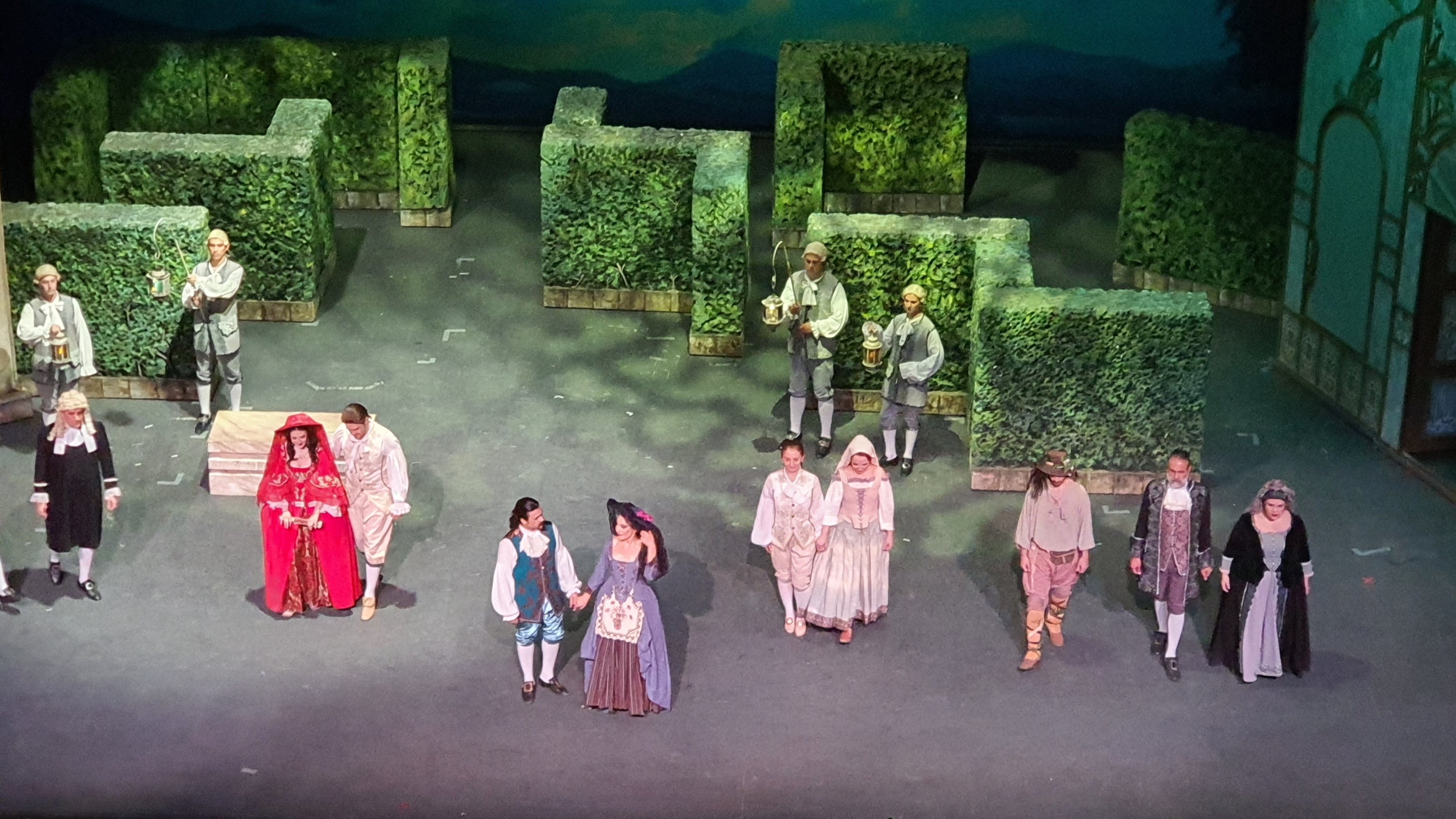
Christopher Gagliardo was highly successful in the role of Antonio. He conveyed the character’s coarse, rustic nature with a clear theatrical energy. His vocal technique also displayed the clarity and rhythmic discipline required by Mozart’s style. Although his stage time was brief, he fulfilled the crucial function assigned to him in Mozart’s ensemble writing. Listening to him, I could not help but think that he might have been a better choice for Figaro. His acting and vocal technique were among the highlights of the evening.
Fırat Halavut, in the role of Don Curzio, attempted to portray the character’s bureaucratic and slightly caricatured nature with a distinct theatrical approach. However, he struggled to project his voice to the audience.
Finally, I should return to the issue of the set design mentioned earlier. Some may defend it by arguing that there was no budget. It is true that many opera productions reuse costumes and sets from previous productions, cutting and adapting them for new stagings due to financial limitations.
However, when there are many artists in Türkiye capable of performing the role of Figaro comfortably, one must ask why Ignas Melnikas was invited from abroad. Meanwhile, in Ankara, although the Opera Company has five constant orchestra conductors ranging from young to senior, for the production “La Boheme” a guest conductor “Antonio Pirolli” is engaged. Isn’t it recklessly squandering the opera budget? The Ankara Opera administration should publicly explain why and what kind of contract is made and how much money has been spent. As if this was not enough, a retired opera member has also been hired as stage director with additional payment. While artists are forced to share costumes because of lack of funding, spending public money in such a way cannot be considered a legitimate artistic decision by the Ankara Opera administration. Will the opera also pay for the six weeks of hotel accommodation in Ankara for Murat Göksu, the retired singer brought in as director? Are there truly no directors left within the opera or theater institutions in Ankara capable of staging this work? What we are witnessing is an approach that spends public money recklessly.