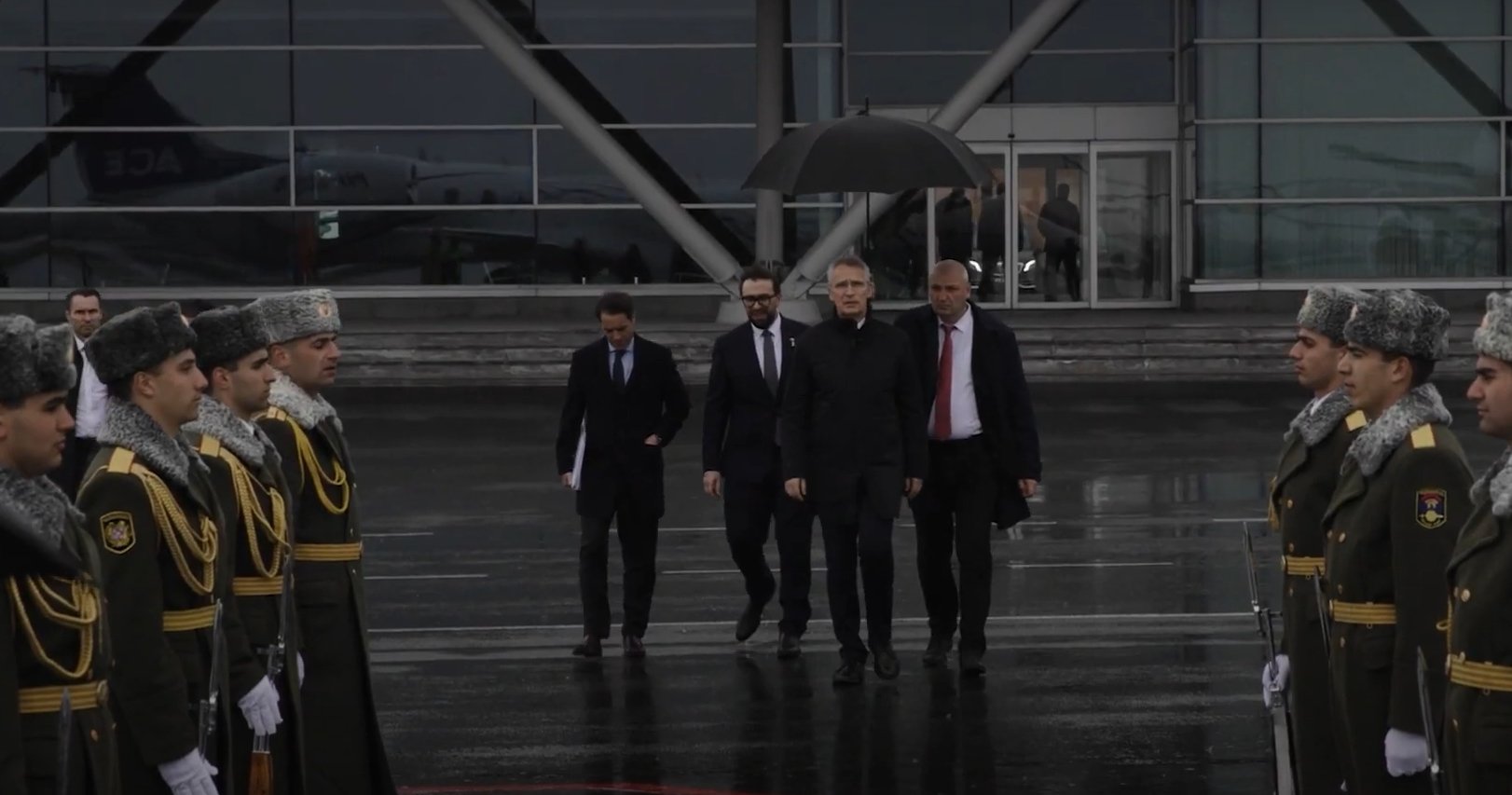
"Facing War," a 2025 documentary about Jens Stoltenberg’s term as Secretary General of NATO was screened as part of the "Dealing with the Past" section of the Sarajevo Film Festival. The "past" that the documentary deals with must be that of NATO, as the documentary starts with footage from a film that talks about the foundation of the organization – a very telling scene of the cleaners hoovering the floor. The surprise, or rather added value of the documentary is that while it sets out to tell the story of Stoltenberg, NATO and Ukraine’s efforts to join the union, it also provides a quite intimate portrait of President Recep Tayyip Erdoğan as he socializes, negotiates and jokes with world leaders.
We first enter Stoltenberg’s office as his team are prepping for a press conference before he makes his way to the White House, to inevitably accept President Biden’s request to extend his term. The staff ask him insistent questions and, like a true diplomat, Stoltenberg gives the same answer that is not an answer over and over again. We see him prep his declarations on the Russian war in Ukraine. Stoltenberg comes across as a true friend of Zelenskyy, however, back in the office, his speeches get edited to be more and more and noncommittal when it comes to NATO support.
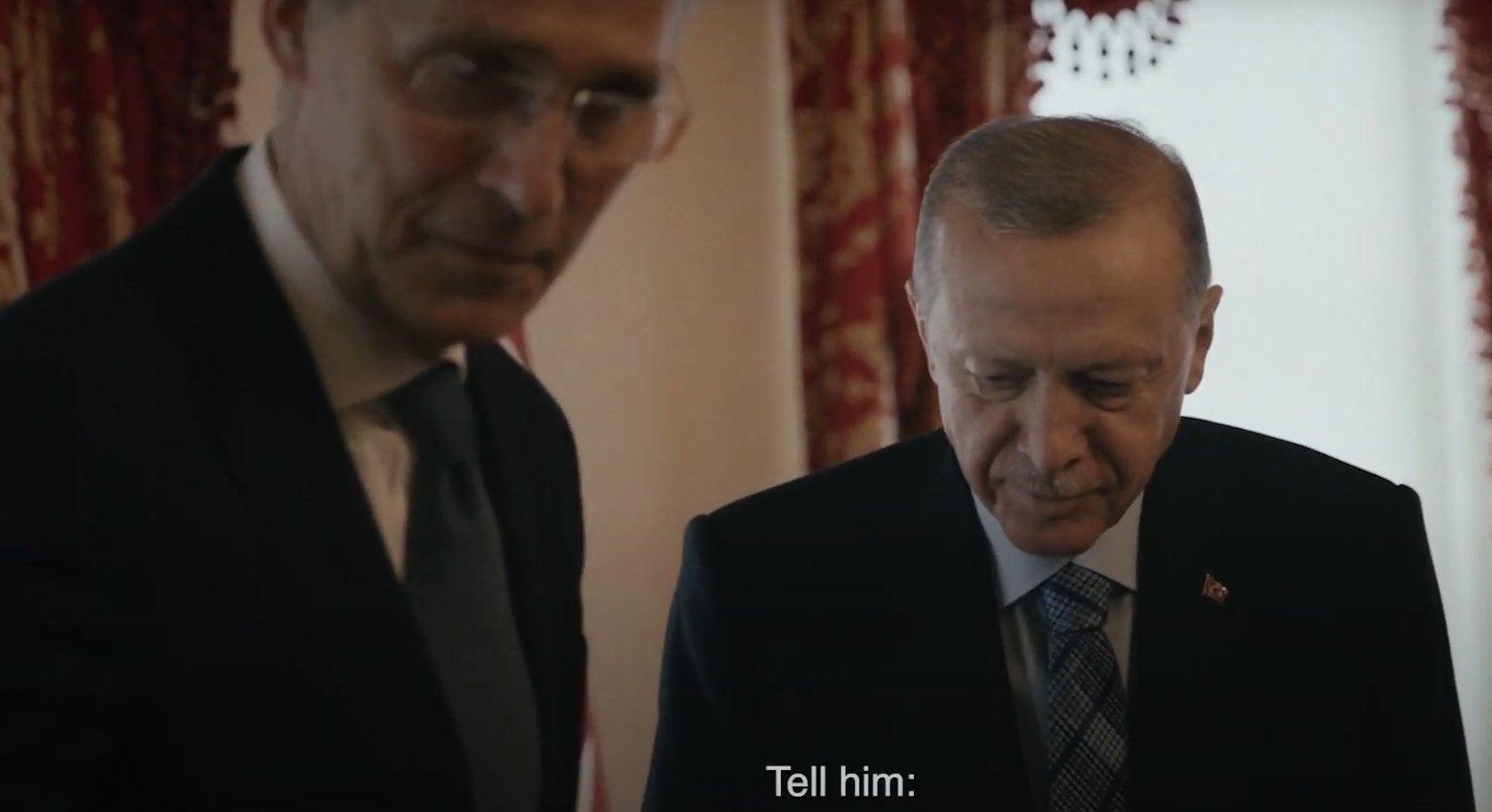
Russia’s aggression toward Ukraine naturally led Nordic states to think about joining NATO and this is where the action of the documentary speeds up. Stoltenberg welcomes this Nordic shift, being from a Nordic country that is actually part of NATO. However, this match made in heaven has one retractor: Recep Tayyip Erdoğan. When Türkiye puts some conditions on Sweden joining NATO, Stoltenberg, the veteran politician that he is, is not surprised at all. For Sweden’s entry to happen, the country needs to recognize the PKK as a terrorist organization. There are action-packed shots of leaders walking the corridors, huddling together in groups, leaning into one another’s ears – and often with Erdoğan in the shot as the man whose demands must be met. And when he is in the shot, inevitably, his hijabi translator is also in the shot, looking like the good angel at the president’s side. I found myself thinking, now wouldn’t a documentary about her life, the conversations she has witnessed, be something to watch.
As a documentary that is often shot at close range, the angles are everything. When we see Zelenskyy sitting next to Erdoğan, the country tag in front of him seems to be Türkiye rather than Ukraine. And of course, body language is a crucial element in diplomacy. Stoltenberg is described, maybe unexpectedly for a Scandinavian politician, as being quite tactile, and there’s a very funny sequence where we see him with Macron, the two politicians basically manhandling each other, trying to out "warm blood" the other. The real success of the film is naturally not a rehashing of the official speeches but catching the endnotes of the chats politicians have at the beginning and end of the sessions, Erdoğan finishing all his conversations with the world’s leaders with "My wife is inviting your wife to come visit her."
As a man of his word, Stoltenberg goes to Kyiv, looks visibly moved at a memorial for fallen soldiers and makes Zelenskyy understand that NATO would do much more if things were up to him. The most realpolitik moment of the documentary comes as the train leaves Kyiv with NATO officials assessing the situation in Ukraine. Stoltenberg is at the table with three more men – and they are all Americans, reflecting the power "balance" in the world. If there are four votes for anything, three belong to the U.S., and the one "independent" one will be a white man from another nation. The men being American, however, doesn’t stop them from making an interesting observation. When in the NATO assessment meeting, Stoltenberg tries to talk up Zelenskyy’s position as solid and strong, the American counter him by saying Zelenskyy’s position looked weak, as his demands seemed more and more random. Lesson to all politicians here – never change tactic, keep repeating the same demands to look "strong."
The other wild card in the NATO alliance is Orban, who doesn’t put conditions on new members entering but on how its contribution to NATO will be spent. We see Stoltenberg go to Orban’s castle – presidential home, naturally – and listen to the great tradition of Hungarian warfare. The scene feels almost like something from a Bram Stoker novel, the unsuspecting Western European trapped in the tales of an Eastern European count.
Despite all the politicking we witness outside and behind closed doors, Stoltenberg never comes across as a wily politician, and the documentary manages to present him as a force for good, cementing this approach by stories from his family home where his dad Thorvald Stoltenberg, the then Minister of Defense hosted Nelson Mandela, and him, as Norway’s Prime Minister standing with his people after the 2011 Utoya terror attack. Running through the documentary is his wish to leave his job at NATO to spend more time with his wife, with whom he has been together since their school days.
By the end of the film, it is impossible not to warm to him: Stoltenberg comes across as an honest man who is doing a difficult job at a difficult time. One does, of course, wonder if one’s skepticism has somehow been lulled by good filmmaking. The documentary is testimony to the fact that politicians often gain by letting journalists enter their own spaces of decision-making, hold the reins closely by themselves and make what they let show feel significant, while no doubt keeping the real machinations of politics to themselves.