"Bridgerton" returns with something it has always done best: visual storytelling wrapped in social tension. The first part of the Netflix drama’s fourth season premiered on Thursday, Jan. 29 and rather than relying on surprise, it draws viewers back into a carefully painted world where romance, class and quiet rebellion move side by side.
The season opens in the tranquil Bridgerton house. Lady Violet (Ruth Gemmell) prepares for the return of her daughters Francesca (Hannah Dodd) and Eloise Bridgerton (Claudia Jessie) from Scotland. As always, the house feels peaceful, almost untouched by the social storms outside its doors.
As viewers, we have long known that Penelope (Nicola Coughlan) is Lady Whistledown. We watch her with that awareness. Now, however, everyone else knows too. Her uneasy truce with Queen Charlotte, the caution she must exercise and the social pressure surrounding her weaken the powerful Lady Whistledown image we once held. Penelope can no longer write freely. And that restraint does not sit comfortably with her character. In the coming episodes, this limitation may well push her toward small acts of rebellion.
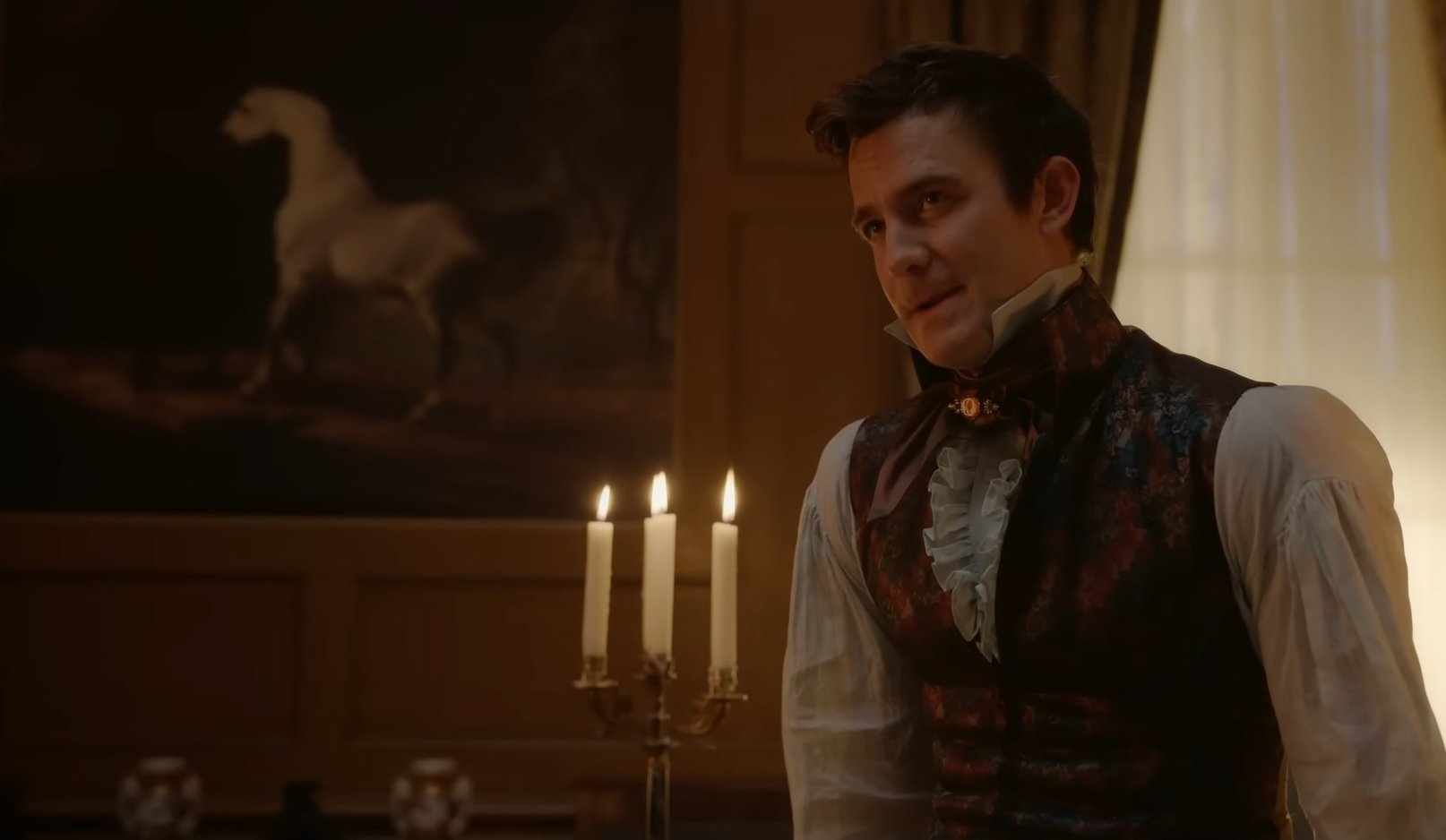
This season’s central figure among the "Bridgerton" siblings is Benedict (Luke Thompson). For three seasons, he has lived freely, exactly as he pleases, with no intention of falling in love, let alone marrying. Known for his artistic spirit, Benedict is finally given a romantic arc this season through one of the oldest narrative formulas in storytelling: a Cinderella tale.
The new character, Sophie Baek (Yerin Ha), is the illegitimate daughter of a powerful man. After her mother dies, her father marries a woman who has two daughters. As expected in such stories, the stepmother is cruel and reduces Sophie to a servant within her own home.
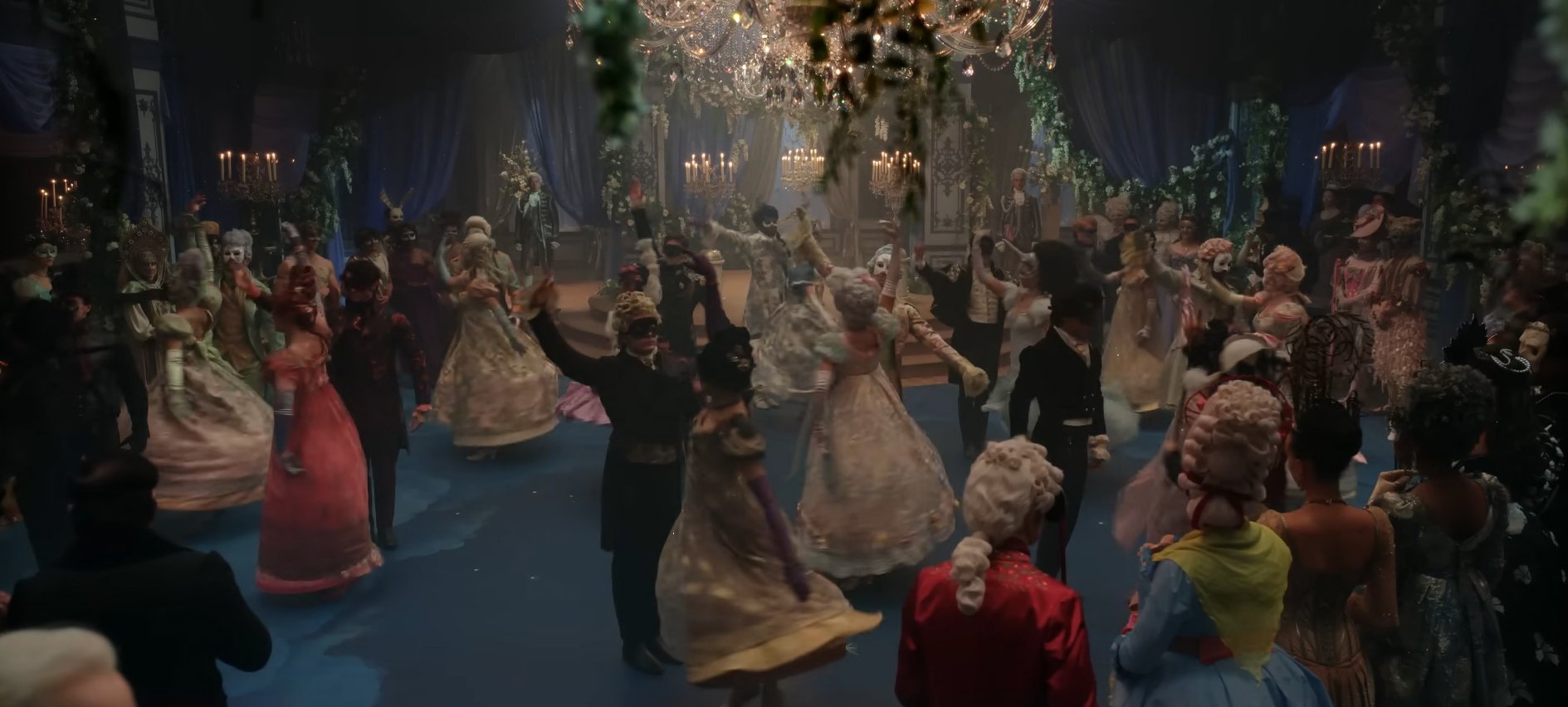
The season begins with a grand masquerade ball at Bridgerton House. Benedict, persuaded by his mother to attend, immediately becomes the focus of every eligible young woman, not only because of his looks, but because of his family name.
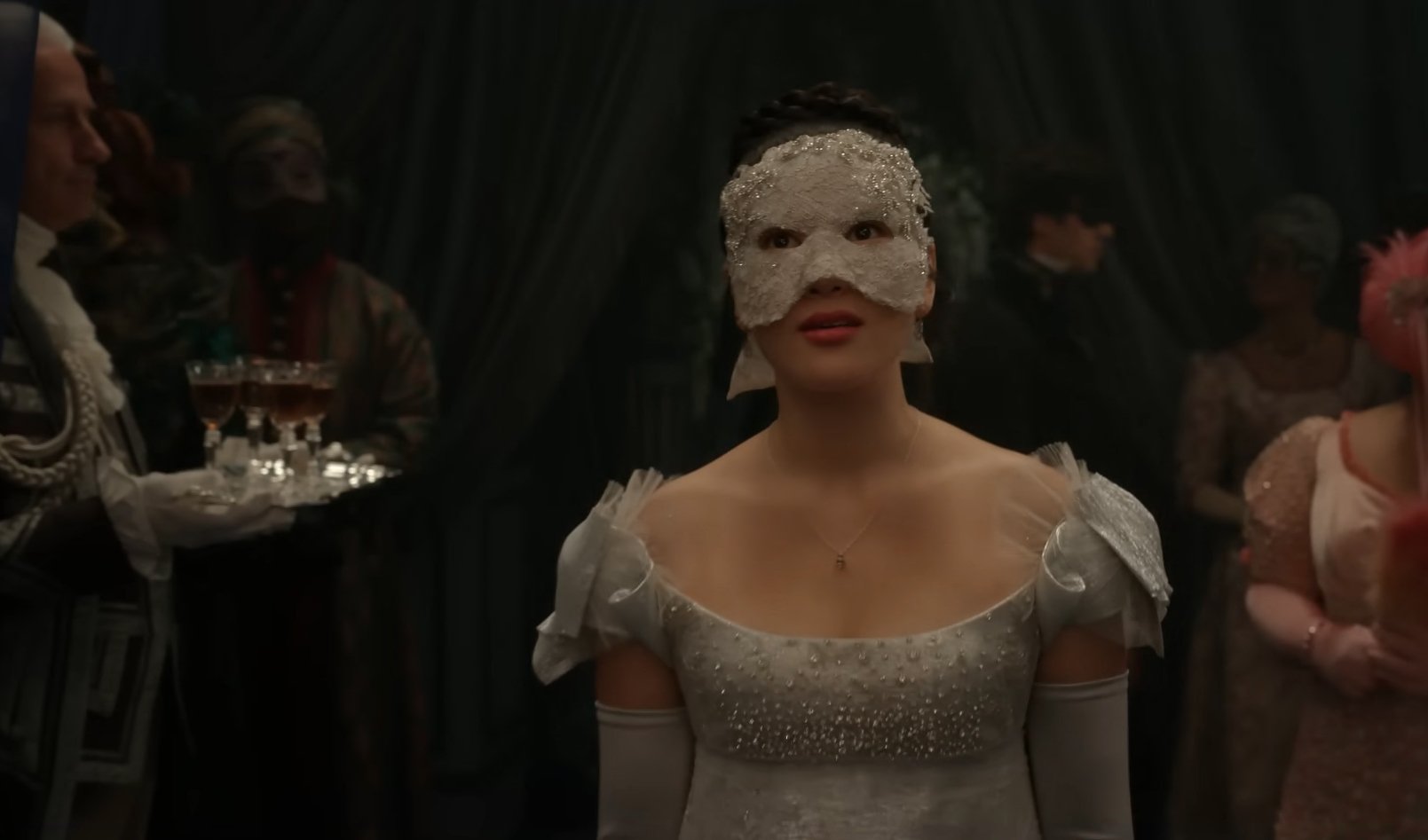
Sophie, who has dreamed for years of attending such a ball, sees the anonymity of the masks as her only opportunity. Certain that no one will recognize her, she slips into the event. At first sight, she catches Benedict’s attention. He asks her to dance and the first spark of romance quietly ignites.
But as in the Cinderella tale, Sophie must leave before midnight, when the masks will come off. Just as Cinderella leaves her slipper behind, Sophie leaves one of her gloves in Benedict’s possession. And thus begins Benedict’s search for the mysterious woman.
On paper, the story sounds simple. Yet the viewing experience carries surprising depth, especially in its dialogue. The servants at Penwood House encouraging Sophie to attend the ball create an immediate bond between her and the audience. The way she watches what others see as ordinary immediately draws the viewer closer to her.
During the dance scene, Sophie’s silver-gray gown makes her appear almost fairy-like, while Benedict’s entirely black attire creates a striking contrast, framing Sophie as light and Benedict as shadow.
It is also in this moment that we see Benedict open himself up to someone for the first time. “Sometimes it is easier to stay in shallow water. Warmer. More pleasant.” Though Benedict often presents himself as indifferent and slightly detached from society, Sophie’s words clearly affect him and begin to shift his thinking.
One reason Bridgerton remains beloved is its ability to enchant those who love period dramas. The lakeside walks, the gowns, the jewelry and the social rituals of eligible young ladies all heighten the visual pleasure of watching.
Color, as always in "Bridgerton," is used with great intention. Lady Violet’s frequent use of blue reflects her maternal softness. Sophie’s stepmother, Lady Araminta Gun (Katie Leung), dressed consistently in black, embodies her darker nature. In the previous season, Penelope’s transformation was mirrored in her wardrobe, shifting from yellows and oranges to confident greens as she found her self-assurance.
Lady Violet, however, is given a different arc this season. For years, she defended social norms while remaining gentle and romantic. Yet instead of confiding in her family first about her relationship with Lord Marcus, we see Violet choosing her own path and surrendering fully to her emotions.
This season also allows us, for the first time, to step slightly into the lives of the servants, largely thanks to Sophie. With household staff becoming harder to find, noble families try various ways to hold on to those who have served them for years. Unsurprisingly, the most understanding and compassionate of these families is the Bridgerton household.

Meanwhile, Portia Featherington (Polly Walker), driven as always by her obsession with money, risks losing the long-serving Varley (Lorraine Ashbourne). A scene between Portia, her daughter Philippa (Harriet Cains) and Varley strikingly echoes conversations that still happen today, even in large corporations. Portia insists, “You are part of our family,” while subtly trying to avoid paying Varley what she truly deserves; an all too familiar employer-employee dynamic.
She goes on to say that she cannot afford to give Varley a raise because it would require raising the wages of all her staff. Instead, to show how much she values her, she presents her with a “gift”: her own old dresses.
And in that moment, Bridgerton stops being a period drama and becomes painfully contemporary.
The final scene of the first part of season four has been widely discussed: “Be my mistress.” Within the realities of 19th-century England, Benedict’s proposal is not as shocking as it sounds. Benedict is a Bridgerton, a nobleman. For someone of his class to marry a servant would have been nearly impossible, carrying the risk of social exile not only for him but for the entire family.
This is precisely why Sophie is written as the daughter of a nobleman. Without that background, marriage would be almost unthinkable.
One of the major questions left for Part 2 is whether Benedict will find the courage to propose marriage to Sophie before learning her true identity.
In the end, even if the first part of Bridgerton’s fourth season feels predictable in places, the charm of the series has never been about plot twists. It rests in the costumes, the grandeur, the glimpse into 19th-century high society, the cinematography and the simple pleasure of a grand romantic story.