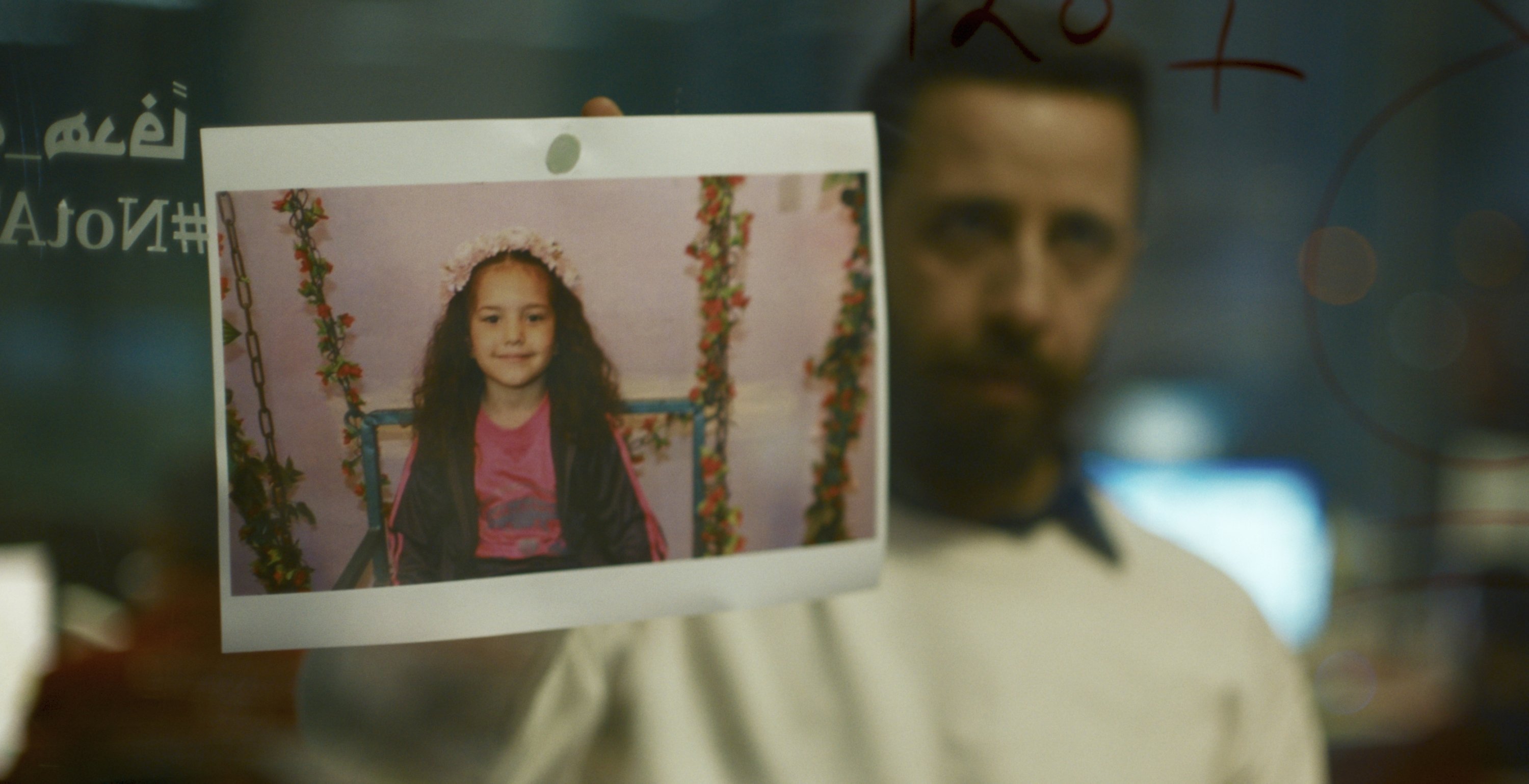
Like any cinema lover, I have been following the fortunes of Kaouther Ben Hania’s film "The Voice of Hind Rajab" since it premiered in Venice in September. I watched Ben Hania’s "Four Daughters" in 2023 and was impressed by her ability to mix documentary and feature film in a way that makes one question the border between reality and representation. I assumed she had done a similar job with "The Voice of Hind Rajab," but of course, everyone was interested in the emotional content of the film and I just couldn’t bring myself to watch it.
I had my first opportunity at the London Film Festival, where, looking for the theater where the film I had tickets for was showing, I almost stumbled into the one where it was showing. Standing at the entrance, I could see the screen through the glass frames on the door. I took a photo to remind myself how close I could let myself get to the film and left, and only recently checked to see that it was the moment of the coup de theater at the very end. A second opportunity presented itself at the Istanbul Boğaziçi Film Festival, and more friends were telling me I could handle it, that I should see it. The posters were all over social media and the set of the Red Crescent help line office in Ramallah, where they tried to help Hind Rajab, was now a familiar sight to me.
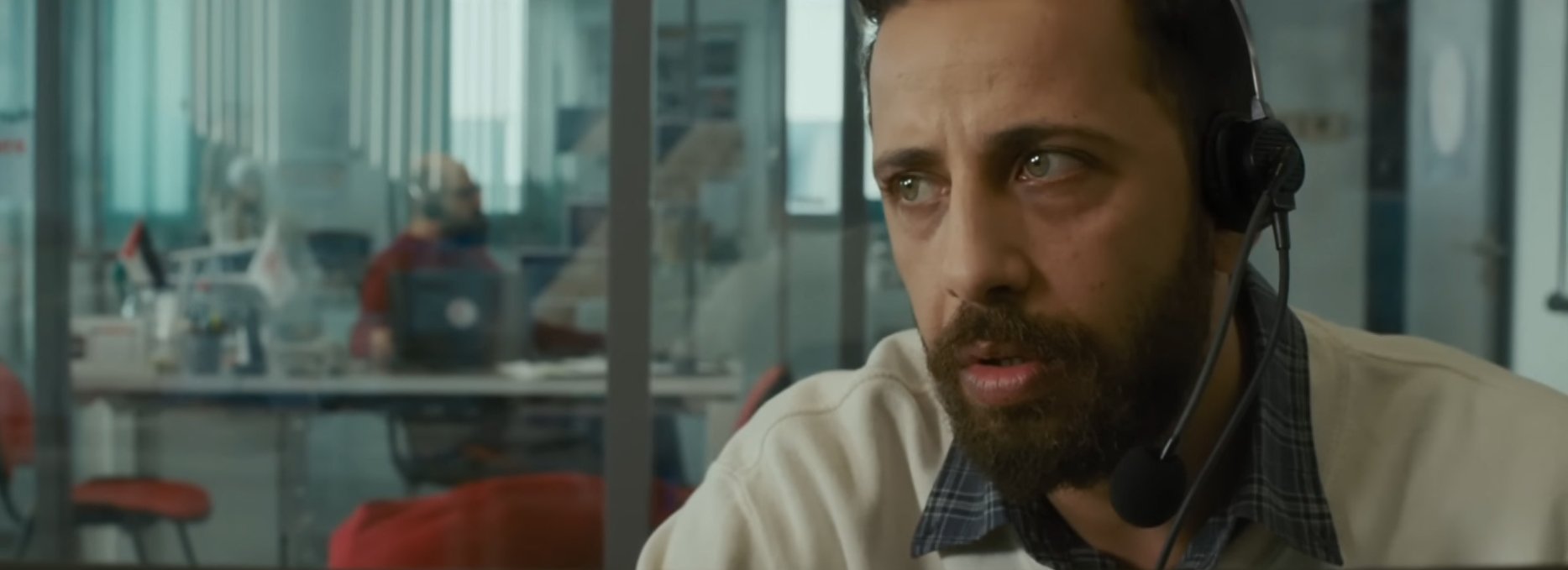
What finally decided me was sitting across from the Red Crescent workers who spoke to Rajab, holding a conference at the Doha Film Festival, and one of them saying, "It’s not just that they murder children, but they also make people who try to help feel useless." This brought home how the film was not only about Hind, but also the two health workers, Yusuf al-Zeino and Ahmed al-Madhoun, who lost their lives trying to save her. In fact, this is the driving theme of the plot: while Omar asks to override the U.N. and the Israeli army to send an ambulance, which is only eight minutes away to the location where Hind Rajab is, Mahdi points to the poster of the medics Israel has killed already and says no.
I watched the film on a small screen at the Doha Film Festival press office after the briefing and the harsh truth spoken by one of the Red Crescent workers echoed in my head, "Hind was one of the lucky ones: someone spoke to her in her last moments." When the call center manages to have phone contact with Hind – they use the real recordings of her voice in the film - we see the digital representation of Hind’s voice: a line of dots that make peaks as Hind speaks. One thinks immediately of medical screens showing heart rate. There is a lot of eerie static and distortion and it feels like Hind is already speaking from another world. The very first words we see on the screen convince me this film needed to be made. "Hello uncle. Stay with me!" If Hind is telling us to stay, where are we to go?
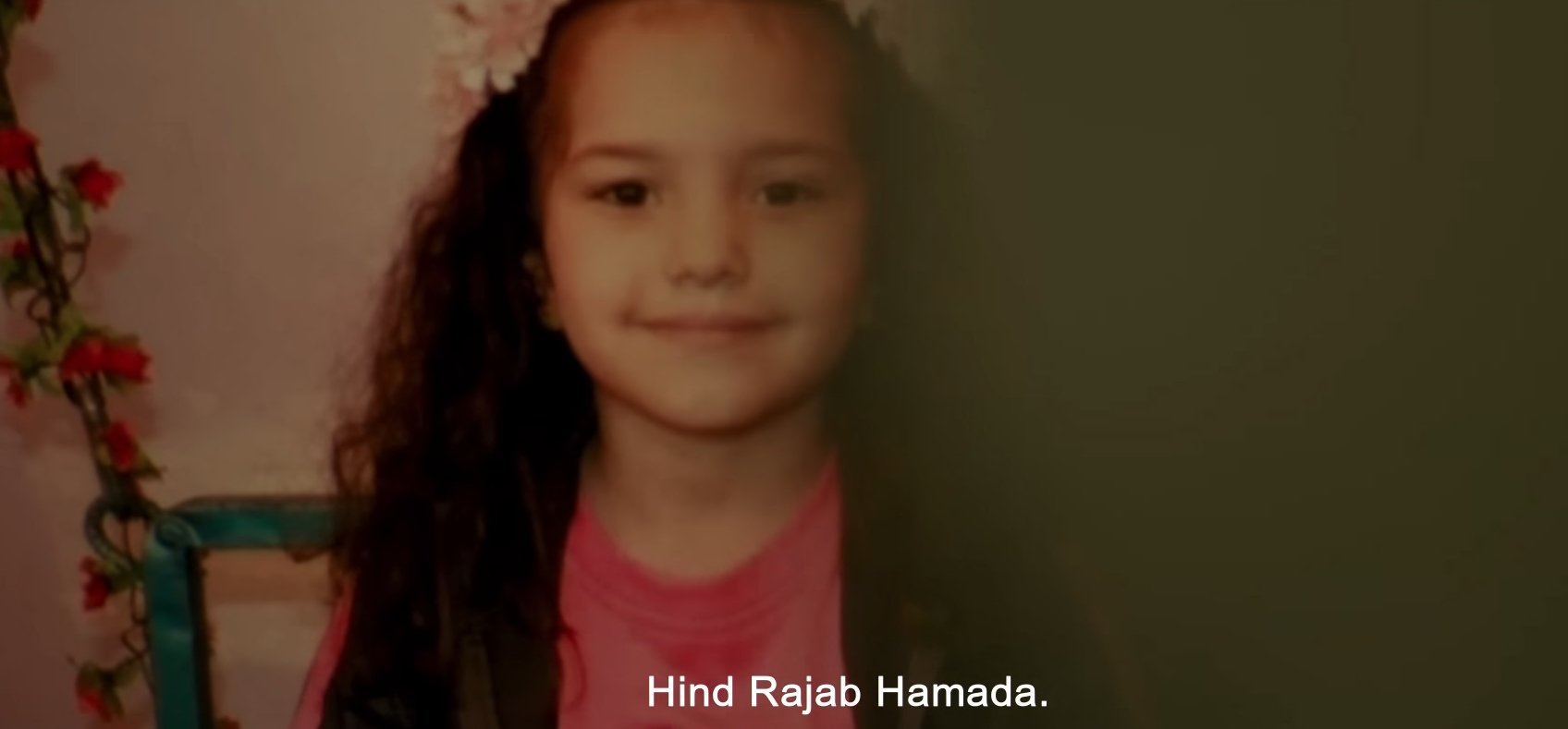
The Red Crescent call center staff take turns speaking to her, and throughout the film, you hear all the words of endearment in the Arabic language. It is at first difficult to tell what has happened to her, as she seems to be saying she is alone and with her family at the same time. And after the staff keep asking her questions, she says her aunt and cousins are sleeping. While the staff want to keep this illusion going, after a while, Hind tells them that they are dead.
I can’t quite recall now how early in the film Ben Hania does this but she starts overlaying the staff’s real voices with the actors’ faces. That is, we see the actor’s face, but a sign appears on the film screen citing a voice file number. Ben Hania takes this even a step further and sometimes overlaps the voice of the real staff with the voice of the actor. At one point, we hear the aid worker Rana say a sentence and the actress playing her, Saja Kilani, repeat it in her own voice. The almost organic bond between the actors and the health workers are felt in the press briefing, as they are all sitting on the platform together. When asked how it felt to be portraying these heroes, the actors unanimously say that it was the greatest honour of their lives.
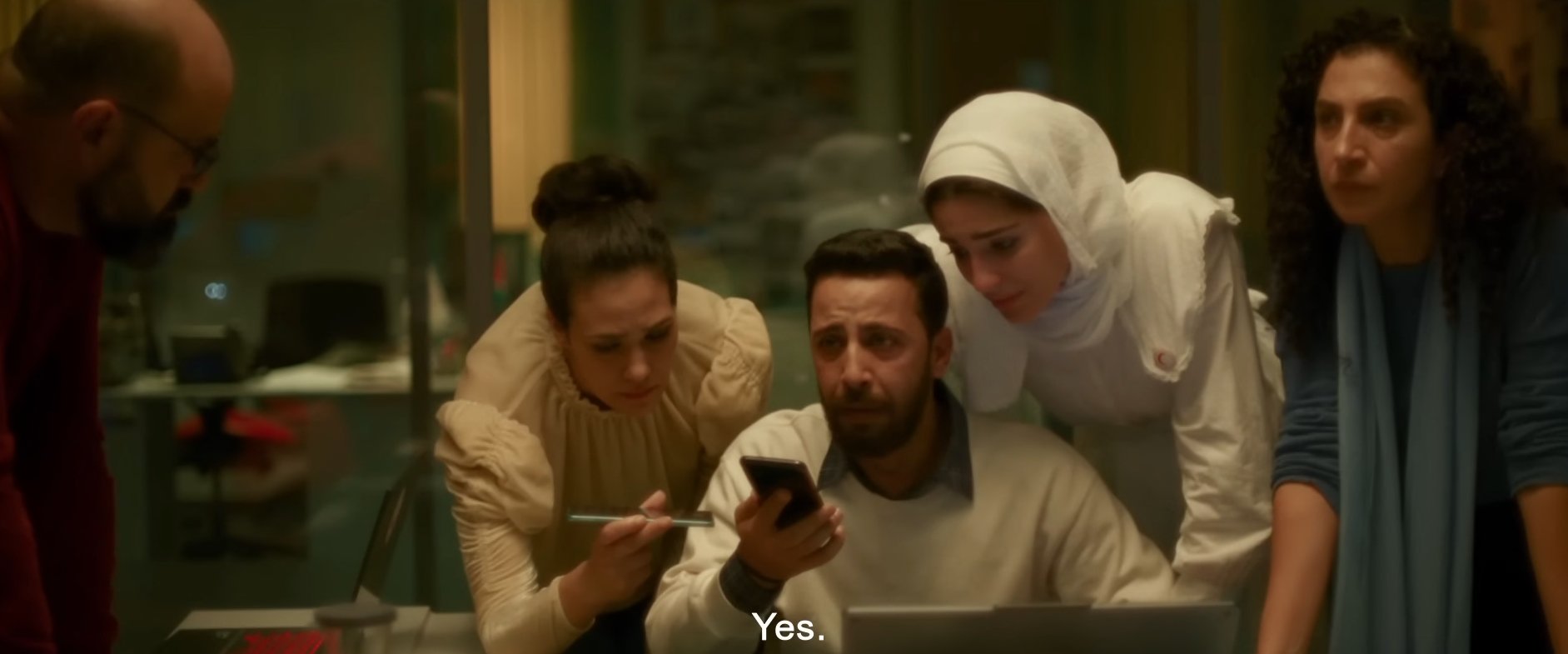
When Omar has a meltdown telling Mahdi to send the ambulance, Mahdi explains the long chain of command that will make it finally safe for the ambulance to go get Hind. When Mahdi finally gets the green light, we see them in their Ramallah office watching the icon of the ambulance go through the street map of Gaza on a big screen. But of course, as we all know, there are no streets left in Gaza and some 4-5 minutes away from Hind, the ambulance has to stop, take a detour. It all sounds like the script of a film, a detail to heighten the tension, but we, the viewers, know this is real. And after all the fights, and back and forth with "the authorities," the ambulance workers are murdered anyway. When Mahdi decides to upload the files on social media – why should they be alone in shouldering the burden of this massacre – my heart skips a beat because I feel now the camera has turned to me. I was one of the people following what was happening to Hind live, online.
When all hope is lost and the staff feel doubly helpless that they have lied to Hind about the ambulance being on the way, Ben Hania decides to give us a coup de theater, one more jolt, one more tearing of the fourth wall. We watch the actor Saja Kilani playing Nisreen speak to Hind in quiet desperation and we see her teammates filming her. However, the phone that they hold to her face is showing the face of Nisreen: Ben Hania has put the actual video recording of the call in the frame. How to respond "artistically" to an unfolding genocide, or whether art has any place at all, are questions that will never be resolved. However, Ben Hania’s film serves to remind us that we were witnesses, and this murder, along with that of tens of thousands of Gazans, has happened, is happening, on our watch.