In her groundbreaking manifesto "Solidarity with French Women!" Houria Bouteldja asks the following question: "Why should you, white women, have the privilege of solidarity? You are also subject to men’s violence, you are also underpaid, despised, your bodies are also instrumentalized." More than anything else, May el-Toukhy’s "Woman Unknown" works as an instance of this solidarity: a visibly Egyptian-Danish woman director making a film about the history of crimes against women in Denmark.
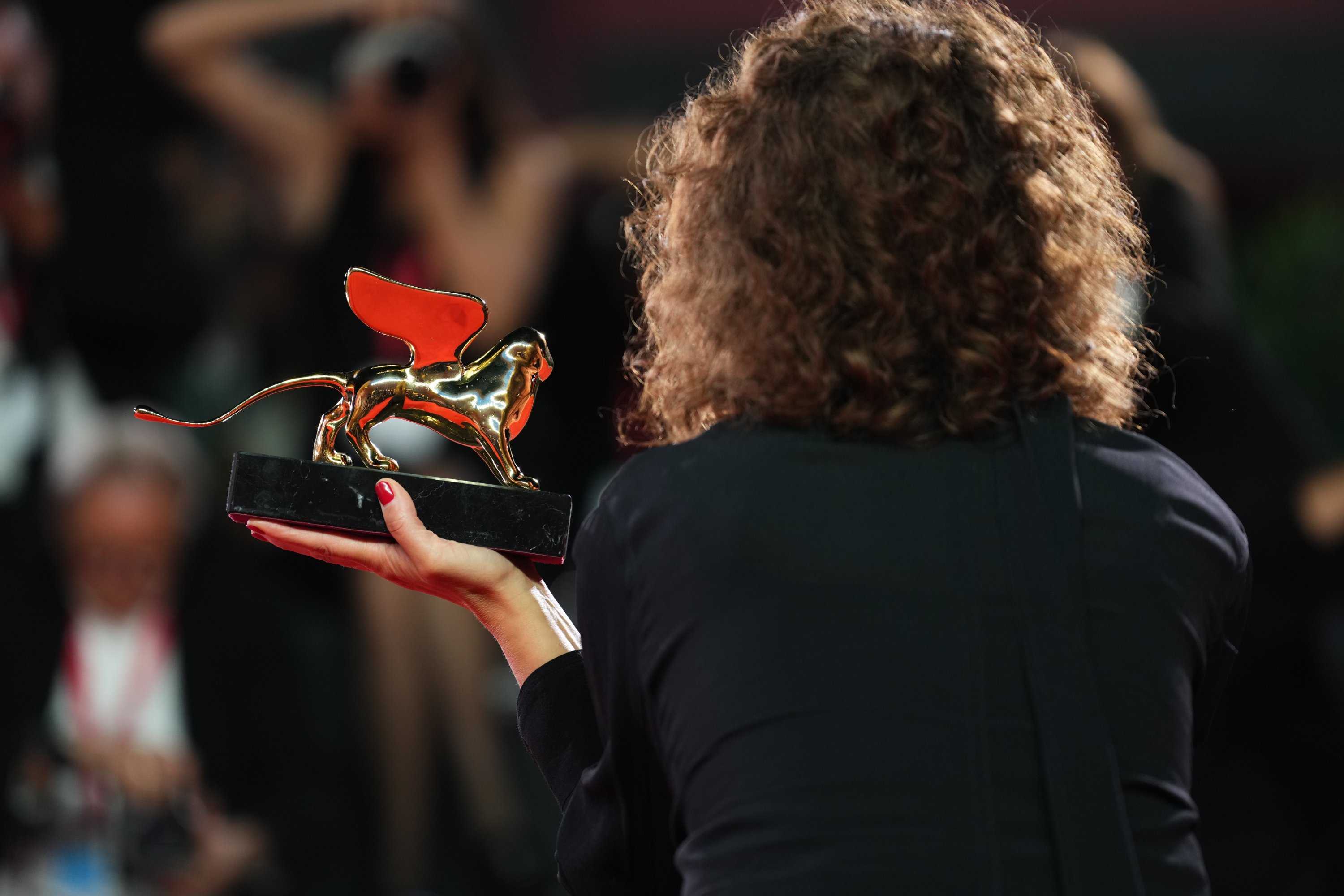
El-Toukhy’s Golden Lion-winning "Woman Unknown" tells the story of Marie, who is a housemaid in a Denmark recently liberated from the Nazis. El-Toukhy organizes the action so that the viewer is at first not quite sure about Marie’s role in the household. We see her get out of her master’s bed early in the morning as he sleeps, wash herself and get ready for another day of chores. We soon understand that Marie is engaged to be married to her boss and think, why does he still make the woman he’s going to marry do all these menial tasks? This is, of course, el-Toukhy asking the still-pertinent question of with what mental gymnastics do men leave all the energy-sucking tasks to their wives as they go about their daily lives?
We see Danes singing and celebrating their newly found sovereignty in the street. Again el-Toukhy orchestrates it so that what the viewer sees is drunk blond men wrapped in red flags. Not a very reassuring sight. The uncanny resemblance to the German oppressors the Danes have just thrown off becomes even more heightened in the scenes where Danish women are ritually humiliated. The phenomenon of women who were suspected of having slept with Germans during World War II being detained by mobs and having their hair cut off has been depicted in cinema several times, most notably in "Hiroshima Mon Amour." With "Woman Unknown," el-Toukhy adds to this archive of representation of crimes against women in Europe.
So this is the cultural moment in which our heroine Marie is hoping to better her lot, to marry her rich employer – a time when women’s reputation can, as throughout history, be tarnished very quickly and they can be judged and punished by an angry mob. It is, then, best to keep a low profile, as we see Marie do at the beginning. Apart from moving up the class ladder, she doesn’t expect much from her marriage. To the extent that she doesn’t have any objections to her employer’s plans to make her wear his clearly much-loved deceased wife’s wedding dress.
El-Toukhy’s use of the muted, matted tones of the wood-paneled house works as a reminder of all that is absorbed within the household, without any of the inner workings being made apparent outside. However, the outside does manage to come in when Marie meets a young man from her earlier youth, and he seems to have information that might lead to Marie facing the same ritual humiliation she has seen other women face.
When the blond, victory-happy Danish youths paint a swastika on their building’s door, neither Marie nor the audience know whether it is her own or her employer’s past (the "nationalists" have recently arrested a supposed Nazi sympathizer in his factory) that has led the "youth" to do this. It could, easily, of course, be random – for if you give young men barely out of their teens such power, what could stop them from random acts of accusation and execution?
The film shows us that the practice of telling the German authorities the whereabouts of "undesirables" has now turned into telling the Danish authorities of the newly designated undesirables – mostly women. This can easily be read as a not very oblique commentary on how Scandinavians have carried on this habit of "telling on your neighbor" and "citizen’s arrest," naturally in our own times for very enlightened causes (See "Fjord"). As Marie’s initial demeanor tells us, it is very easy for women, as it always has been, to fall into this category of the "undesirable."
One such woman is the neighbor who has a child with no father around and who seems to be wearing trousers all the time. When events conspire in a way to point the finger at her, Marie tries, belatedly, to come to her defense and asks her employer/fiance in a rare moment of defiance: "But you also sold your gloves to the Germans," to which her employer looks with the sort of disdain that women recognize at first sight. You, as a woman, what do you know of economic necessity and how we needed to keep the industry going? I also read this as a commentary on the Boycott Divest Sanction movement, with "well-meaning" industry people making fun of these efforts as not understanding how the economy works. Men can keep working with the enemy and make a fortune through war for "financial necessity" while women will have their clothes torn in the street for having been intimate with de facto rulers during occupation. Women will always serve as the offering the liberated country will give to the gods for its past crimes.
While all these politics rumble in the background, el-Toukhy’s triumph is in how she makes us feel for Marie by showing the exposure women’s bodies go through. She is made to sit on a gynecologist’s chair; she sees women being stripped and their hair cut on the street; she is made to offer her body to her boss and then to her childhood friend' she then, in the final scene, has to stand stripped, so that her fiance’s ex-wife’s wedding dress may be tried and altered on her. Never seen for who she is, always a stand-in for something else, Marie’s body answers to el-Toukhy’s title "Woman Unknown," a surface onto which others inscribe their desires and crimes.