Daily Sabah logo

Politics
Diplomacy Legislation War On Terror EU Affairs Elections News Analysis
TÜRKİYE
Istanbul Education Investigations Minorities Expat Corner Diaspora
World
Mid-East Europe Americas Asia Pacific Africa Syrian Crisis Islamophobia
Business
Automotive Economy Energy Finance Tourism Tech Defense Transportation News Analysis
Lifestyle
Health Environment Travel Food Fashion Science Religion History Feature Expat Corner
Arts
Cinema Music Events Portrait Reviews Performing Arts
Sports
Football Basketball Motorsports Tennis
Opinion
Columns Op-Ed Reader's Corner Editorial
PHOTO GALLERY
JOBS ABOUT US RSS PRIVACY CONTACT US
© Turkuvaz Haberleşme ve Yayıncılık 2025

Daily Sabah - Latest & Breaking News from Turkey | Istanbul

  • Politics
    • Diplomacy
    • Legislation
    • War On Terror
    • EU Affairs
    • Elections
    • News Analysis
  • TÜRKİYE
    • Istanbul
    • Education
    • Investigations
    • Minorities
    • Expat Corner
    • Diaspora
  • World
    • Mid-East
    • Europe
    • Americas
    • Asia Pacific
    • Africa
    • Syrian Crisis
    • Islamophobia
  • Business
    • Automotive
    • Economy
    • Energy
    • Finance
    • Tourism
    • Tech
    • Defense
    • Transportation
    • News Analysis
  • Lifestyle
    • Health
    • Environment
    • Travel
    • Food
    • Fashion
    • Science
    • Religion
    • History
    • Feature
    • Expat Corner
  • Arts
    • Cinema
    • Music
    • Events
    • Portrait
    • Reviews
    • Performing Arts
  • Sports
    • Football
    • Basketball
    • Motorsports
    • Tennis
  • Gallery
  • Opinion
    • Columns
    • Op-Ed
    • Reader's Corner
    • Editorial
  • TV
  • Arts
  • Cinema
  • Music
  • Events
  • Portrait
  • Reviews
  • Performing Arts

Roman camps found in Arabian desert hint epic attacks in 106 AD

by Deutsche Presse-Agentur - dpa

LONDON Apr 27, 2023 - 8:58 am GMT+3
Edited By Buse Keskin
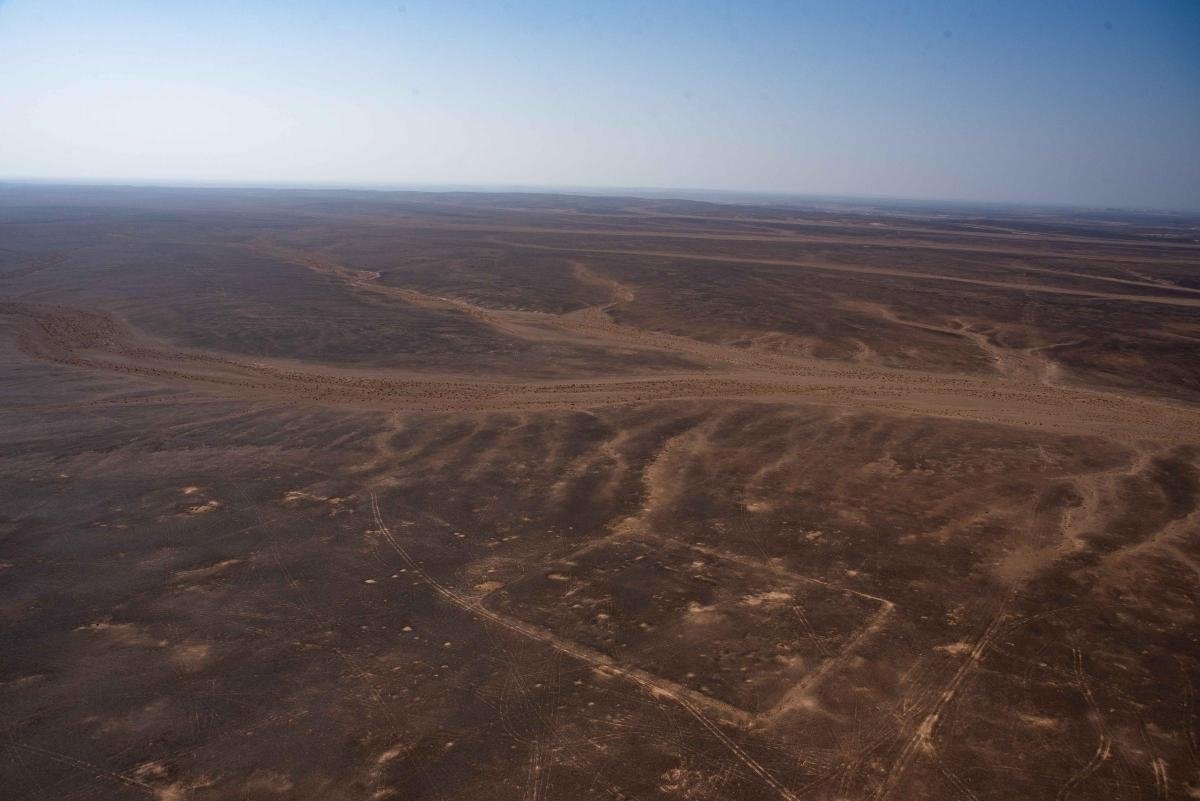
An aerial view of the Roman camp in the Western front, Jordan. (Photo courtesy of Aerial Photographic Archive for Archeology in the Middle East)
by Deutsche Presse-Agentur - dpa Apr 27, 2023 8:58 am
Edited By Buse Keskin

Archaeologists have made a remarkable discovery of Roman military camps in the Arabian desert, utilizing satellite images.

The University of Oxford researchers identified three new Roman fortified camps – in the typical playing card shape – across northern Arabia.

The discovery may be evidence of potential surprise attacks during a previously undiscovered Roman military campaign linked to the Roman takeover of the Nabataean Kingdom in 106 A.D., a civilization centered on the city of Petra, located in Jordan.

Dr. Michael Fradley, who led the research and first identified the very well-preserved camps on Google Earth, suggests there is little doubt about the date of the camps.

He said: "We are almost certain they were built by the Roman army, given the typical playing card shape of the enclosures with opposing entrances along each side."

"The only notable difference between them is that the westernmost camp is significantly larger than the two camps to the east," he added.

Oxford's Dr. Mike Bishop, an expert on the Roman military, said: "These camps are a spectacular new find and an important new insight into Roman campaigning in Arabia. Roman forts and fortresses show how Rome held a province, but temporary camps reveal how they acquired it in the first place."

The researchers suggest the camps would have been built by the army as temporary defended stations when marching on the campaign.
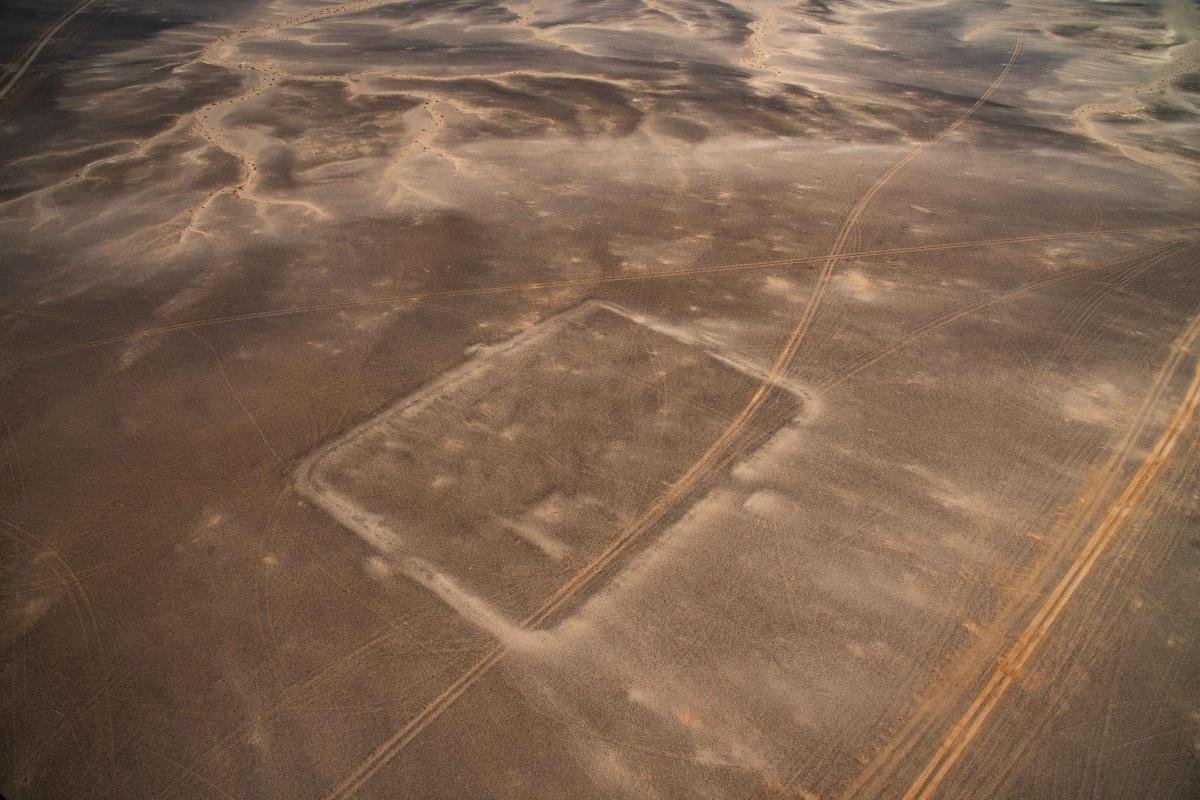
An aerial view of the Roman camp in the Western front, Jordan. (Photo courtesy of Aerial Photographic Archive for Archeology in the Middle East)

Dr. Fradley added: "The level of preservation of the camps is really remarkable, particularly as they may have only been used for a matter of days or weeks. They went along a peripheral caravan route linking Bayir and Dumat al-Jandal. This suggests a strategy to bypass the more used route down the Wadi Sirhan, adding an element of surprise to the attack. It is amazing that we can see this moment in time played out at a landscape scale."

Professor Andrew Wilson, a co-author of the paper, said: "These marching camps – if we are correct in dating them to the early second century – suggest the Roman annexation of the Nabataean Kingdom following the death of the last king, Rabbel II Soter in A.D. 106, was not an entirely straightforward affair, and that Rome moved quickly to secure the kingdom."

Because the distance between each camp is 37 to 44 kilometers (22.9 to 27.3 miles), the researchers speculate it was too far to be crossed by infantry in a day.

Therefore, they suggest the camps were instead built by a cavalry unit that could travel over such barren terrain in a single day, possibly on camels.

On the basis of the distance between the camps, there is also a suggestion that another camp may have been located further west at the later Umayyad fort and well station at Bayir.

The study sets out that the newly discovered camps run in a straight line toward Dumat al-Jandal in what is now Saudi Arabia, but which was then a settlement in the east of the Nabataean kingdom.

According to the researchers, the findings suggest Rome had to force its takeover, whereas the surviving Roman history argues the power transfer was a peaceful event at the end of the reign of the last Nabataean king.

Archaeologists still need to confirm the date of the camps through investigation on the ground, but there are other questions that need to be answered.

Professor Wilson said: "Why does the western camp have twice the capacity of the other two? Did the force split, and if so, where did the other half go?

"Was it half wiped out in a battle, or did they remain in the western camp to resupply the other camps with water?"

The paper is published in the journal Antiquity.

  • shortlink copied
  • KEYWORDS
    rome roman camps archeology history
    The Daily Sabah Newsletter
    Keep up to date with what’s happening in Turkey, it’s region and the world.
    You can unsubscribe at any time. By signing up you are agreeing to our Terms of Use and Privacy Policy. This site is protected by reCAPTCHA and the Google Privacy Policy and Terms of Service apply.
    No Image
    Lull in La Palma volcano activity allows look into crater
    PHOTOGALLERY
    • POLITICS
    • Diplomacy
    • Legislation
    • War On Terror
    • EU Affairs
    • News Analysis
    • TÜRKİYE
    • Istanbul
    • Education
    • Investigations
    • Minorities
    • Diaspora
    • World
    • Mid-East
    • Europe
    • Americas
    • Asia Pacific
    • Africa
    • Syrian Crisis
    • İslamophobia
    • Business
    • Automotive
    • Economy
    • Energy
    • Finance
    • Tourism
    • Tech
    • Defense
    • Transportation
    • News Analysis
    • Lifestyle
    • Health
    • Environment
    • Travel
    • Food
    • Fashion
    • Science
    • Religion
    • History
    • Feature
    • Expat Corner
    • Arts
    • Cinema
    • Music
    • Events
    • Portrait
    • Performing Arts
    • Reviews
    • Sports
    • Football
    • Basketball
    • Motorsports
    • Tennis
    • Opinion
    • Columns
    • Op-Ed
    • Reader's Corner
    • Editorial
    • Photo gallery
    • DS TV
    • Jobs
    • privacy
    • about us
    • contact us
    • RSS
    © Turkuvaz Haberleşme ve Yayıncılık 2021