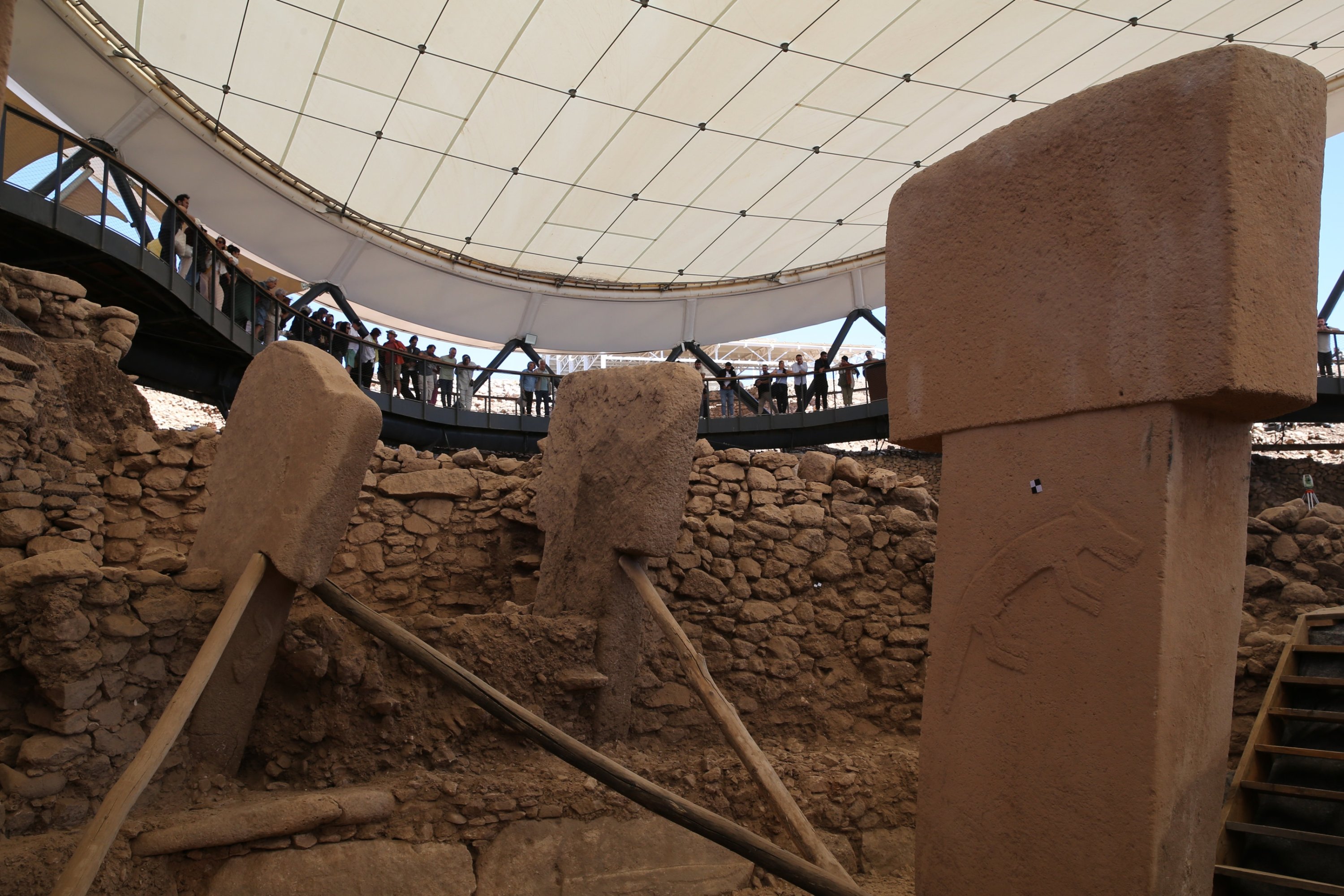
Göbeklitepe, the ancient sanctuary in southeastern Türkiye and a UNESCO World Heritage site, will be showcased in Germany with a special selection of 96 pieces in 2026.
Türkiye’s Deputy Culture and Tourism Minister Gokhan Yazgı told Anadolu Agency (AA) that the ministry is carrying out simultaneous projects to promote Göbeklitepe both in Türkiye and abroad.
He recalled that last year, the exhibition "Göbeklitepe: The Enigma of a Sacred Place" was held at the Colosseum in Rome, attracting over 6 million visitors.
Yazgı said that this time Göbeklitepe will be introduced in Berlin under the title "Myths on Stone: Göbeklitepe and the World of the Last Hunters."
"The Taş Tepeler (The Stone Hills) Project is one of a kind in the world. With this project, Göbeklitepe has secured a unique place in global tourism literature and the field of archaeology. So far this year, we have welcomed over 500,000 visitors and the numbers continue to grow,” Yazgı said.
The ministry is preparing a special selection to highlight Göbeklitepe’s role in the Neolithic era and its place in world archaeology, with Yazgı stressing: "We will do our best to promote the Taş Tepeler (The Stone Hills) Project globally and secure the recognition our country and city deserve in tourism.”
He underlined that the Berlin exhibition marks the latest step in promoting the site globally, noting that the ministry will launch a major project on Museum Island to showcase Göbeklitepe, with similar promotional events planned in other countries.
"We are working intensively to make this cultural treasure, which enriches Türkiye’s cultural tourism, better known across the globe,” he said.
Highlighting Germany’s central position in Europe, Yazgı said the exhibition would reach a wide audience of archaeology enthusiasts.
The display will feature replicas of three artifacts from Göbeklitepe, multilingual excerpts from films shown at the Göbeklitepe Visitor Center, as well as various digital works and informational panels.
The exhibition is scheduled to open in February 2026 and will remain on display for six months, Yazgı added.