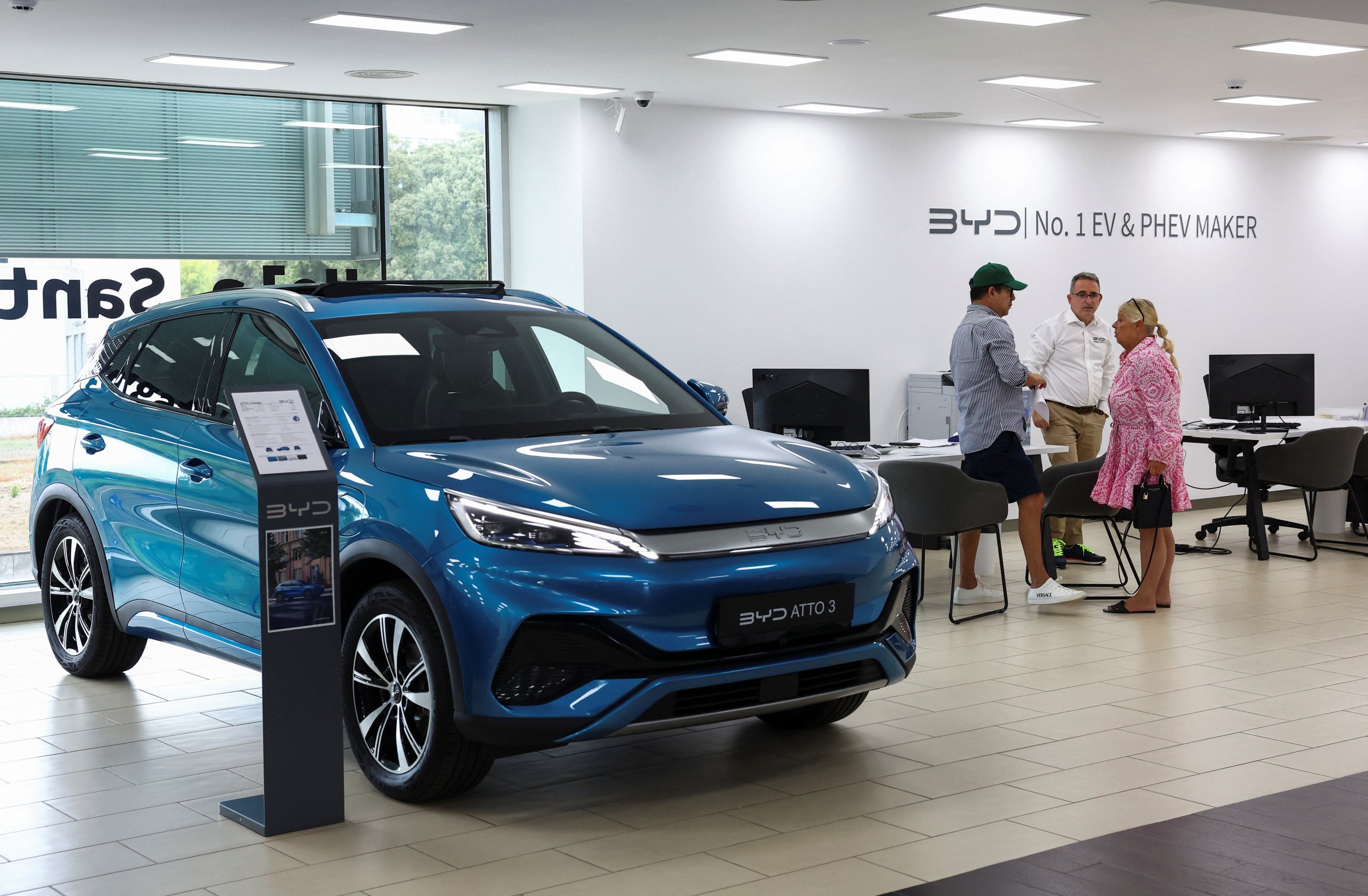
Chinese electric carmakers are said to have invested more abroad than at home for the first time in 2024, according to the data from Rhodium Group, shared on Wednesday, as a strong domestic competition environment makes it almost impossible for manufacturers to turn a profit.
Automakers have benefited from years of subsidies and other government policies aimed at making China a global automotive powerhouse and the world's leader in electric vehicles; however, overcapacity and aggressive price cutting have sent the industry into a tailspin.
Carmakers in the world's No. 2 economy are locked in a relentless price war that is deepening deflationary pressures. At the same time, fears of a flood of cheap Chinese cars have sparked trade tensions with key partners – a strain the export-driven economy can ill afford amid U.S. President Donald Trump's tariffs.
Chinese outbound foreign direct investment in the EV value chain soared to an annual average of $30.4 billion in 2022-2024 from $8.5 billion in 2018-2021, according to data compiled by Rhodium Group, a U.S. think tank.
Meanwhile, the value of Chinese domestic investment in the EV value chain plummeted from $94 billion in 2022 – a peak – to just $15 billion last year, the data showed.
"In 2024, EV investment by Chinese companies was greater overseas than domestically for the first time, a historic reorientation of capital as companies seek profitability outside of a domestic market facing 'involution,'" the report said.
BYD is building an EV factory in southern Hungary, which is expected to start production by the end of 2025, as well as a separate facility in Türkiye, scheduled to come online in 2026.
Geely has plans for a new plant in Vietnam, while Chery and Great Wall Motors are expanding in Russia and across Latin America. Other manufacturers are also looking to invest in Southeast Asia and India.
According to data from LSEG covering 33 listed automakers headquartered in China, the sector's median net profit margin fell to just 0.83% in 2024 from 2.7% in 2019.
Facing EV tariffs from the European Union, the U.S., Canada, Türkiye, Brazil, and other economies, Chinese automakers are focusing their investments on Asia, the Middle East and Africa, the report said, which attracted 33% and 25% of new investment, respectively.
However, amid reports that a China-Gulf free trade deal has stalled over concerns in Saudi Arabia that cheap Chinese imports could undermine the kingdom's efforts to become an industrial powerhouse, those investment avenues may soon be squeezed as well.
Chinese leaders have promised to end aggressive price cuts by firms across multiple industries, also including solar panels, lithium batteries, steel, cement and food delivery.
But policymakers have yet to announce a clear-cut plan.
Officials appear to be quietly supporting a solar industry plan to form a polysilicon cartel, buying out and shutting down the least efficient producers of the key ingredient for solar cells. At the same time, other sectors seem to have resorted to giving their staff a stern lecture on the importance of profitability.