Germany’s biggest trade union on Monday urged Berlin to pursue development of its own fighter jet, following comments by French President Emmanuel Macron calling for advances on a stalled joint European warplane project.
The IG Metall union's stance adds to signs of worsening relations between German and French industry over the Future Combat Air System (FCAS), a 100-billion-euro ($118.67 billion) project launched in 2017 but stalled by disputes over workshare and technology rights.
Accusing French planemaker Dassault Aviation of trying to dictate terms on the FCAS project, Juergen Kerner, deputy head of the IG Metall, and Marie-Christine von Hahn, head of the German Aerospace Industries Association, said Germany should make its own jet.
"FCAS was originally planned as a joint project between equal partners and operated as such for a long time," they wrote in an opinion piece published by the Handelsblatt newspaper.
"Those who now demand absolute control should not be surprised if there are consequences," they added, calling for "a commitment to two aircraft within the project."
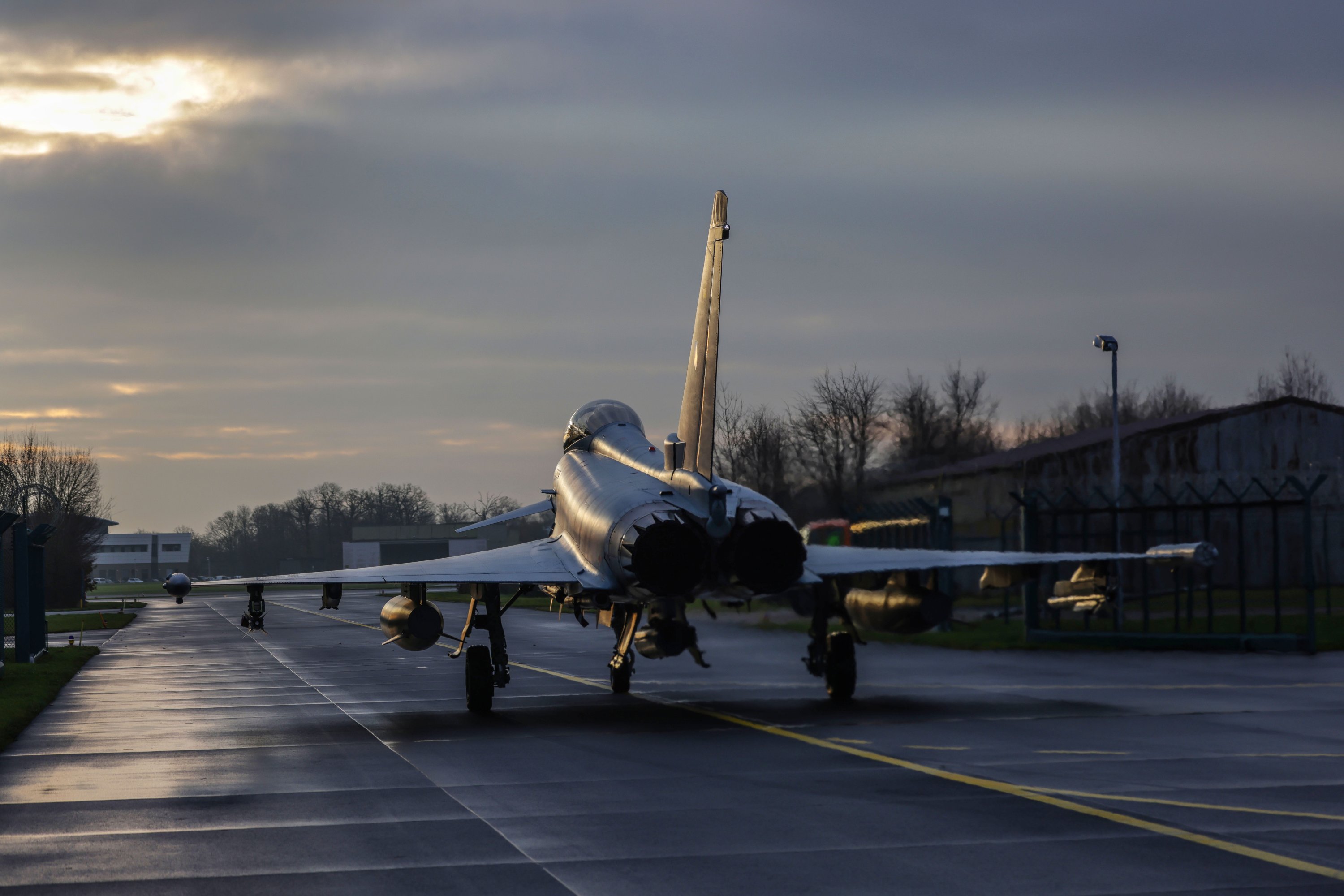
The FCAS has been designed to replace France's Rafale jet as well as the Eurofighter planes used by Germany and Spain. But the project has stalled amid disagreements between Dassault and Airbus, which represents German and Spanish interests in the project.
In November last year, IG Metall union warned it would stop cooperating on the program if Dassault remains involved. With more than two million members, IG Metall wields influence through board representation.
Macron said in November that Paris and Berlin had "an obligation to achieve results" on the project, presenting it as a "test of credibility" for the continent.
But a German government spokesman told Agence France-Presse (AFP) in December that efforts to break the deadlock on the project had been unsuccessful.
While agreeing that a failure of the project would "weaken our security, European cooperation, capacity to innovate and not least well-paid jobs in industry", Kerner and von Hahn said developing two jets would represent the "maturation" of FCAS.
"That would allow for different national priorities and reduce tensions because cooperation would then take place where it makes economic and technological sense – not where it is dictated by political symbolism," they said.