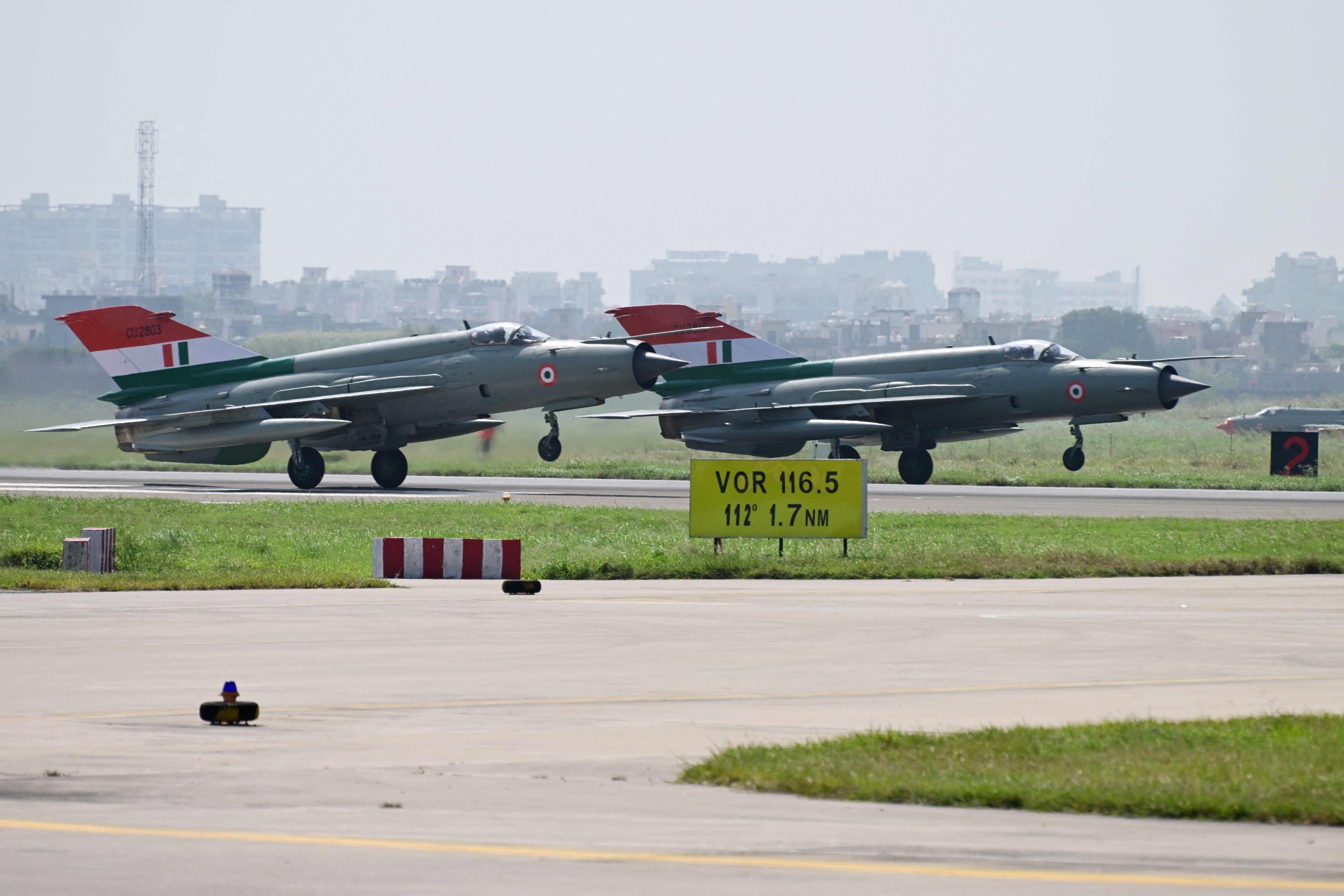
India's Russian-built MiG-21s flew for the final time Friday, marking the end of an era for the country's first supersonic fighter jet tarnished by a legacy of some 400 crashes.
Crowds cheered as officials staged a grand farewell for the final two needle-nosed MiG-21 squadrons, totalling around 36 aircraft, at an air force base in the northern city of Chandigarh.
The send-off came a day after New Delhi signed a $7-billion deal to acquire 97 domestically designed and built Tejas jets as it seeks to modernize its Soviet-era fleet.
The farewell ceremony included a mock dogfight between Russian MiGs and a colourful display by the Surya Kiran aerobatic team.
The retired jets will likely be put up for public display, though the government has yet to announce any plans.
Defense Minister Rajnath Singh, senior air force officials, including veterans who piloted the MiG-21, watched as the storied aircraft made their last pass.
India procured 872 MiG aircraft of various models between 1966 and 1980, making it the biggest operator of the aircraft in the world.
Plans to retire them in the 1990s were repeatedly delayed amid local production setbacks, bureaucratic obstacles and corruption scandals.
"MiG-21's legacy is undeniable. It was a capable – if flawed – fighter that formed the Indian Air Force's backbone for decades," former Air Marshal Raghunath Nambiar told Agence France-Presse (AFP) on the sidelines of the event.
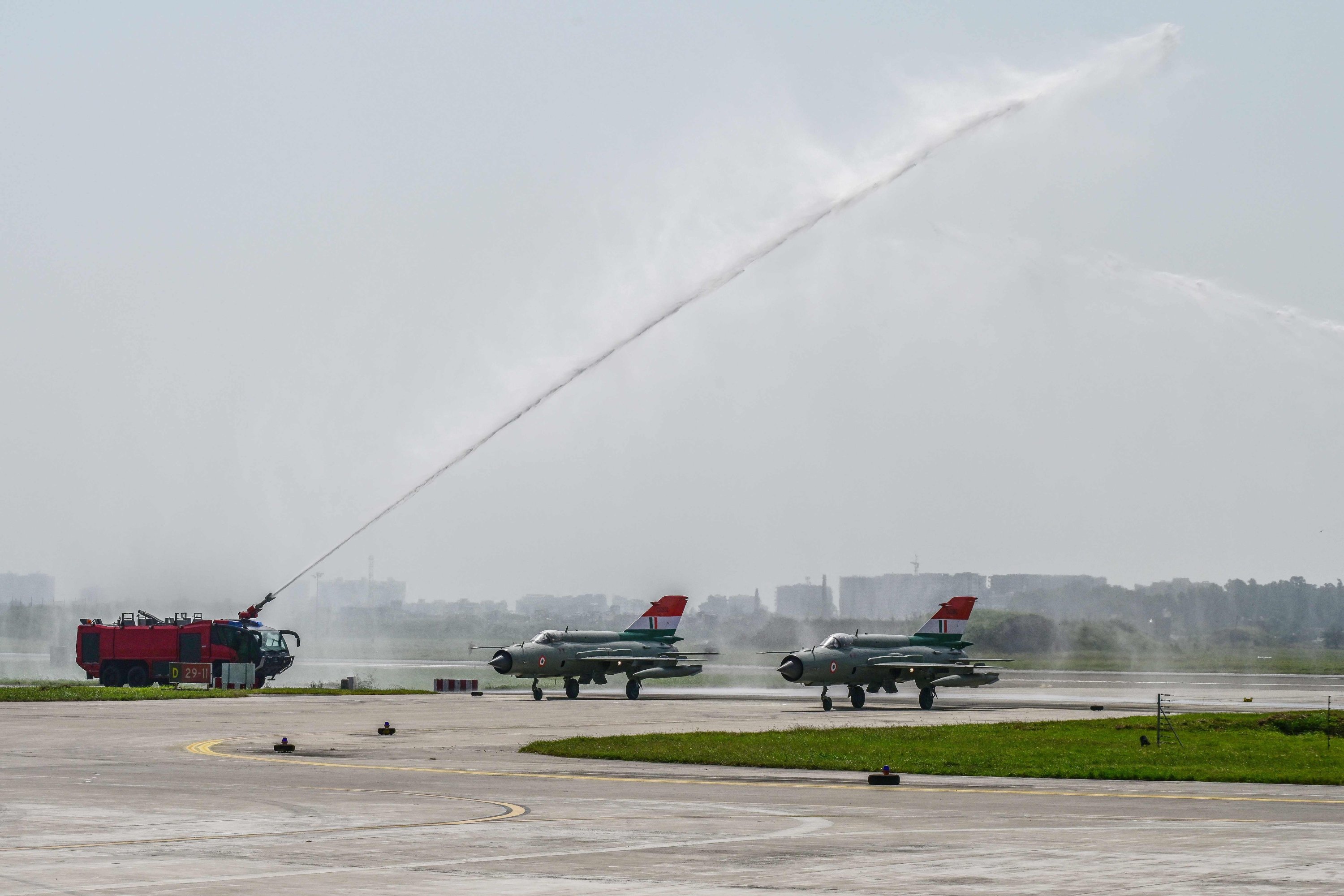
Rajnath said MiG-21's contribution to India would be remembered in "golden letters."
"It has played all kinds of roles in these years and it isn't without reason that it was known as a bird of all seasons," the minister said. "It has made us proud in every historic mission, so this is also a farewell to our collective memories," he added.
Age caught up with the Soviet-era jet, once renowned for its simplicity and ruggedness.
Engine flameouts, hydraulic failures, and electrical faults were frequent and with no backup systems, emergency landings and ejections became all too common, he added.
The grim reputation earned the fighters a grim nickname of "flying coffins" and inspired a blockbuster Bollywood movie "Rang De Basanti" in 2006 based on the death of a young MiG-21 pilot.
Over roughly 40 years, 482 MiG crashes were recorded, claiming the lives of 171 pilots in India as of 2012, according to Defense Ministry figures.
The causes of the accidents were attributed to "both human error and technical defects," Defense Ministry data said.
"It's time to let it go – not as a flawless icon, but as a sobering reminder of the sacrifices made by those who flew it," Nambiar said.
The MiG-21 was once the most widely exported fighter, but only a few countries, including Cuba, Yemen, Syria, North Korea and some African nations now fly the updated variants in limited numbers.
Indian Air Force spokesperson Wing Commander Jaideep Singh said the MiG-21 had served for almost 62 years, completing its full service.
"If the jet was a human being I am sure it'd have emotions right now for going out of service," Singh, who is also a MiG-21 pilot, told AFP.
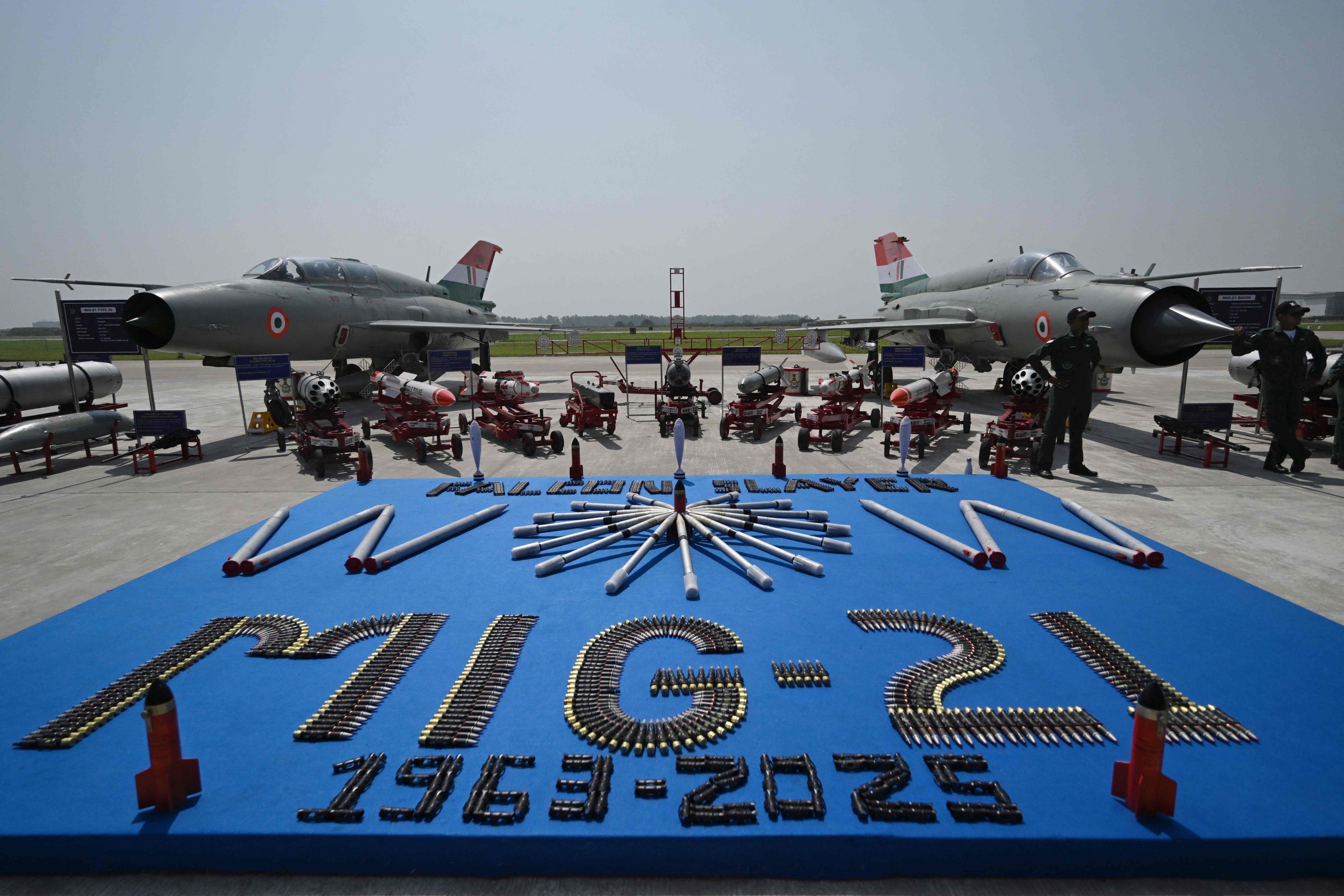
"It is third third-generation aircraft and now the generation of aircraft has changed," he said, adding that India would have to "move to new tactics with changing times."
With the MiG-21's retirement, India, the world's fifth-largest economy, is set to intensify its push for domestic arms production and new international partnerships.
In April, India signed a multi-billion-dollar deal to purchase 26 Rafale fighter jets from France's Dassault Aviation. They will join 36 Rafale fighters already acquired.
India is also working with a French company to develop and manufacture fighter jet engines at home.
Angad Singh, co-author of a book on the MiGs, told AFP the country faced an "unenviable position" given its current fighter shortfall.
He, however, added that India was putting its full weight behind the improved Tejas aircraft and was in talks to buy another 114 Rafales.
India currently operates a fleet of Rafales, Mirage 2000, Russian Su-30s, MiG-29 and Tejas, among others.