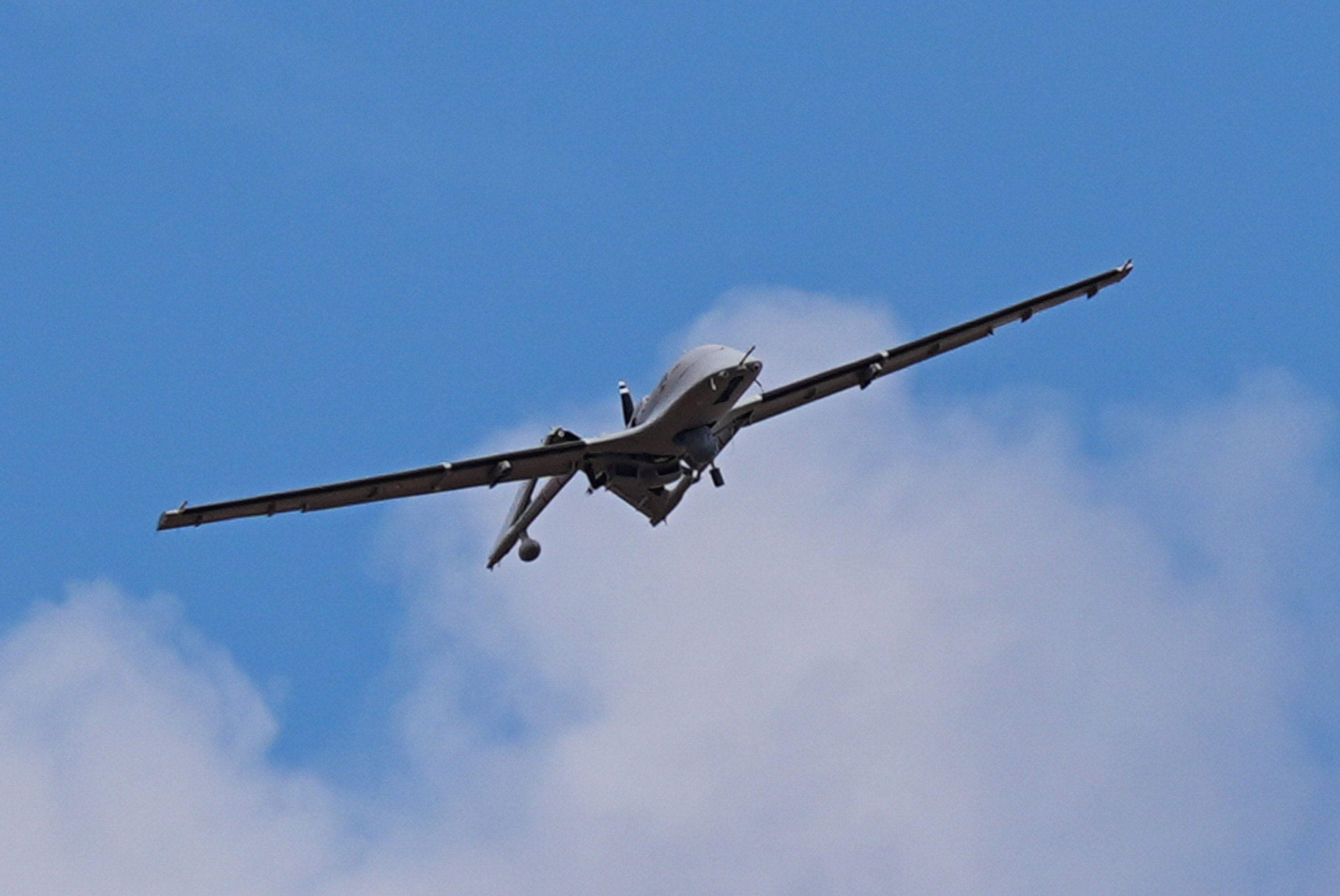
Türkiye’s booming defense sector and its strong production capacity contribute to the country’s standing as a manufacturing powerhouse, while the sector could also help address critical military supply shortages Europe is facing, according to a recent report by BBVA Research.
This complementary role, which comes at a time of a number of conflicts worldwide, could begin with drones, the research suggested.
Heightening geopolitical tensions and surging military spending around the world prompted defense demand to "enter a more structural phase," as governments are prompted to "rebuild capabilities and invest in new technologies," the report said.
The report titled "Türkiye: Defense Industry Potential," published late last month, evaluates different aspects of the Turkish burgeoning defense sector and growing spending.
The report noted that the European defense industry is facing bottlenecks in production scale, speed and stockpile replenishment despite strong infrastructure, with the most pronounced capacity gaps seen in integrated air and missile defense, unmanned aerial vehicles (UAVs) and counter-unmanned aircraft systems, loitering munitions, long-range firepower and ammunition stocks.
It also referred to Türkiye "moving toward the medium-range ballistic missile category" and mentioned its role alongside France in indigenous ballistic missile development.
"Türkiye is not only focusing on producing different types of missiles but also on the mass production," it added.
At the same time, the report flagged growing uncertainty about the role of the U.S. in NATO, pointing out that, "Collaboration points between Türkiye and Europe could be worth mentioning to contribute to the discussions of Europe's defense needs in the wake of emerging and continuing conflicts and wars."
The report’s authors designated unmanned aerial vehicles and ammunition manufacturing as the two areas of highest potential alignment with Europe’s needs, while noting that the mere complementarity of the Turkish defense industry does not by itself guarantee access to the European market, as the requirements for local content and design rights under the SAFE framework restrict non-EU suppliers.
Türkiye’s deeper integration into European defense could be achieved via joint production, local assembly, joint ventures, supply chain integration and technology sharing, according to the report.
Meanwhile, the weight of the defense and defense-related sectors in the Turkish economy increased, with defense exports reaching $10 billion by 2025 and the domestic production rate in missiles and rockets exceeding 90%.
Türkiye’s defense-related sectors employ 176,700 workers, and the Turkish defense industry boasts opportunities not only in Europe but also in export markets in Africa, Asia and the Gulf.
The report identified cost-effective and rapidly deployable systems as a priority in Africa, while joint production and technology transfer opportunities lie in Asia, and joint venture and technology partnership potential exists in the Gulf countries.
Türkiye’s competitive edge in the coming period will depend on boosting the production of existing platforms and making progress in artificial intelligence, autonomous systems, cybersecurity, space and other advanced technologies, according to BBVA Research.
While Europe needs scale, speed and operationally deployable capabilities, Türkiye provides flexible production capacity and experience in modern warfare, which position the country as a complementary partner for the bloc.
The report added that Türkiye-EU defense cooperation could be one of the most important industrial and geopolitical opportunities in the coming decade.