Daily Sabah logo

Politics
Diplomacy Legislation War On Terror EU Affairs Elections News Analysis
TÜRKİYE
Istanbul Education Investigations Minorities Expat Corner Diaspora
World
Mid-East Europe Americas Asia Pacific Africa Syrian Crisis Islamophobia
Business
Automotive Economy Energy Finance Tourism Tech Defense Transportation News Analysis
Lifestyle
Health Environment Travel Food Fashion Science Religion History Feature Expat Corner
Arts
Cinema Music Events Portrait Reviews Performing Arts
Sports
Football Basketball Motorsports Tennis
Opinion
Columns Op-Ed Reader's Corner Editorial
PHOTO GALLERY
JOBS ABOUT US RSS PRIVACY CONTACT US
© Turkuvaz Haberleşme ve Yayıncılık 2026

Daily Sabah - Latest & Breaking News from Turkey | Istanbul

  • Politics
    • Diplomacy
    • Legislation
    • War On Terror
    • EU Affairs
    • Elections
    • News Analysis
  • TÜRKİYE
    • Istanbul
    • Education
    • Investigations
    • Minorities
    • Expat Corner
    • Diaspora
  • World
    • Mid-East
    • Europe
    • Americas
    • Asia Pacific
    • Africa
    • Syrian Crisis
    • Islamophobia
  • Business
    • Automotive
    • Economy
    • Energy
    • Finance
    • Tourism
    • Tech
    • Defense
    • Transportation
    • News Analysis
  • Lifestyle
    • Health
    • Environment
    • Travel
    • Food
    • Fashion
    • Science
    • Religion
    • History
    • Feature
    • Expat Corner
  • Arts
    • Cinema
    • Music
    • Events
    • Portrait
    • Reviews
    • Performing Arts
  • Sports
    • Football
    • Basketball
    • Motorsports
    • Tennis
  • Gallery
  • Opinion
    • Columns
    • Op-Ed
    • Reader's Corner
    • Editorial
  • TV
  • Business
  • Automotive
  • Economy
  • Energy
  • Finance
  • Tourism
  • Tech
  • Defense
  • Transportation
  • News Analysis

China's jobless fake work routines to keep families calm

by Reuters

BEIJING - HONG KONG Oct 20, 2026 - 11:03 am GMT+3
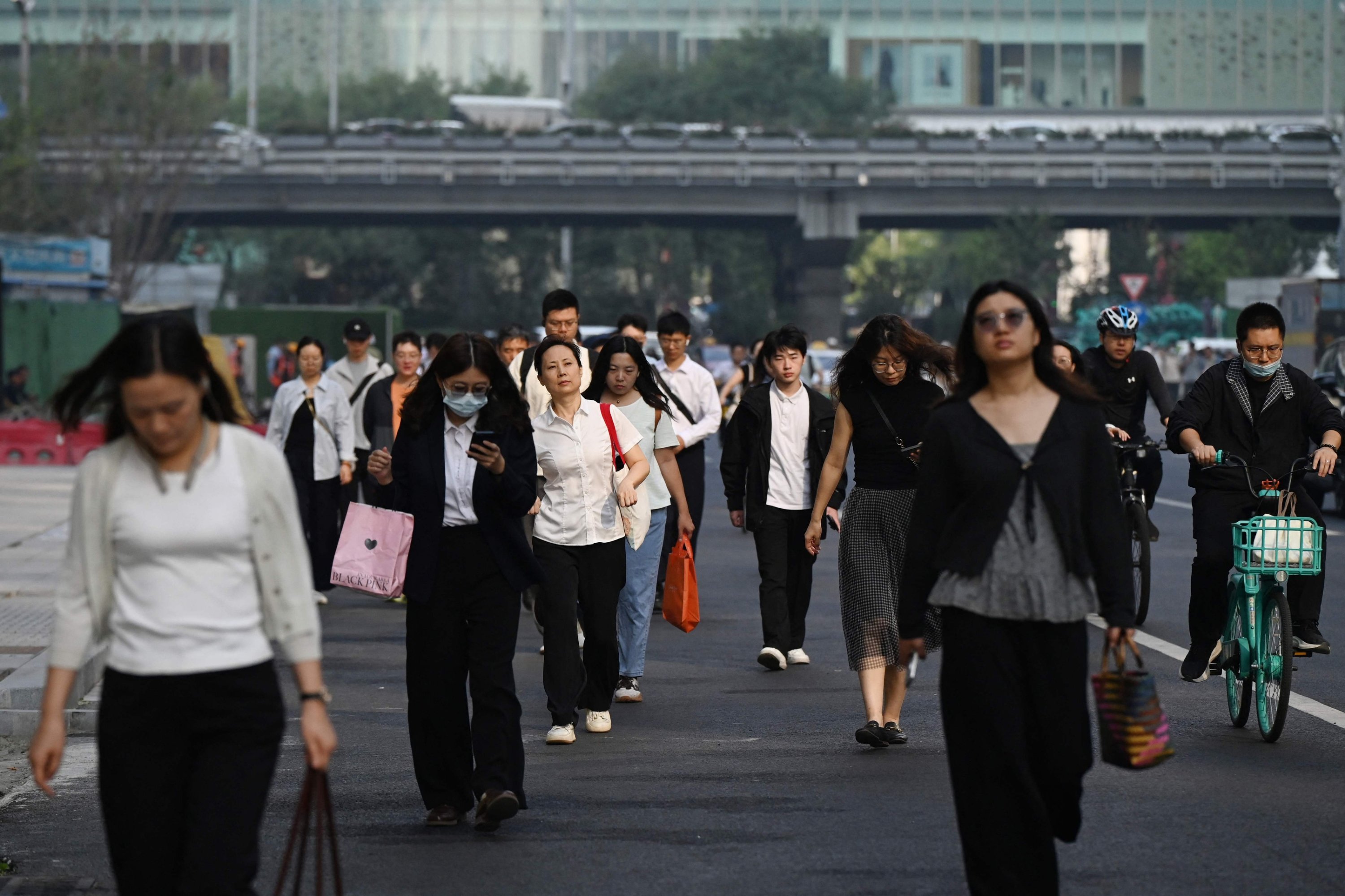
Office workers walk to their buildings in the central business district, Beijing, China, Sept. 23, 2026. (AFP Photo)
by Reuters Oct 20, 2026 11:03 am

A photo of a home-cooked lunch almost exposed Coco Li's ​secret.

The 32-year-old, a former employee of a Chinese state-owned property firm, had been about to share it in her family group chat before catching herself. Her mother might ask why she wasn't ⁠at work.

Li is one of many unemployed Chinese hiding ⁠their joblessness from relatives, wary of the concern and pressure that often follow in a labor market where finding work has become increasingly difficult.

"She would fall into an endless cycle of anxiety and eventually pass that anxiety on to ​me," said Li, who quit more than six months ago, citing high workload and little recognition. ​Her ⁠mother's concern "couldn't really solve my problem," she added.

Pretending to be employed may ease social tensions

The scale of online engagement suggests pretending to have a job is widespread.

Posts advising where to spend the day, how to dodge relatives' questions about work, and chronicling the experiences of pretend-workers have drawn more than 70 million views on the Instagram-like RedNote app and 610 million views on Douyin, China's TikTok. On X-like Weibo, related hashtags have drawn up to 320 million views.

Analysts say the phenomenon is a stark reflection of a weakening job market in an economy increasingly reliant on roaring exports. As Monday's third quarter data showed, manufacturers are battling fierce competition by slashing prices and payrolls while piling heavier workloads onto remaining staff.

A prolonged property market crisis and tight local government finances have also hurt jobs and incomes, along with automation and rapid AI adoption.

Diana Fu, an associate professor of Chinese politics at Cornell University, says pretending to go ⁠to ⁠work allows people to save face and potentially defuse collective discontent.

This helps preserve social stability as Beijing pushes ahead with automation and its tech race against the U.S., she said.

"Pretend-workers are helping the Chinese government to stave off the hard choice between leaping ahead in automation and protecting job security, which is so essential to the social contract," she said.

Parks, malls, libraries

Most social media posts share tips on how to spend the day away from home, drifting through parks, libraries, cafes and shopping malls, in scenes reminiscent of salarymen who hid their joblessness in South Korea and Japan during the Asian financial crisis in the 1990s.

Visitors are seen inside a newly opened bookstore, Chongqing, China, Jan. 29, 2019. (Reuters Photo)

Li follows similar routines when her parents visit.

"I never would have believed the library would be completely full on ⁠a weekday," said Zhang, 36, a visual effects producer who lost her job in AI-driven redundancies in August. She gave only her surname.

In other posts, users wonder if the people around them are in a similar predicament, or – echoing Li – explain why they hide and how it makes them feel.

Some posts are ​daily journals. In one titled "Day 30 of unemployment: a month pretending to work," a user recounts 80 failed job applications.

Susan Sun, 28, has ​concealed her layoff from an internet company since late last year. The balancing act became more complicated in May when her mother and stepfather moved in with her in the megacity of Chongqing from their smaller hometown to look for ⁠work.

This forces her ‌to leave home ‌before 9 a.m. and return after 6 p.m.

Sun lives on 1,864 yuan ($278) per month in ⁠unemployment benefits and what remains of her severance package. She says she is happy ‌living on little and not working. Her only pressure comes from her parents.

"They pass their anxiety on to me, through subtle, insistent expressions and tone of voice," ​she said, especially when they advise her to ⁠save money because "the economy is bad."

Yige Dong, an assistant professor of sociology at the University at ⁠Buffalo, says China's relatively thin social safety net, compared with those in Japan and South Korea during the 1990s, could eventually make ⁠it harder for the unemployed ​to keep up the pretence.

At some point, "individuals would probably be more concerned with pooling resources from all available sources, including borrowing from family members and relatives," Dong said.


  • shortlink copied
  • KEYWORDS
    chinese economy economy china labor jobs unemployment work
    The Daily Sabah Newsletter
    Keep up to date with what’s happening in Turkey, it’s region and the world.
    You can unsubscribe at any time. By signing up you are agreeing to our Terms of Use and Privacy Policy. This site is protected by reCAPTCHA and the Google Privacy Policy and Terms of Service apply.
    No Image
    Garbage donkey, smog and the full moon: This week's top photos
    PHOTOGALLERY
    • POLITICS
    • Diplomacy
    • Legislation
    • War On Terror
    • EU Affairs
    • News Analysis
    • TÜRKİYE
    • Istanbul
    • Education
    • Investigations
    • Minorities
    • Diaspora
    • World
    • Mid-East
    • Europe
    • Americas
    • Asia Pacific
    • Africa
    • Syrian Crisis
    • İslamophobia
    • Business
    • Automotive
    • Economy
    • Energy
    • Finance
    • Tourism
    • Tech
    • Defense
    • Transportation
    • News Analysis
    • Lifestyle
    • Health
    • Environment
    • Travel
    • Food
    • Fashion
    • Science
    • Religion
    • History
    • Feature
    • Expat Corner
    • Arts
    • Cinema
    • Music
    • Events
    • Portrait
    • Performing Arts
    • Reviews
    • Sports
    • Football
    • Basketball
    • Motorsports
    • Tennis
    • Opinion
    • Columns
    • Op-Ed
    • Reader's Corner
    • Editorial
    • Photo gallery
    • DS TV
    • Jobs
    • privacy
    • about us
    • contact us
    • RSS
    © Turkuvaz Haberleşme ve Yayıncılık 2021