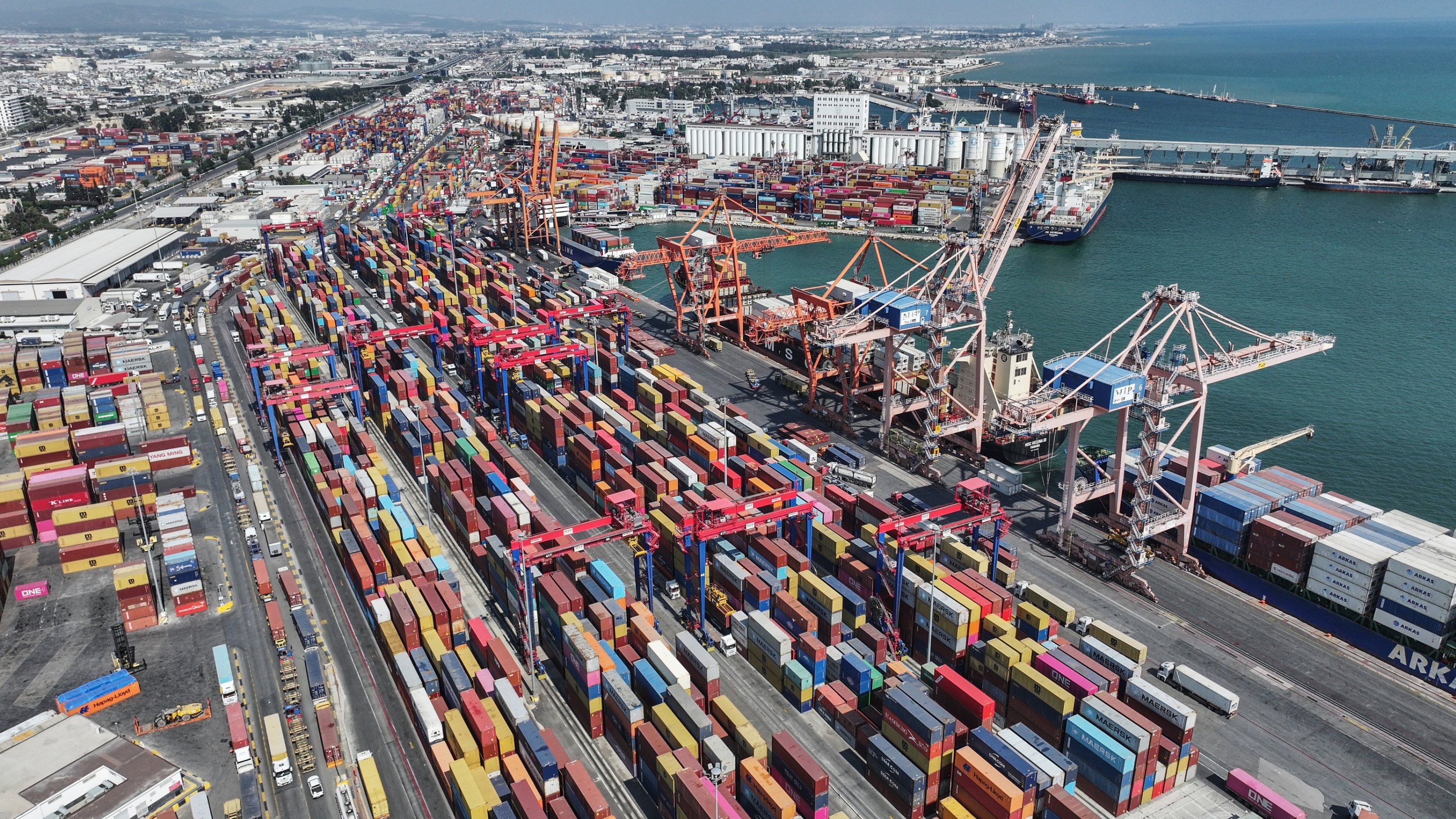
China's efforts to offset losses in the United States are intensifying competitive pressure on Turkish exporters, as many of the alternative markets targeted by Chinese companies are also important destinations for Türkiye's shipments, a report said Tuesday.
The report by the Foreign Economic Relations Board of Türkiye (DEIK) examines changes in China's trade following additional U.S. tariffs introduced in 2025 and their potential implications for Türkiye.
China's share of total exports accounted for by shipments to the United States fell to 11.14% in 2025 from 14.68% in 2024, according to the report. As its position in the U.S. market weakened, China accelerated efforts to diversify its export destinations.
China's exports to Africa rose 25.9% in 2024-2025, while exports to the Middle East increased 9.7% and shipments to the European Union rose 8.63%. Nigeria, the United Arab Emirates (UAE) and Germany emerged as particularly important markets.
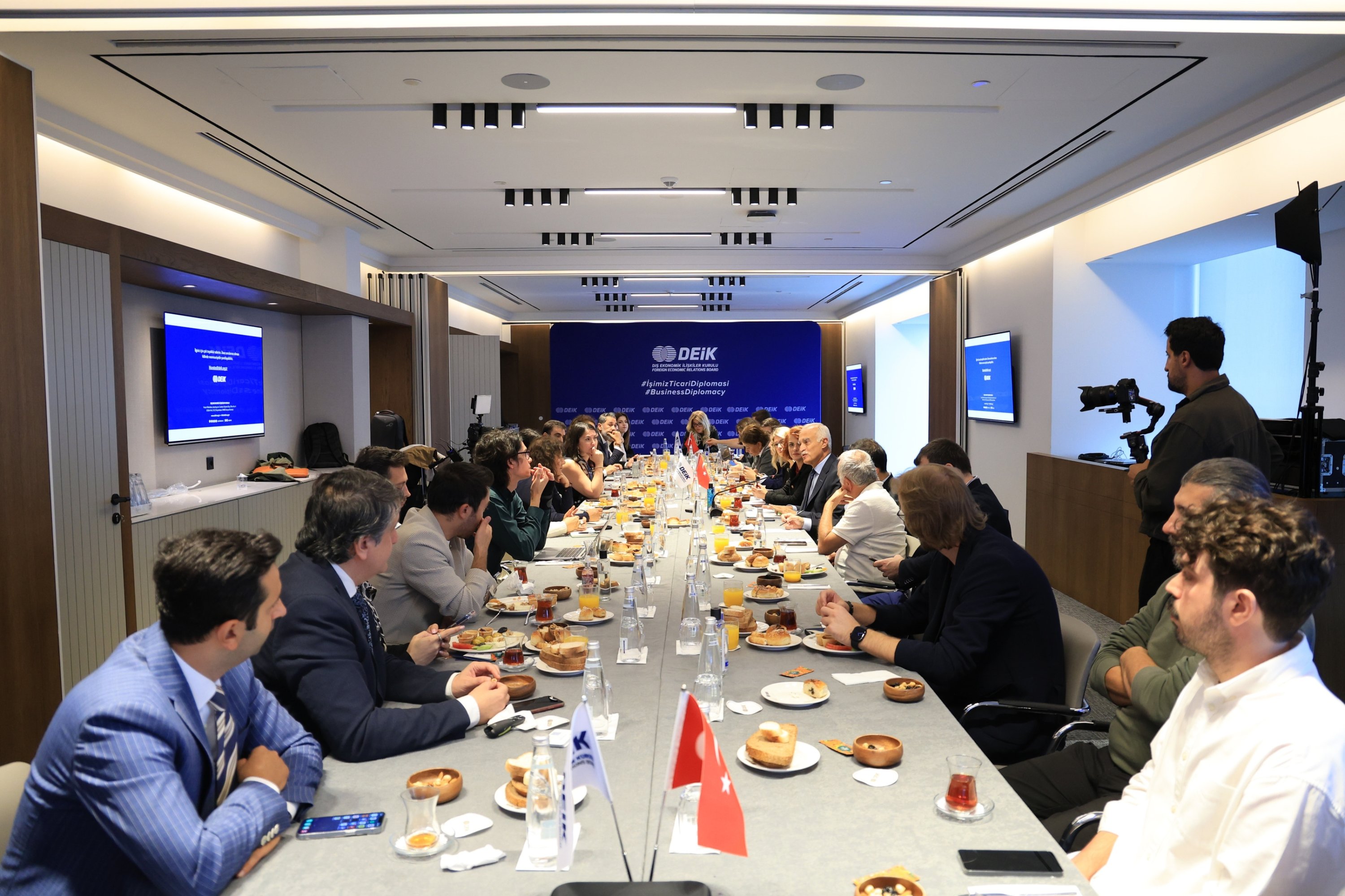
DEIK Chair Nail Olpak said the shift showed protectionist trade policies were affecting global trade routes beyond the bilateral relationship between the world's two biggest economies.
"When access to one market becomes more difficult, global trade does not disappear; it finds new routes, new countries and new partners," he told a meeting with press members in Istanbul. "The issue is therefore not only a tariff dispute between the U.S. and China, but the reshaping of global trade routes."
The slowdown in the U.S. is prompting China to establish new trade channels across a much broader geographic area, including the Association of Southeast Asian Nations (ASEAN), Africa, the Middle East and Europe.
This is particularly important for Türkiye because many of the markets China is targeting are also important destinations for Turkish companies, Olpak said.
"Africa, the Middle East and Europe, where China is moving more strongly to offset its losses in the U.S. market, are also regions where the Turkish business community has traditionally been strong or aims to expand further," he said.
"For this reason, we must closely monitor the geographic diversification of China's exports."
He said Türkiye's manufacturing capacity, geographic position, logistics advantages, integration with Europe and business relationships across different regions could provide opportunities as global trade is reorganized.
"However, I do not think this should be read simply as 'China is coming and competition is increasing,'" Olpak said. "What matters is turning these advantages into trade and investment through the right strategy."
China's exports to Germany, Türkiye's largest export market, increased 10.55% between 2024 and 2025. The report said available data did not yet indicate that China's growing presence in Germany represented a direct and significant threat to Türkiye.
The report identified Africa and the Middle East as regions requiring closer monitoring by Turkish exporters.
In Egypt, China's exports reached $19.97 billion in 2025, compared with Türkiye's nearly $4.1 billion, indicating a widening competitive gap in China's favor, according to the report.
Olpak said Türkiye's position in Africa should not be viewed solely through the lens of price competition, pointing to the country's trade, contracting, investment, logistics and industrial ties across the continent.
"Alongside price competition, we will increasingly see competition based on trust," he said. "Türkiye's ability to establish long-term relationships and act as a reliable partner can become an important competitive advantage, particularly in Africa and the Middle East."
The United Arab Emirates is another market highlighted by the report. China's exports to the UAE increased from $43.81 billion in 2021 to $72.90 billion in 2025, while Türkiye's exports to the Gulf country stood at $9.28 billion last year.

China's strength in electrical equipment and machinery could increase competitive pressure on Turkish companies in the UAE market, according to the report.
Olpak said Turkish companies would need to focus more heavily on value-added production.
"We need to talk not only about how much we export to a country, but also which products we export, at what technology level and with what added value," he said. "Türkiye's response in increasingly competitive markets should be greater value-added, stronger brands, technology, innovation and lasting partnerships."
Olpak said the trade conflict between the U.S. and China was also reshaping global supply chains, potentially creating opportunities for Türkiye to strengthen its position as a production and investment hub.
"The world is no longer asking only, 'Where can I produce more cheaply?' Questions such as 'Where can I produce more safely, how can I reach my market faster, how can I diversify my supply chain and with which partner can I establish a long-term and predictable relationship?' have become just as important as cost," he noted.
Olpak described this shift as an emerging "competition for trust" alongside competition over price and technology.
"Türkiye has significant potential precisely at this point," he said, citing the country's proximity to Europe, industrial infrastructure, skilled workforce, logistics capabilities and economic ties with different regions.
He said the transformation in U.S.-China trade should therefore be assessed not only in terms of potential competitive pressure in Türkiye's export markets, but also in terms of new investment and production opportunities for the country.