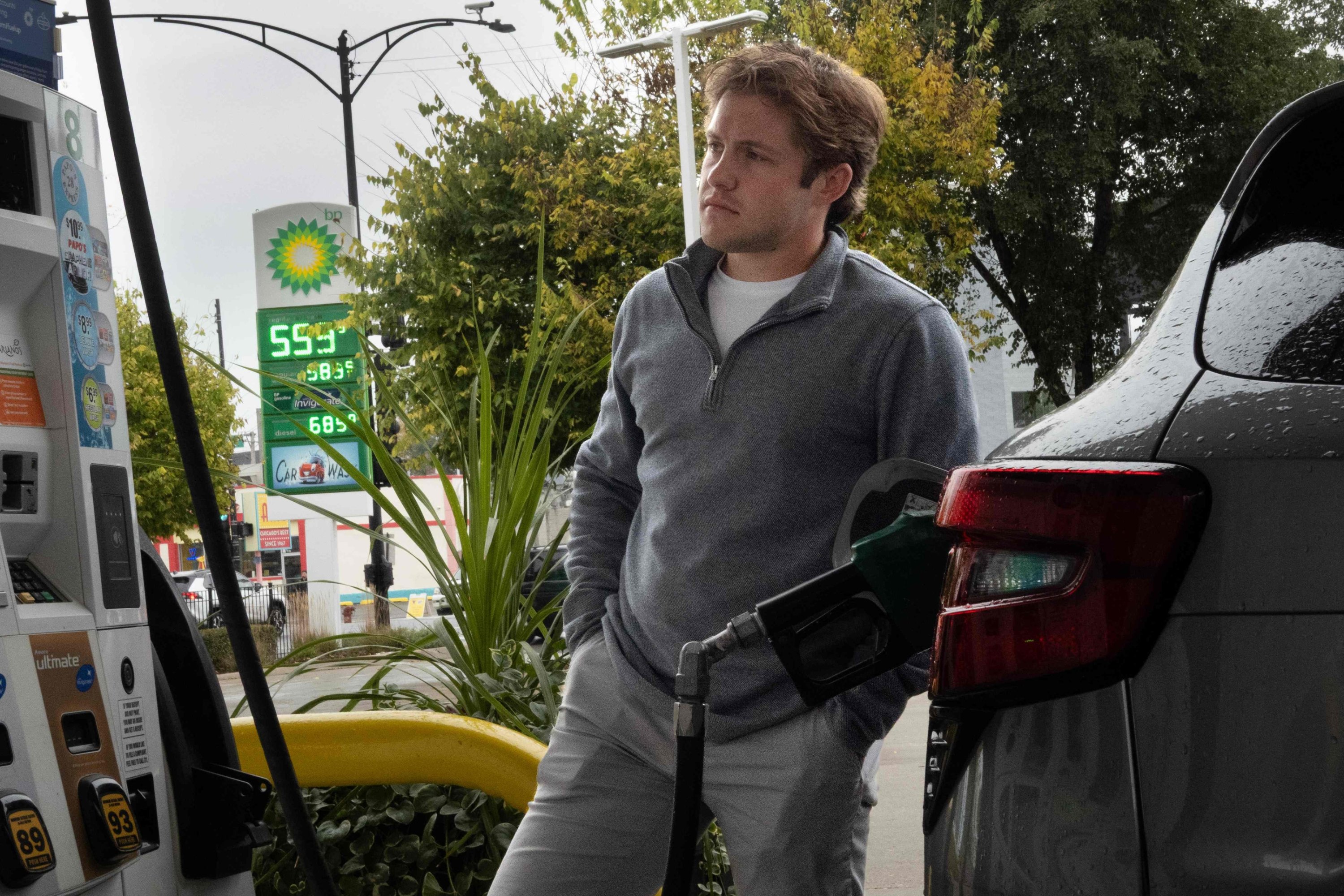
The global rise in petrol and diesel prices triggered by the supply disruptions resulting from the U.S. war on Iran has cost consumers an additional $468 billion, according to a study published Monday.
U.S. consumers bore the largest share of the bill at $160 billion, said Finland-based nonprofit group Centre for Research on Energy and Clean Air (CREA), which supports efforts to move off fossil fuels.
The U.S. thus accounted for roughly one-third of the worldwide increase in costs stemming from the energy shock due to the virtual shutdown and blockade of the Strait of Hormuz.
The figures cover the period since U.S. and Israeli attacks on Iran began in late February, when the conflict sent global fuel prices higher and increased costs for consumers.
China was the second-most affected country, with an additional $54 billion in costs, followed by Canada at $17 billion, the CREA study showed.
Americans have paid an average of $471 more for higher fuel prices since the war started on Feb. 28, the study said. That amount is nearly eight times the global average, estimated at $60.
U.S. consumers are paying more due to reliance on less efficient private vehicles, longer-distance travel and a relatively slow transition to electric vehicles, CREA said. The impact has also varied significantly by vehicle type. A typical U.S. driver of a petrol-powered car has spent an estimated $440 more on fuel since March, while the increase in charging costs for electric vehicle owners was just $17.
The administration of U.S. President Donald Trump says higher fuel prices are a small cost for consumers to pay to stop Iran from getting nuclear weapons and that oil and fuel prices will fall when the war ends. The war has lasted longer than the administration predicted.
To calculate the costs, the study compared fuel prices in January and February to what they were during the rest of the year.
Consumers in Canada, Australia, New Zealand and Belgium have also paid a lot more, according to the study, which looked at fuel prices and consumption in 169 countries from the beginning of March to mid-October.
Canada recorded the second-highest per capita increase, at $422, followed by Australia, at $386.
The findings highlighted how lower fuel consumption can limit exposure to oil price shocks. However, electric vehicle adoption in the U.S. has recently lost ground: EVs accounted for 7.3% of new car sales in the first eight months of 2026, down 3 percentage points from the same period a year earlier.
The comparable shares were 57% in China, 32% in the European Union and 98% in Norway, according to the analysis.
Countries that have reduced fuel consumption since 2023 have been able to limit the financial impact of higher prices.
Lower consumption helped China save an estimated $10.8 billion and Germany $3.7 billion, while savings in the United States reached $5.7 billion, CREA said.