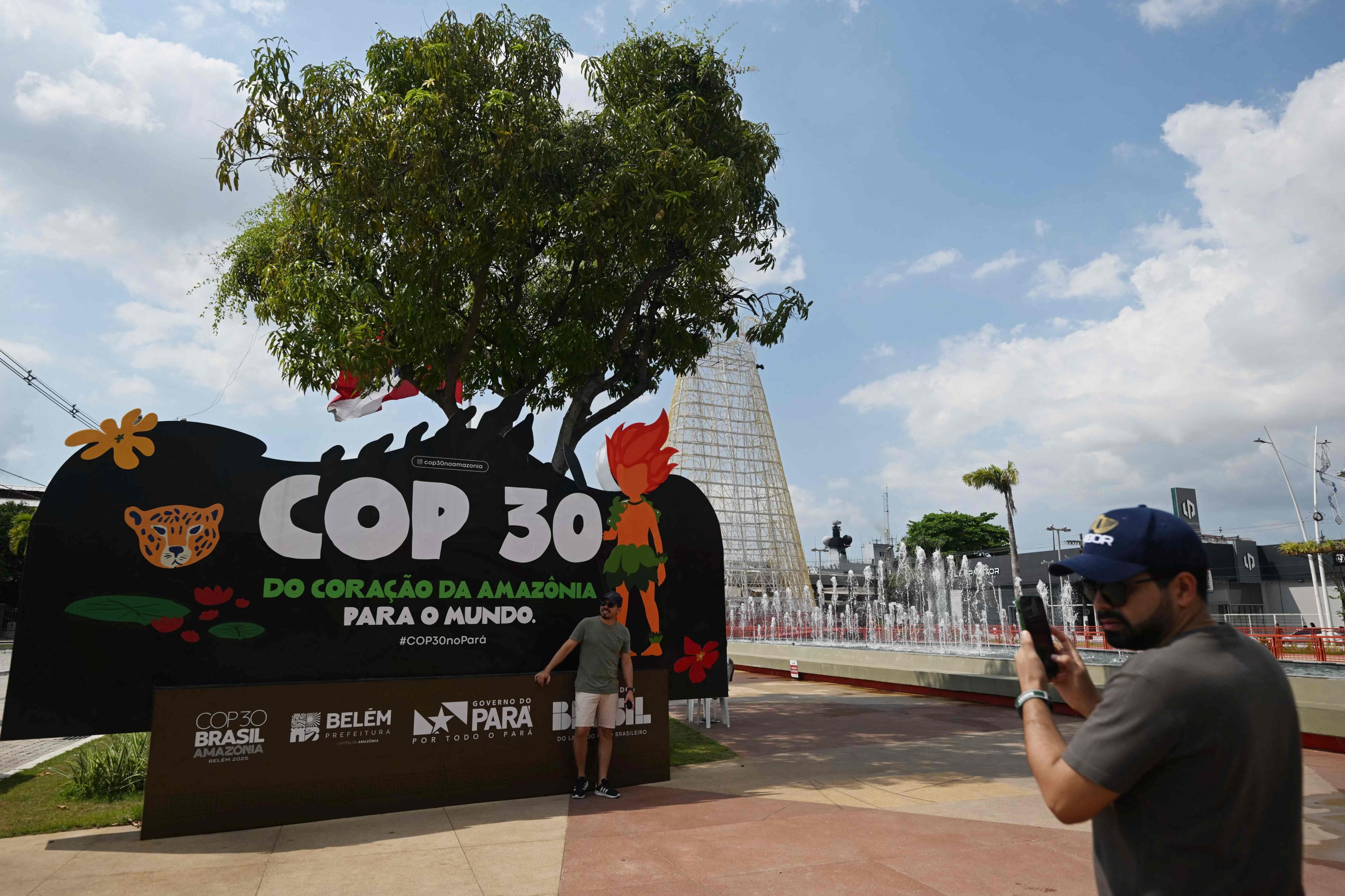
As COP30 opens on Monday for the more than 190 countries participating, it was unclear what exactly they would discuss during the two-week U.N. climate summit in Brazil's Amazon city of Belem.
Also unclear is how they'll handle testy issues, such as a 2023 pledge to wean off polluting energy sources and demand for financing to make that happen. But the biggest question mark was whether countries would aim to negotiate a final agreement – a hard sell in a year of fractious global politics and U.S. efforts to obstruct a transition away from fossil fuels.
Andre Correa do Lago, president of COP30, emphasized that negotiators engage in "mutirao," a Brazilian word derived from an Indigenous word that refers to a group uniting to work on a shared task.
"Either we decide to change by choice, together, or we will be imposed change by tragedy," do Lago wrote in his letter to negotiators Sunday. "We can change. But we must do it together."
Some nations, including Brazil, have suggested that countries focus on smaller efforts that don't need consensus, after years of COP summits that have celebrated lofty promises only to leave many unfulfilled.
"My preference is not to need a COP decision," do Lago said in an interview with the media. "If countries have an overwhelming desire for a COP decision, we will certainly think about it and deal with it."
Complicating the calls for togetherness is the United States. The Trump administration did not send high-level negotiators to the talks and is withdrawing for the second time from the 10-year-old Paris Agreement.
The U.S. has put more heat-trapping carbon dioxide into the air from the burning of coal, oil and natural gas than any other country. China is the No. 1 carbon polluter now, but because carbon dioxide stays in the air for at least a century, more of it was made in the U.S.
"I think the environment we are in, the geopolitical landscape, is particularly challenging," said Palau Ambassador Ilana Seid, who chairs the Alliance of Small Island States. Small island nations suffer some of the worst effects of climate change because rising seas swallow land.
"The United States withdrawing from the Paris Agreement has really shifted the gravity'' of the whole negotiating system.
President Donald Trump's actions damage the fight against climate change, former U.S. Special Envoy for Climate Todd Stern said.
"It's a good thing that they are not sending anyone. It wasn't going to be constructive if they did," he said.
Do Lago noted the rise of China's importance in the talks, as the U.S. promises to exit the Paris Agreement in January and the European Union struggles to maintain its ambition amid worries over energy security.
"Emerging countries are appearing in this COP with a different role. China is coming with solutions for everyone," do Lago said, noting that inexpensive green technologies from China were now leading the energy transition worldwide.
"You start complaining that China is moving the GDP all over the world," he said. But "that is great for climate."
Countries will be joined by Indigenous leaders, who arrived Sunday evening by boat after traveling some 3,000 km (1,864 miles) from the Andes to the Brazilian coast.
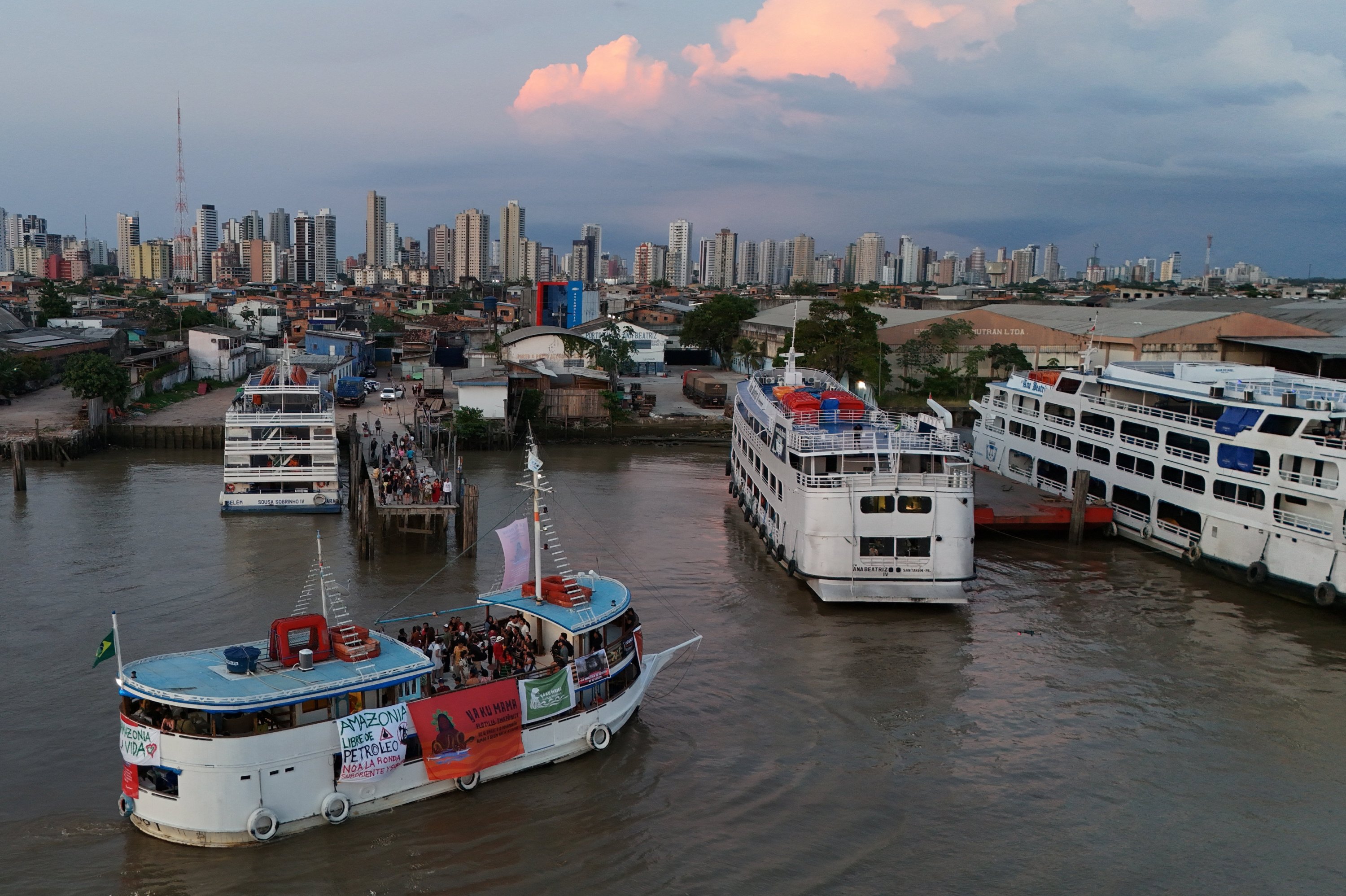
They are demanding more say in how their territories are managed as climate change escalates and industries such as mining, logging and oil drilling push deeper into forests.
"We want to make sure that they don't keep promising, that they will start protecting, because we as Indigenous people are the ones who suffer from these impacts of climate change," said Pablo Inuma Flores, an Indigenous leader from Peru who also bemoaned the oil spills and illegal mining he says are happening along the river.
Hours before the summit's start, scientists at dozens of universities and science institutions from Japan to South Africa and Britain sounded an alarm over the world's thawing glaciers, ice sheets, and other frozen spaces.
"The cryosphere is destabilizing at an alarming pace," the groups said in a letter to COP30 published on Monday. "Geopolitical tensions or short-term national interests must not overshadow COP30. Climate change is the defining security and stability challenge of our time."
The first point of order for COP30 will be to vote on an agenda. Do Lago said countries had been wrangling for months over what to include, a process he described as a healthy exchange of priorities.
Brazilian President Luis Inacio Lula da Silva hopes countries will consider setting a plan for quitting fossil fuels.
"How are we going to do this? Is there going to be consensus about how we are going to do it? This is one of the great mysteries of COP30," do Lago said.
Other possible issues for the agenda include deciding how countries will cut emissions further, with their current plans falling short of what’s needed to limit extreme warming. By Monday morning, 106 governments had submitted new climate plans.
Sources familiar with the talks said more would offer plans this week, including South Korea and India.
In a letter to negotiators released late Sunday, Simon Stiell, the U.N. climate chief, said the Paris Agreement is working to a degree, "but we must accelerate in the Amazon. Devastating climate damages are happening already, from Hurricane Melissa hitting the Caribbean, Super Typhoons smashing Vietnam and the Philippines, to a tornado ripping through Southern Brazil."
Not only must nations do more faster, but they "must connect climate action to people's real lives," Stiell wrote.
Uniquely this year, delegates are keen to tackle agriculture emissions – a topic often left to the side given the difficulty of addressing the farming and livestock practices central to many countries' food security and livelihoods.
Among developing countries, do Lago said, "there is a movement" to advance solutions and access to technologies that can help make farming more efficient and less polluting.
Countries also want to address financial and action targets for adapting to the conditions of a warmer world, with hopes that development banks can undergo enough reform to ensure more money – including from the private sector – goes to these goals.