Daily Sabah logo

Politics
Diplomacy Legislation War On Terror EU Affairs Elections News Analysis
TÜRKİYE
Istanbul Education Investigations Minorities Expat Corner Diaspora
World
Mid-East Europe Americas Asia Pacific Africa Syrian Crisis Islamophobia
Business
Automotive Economy Energy Finance Tourism Tech Defense Transportation News Analysis
Lifestyle
Health Environment Travel Food Fashion Science Religion History Feature Expat Corner
Arts
Cinema Music Events Portrait Reviews Performing Arts
Sports
Football Basketball Motorsports Tennis
Opinion
Columns Op-Ed Reader's Corner Editorial
PHOTO GALLERY
JOBS ABOUT US RSS PRIVACY CONTACT US
© Turkuvaz Haberleşme ve Yayıncılık 2026

Daily Sabah - Latest & Breaking News from Turkey | Istanbul

  • Politics
    • Diplomacy
    • Legislation
    • War On Terror
    • EU Affairs
    • Elections
    • News Analysis
  • TÜRKİYE
    • Istanbul
    • Education
    • Investigations
    • Minorities
    • Expat Corner
    • Diaspora
  • World
    • Mid-East
    • Europe
    • Americas
    • Asia Pacific
    • Africa
    • Syrian Crisis
    • Islamophobia
  • Business
    • Automotive
    • Economy
    • Energy
    • Finance
    • Tourism
    • Tech
    • Defense
    • Transportation
    • News Analysis
  • Lifestyle
    • Health
    • Environment
    • Travel
    • Food
    • Fashion
    • Science
    • Religion
    • History
    • Feature
    • Expat Corner
  • Arts
    • Cinema
    • Music
    • Events
    • Portrait
    • Reviews
    • Performing Arts
  • Sports
    • Football
    • Basketball
    • Motorsports
    • Tennis
  • Gallery
  • Opinion
    • Columns
    • Op-Ed
    • Reader's Corner
    • Editorial
  • TV
  • Business
  • Automotive
  • Economy
  • Energy
  • Finance
  • Tourism
  • Tech
  • Defense
  • Transportation
  • News Analysis

COVID-19 may take things from bad to worse for weak US economies

by REUTERS

ISTANBUL Oct 14, 2020 - 2:10 pm GMT+3
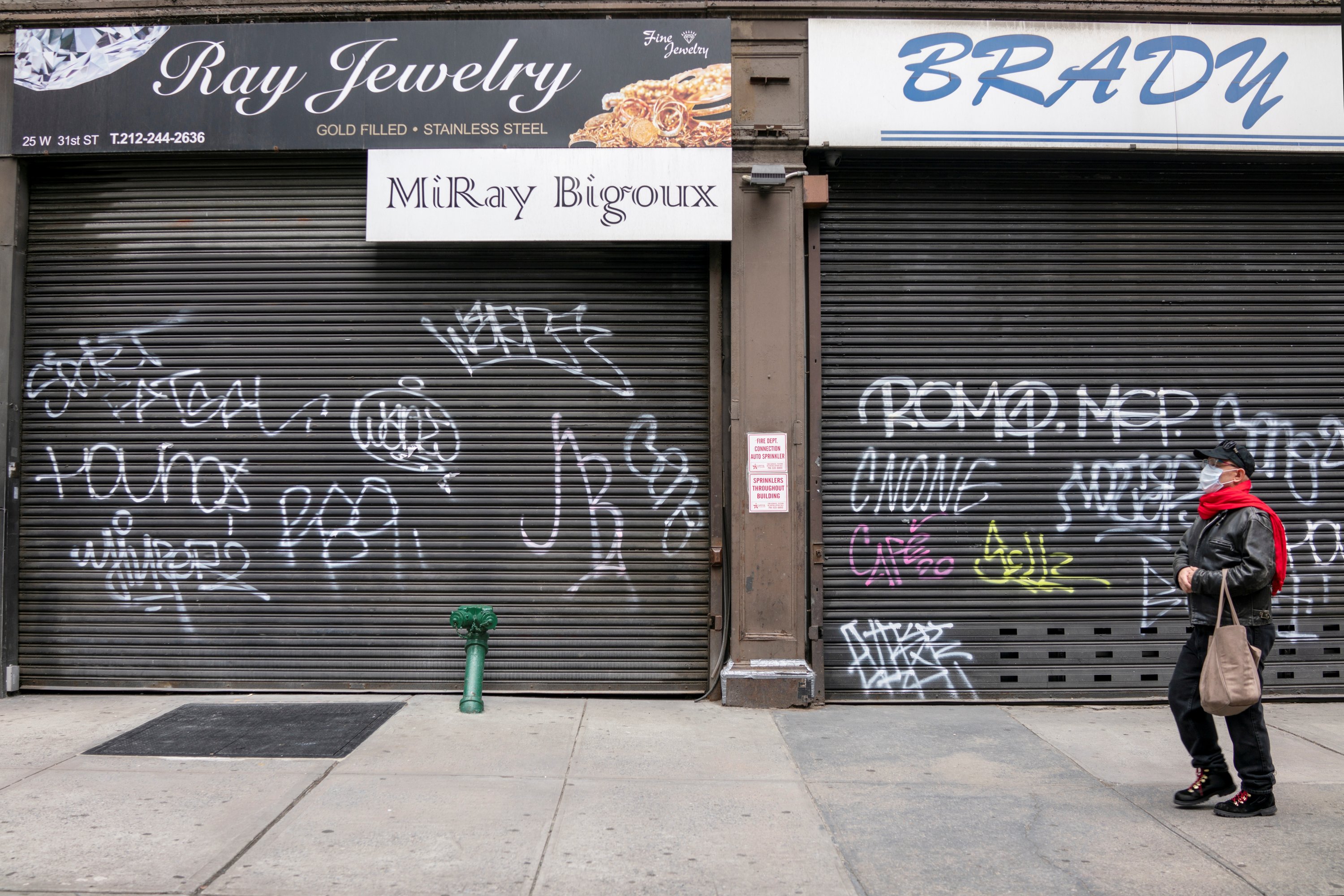
A man wearing a mask walks past shuttered businesses on Broadway in the Manhattan borough of New York City, U.S., April 25, 2020. (Reuters Photo)
by REUTERS Oct 14, 2020 2:10 pm

A decadelong economic expansion did little to narrow the gaps between the United States' prosperous and ailing areas, with thousands of "distressed" zip codes shedding jobs and businesses in a trend that laid the groundwork for the developing "K" shaped recovery from the coronavirus pandemic.

A new analysis from the Economic Innovation Group studying economic patterns across roughly 25,000 zip codes showed that from 2000 through 2018, already prosperous areas pulled further ahead, capturing disproportionate shares of the jobs created and the new businesses that were formed.

For 5,000 or so "distressed" zip codes it was, by contrast, a period of lost opportunity as they fell further behind, with the number of jobs declining even deep into the recovery and those that remained more concentrated in industries and occupations likely to have been disrupted by the pandemic.

Economists analyzing the U.S. path to recovery are worried that inside national measures of economic growth lie deepening divisions between industries and people as some sectors recover fast, while employment in the leisure and hospitality industry, for example, remains 20% below where it was in February.

Such service sector workers, the EIG found, made up a disproportionate share of workers in areas already falling behind economically.

"Communities that were already vulnerable going in, that had already been largely overlooked by the period of growth preceding the pandemic, are the most vulnerable to its effects," said EIG President John Lettieri.

Within the roughly 5,000 worst-off zip codes nearly a quarter of working adults were employed in service occupations as of 2018.

By contrast, in prosperous zip codes, only 13% of employed adults were in service jobs, while half were in management or professional occupations, a group of jobs considered more adaptable to work-from-home arrangements.

The study combines a variety of statistics on education, poverty rates and employment into an index that divides U.S. zip codes into five groups, with the top 20% considered "prosperous" and the bottom considered distressed.

The study did document improvement. Around 33 million more Americans were living in "prosperous," "comfortable" or mid-tier zip codes in 2018 than in 2000 – prosperity that increasingly moved towards urban areas. Those zip codes also became more ethnically and racially diverse, with the share of non-white residents in prosperous areas rising from 16% to 26%. More Americans in distressed areas are also graduating high school.

But the gaps remained large. The number of Americans living in distressed areas remained about 50 million, unchanged since 2000, and a disproportionate share were Black and Hispanic. About 56% of Blacks and 45% of Hispanics lived in economically distressed or at-risk areas.

From 2000 through February 2020, the U.S. went through two recessions, one of them deep, but also had its longest measured period of uninterrupted growth.

It did little to change the economic landscape, with roughly two-thirds of zip codes remaining in the same category in which they started. With a third recession sparked by the pandemic now underway, the divide may grow deeper.

"All of the gains have gone to higher tiers," said EIG Research Director Kenan Fikri. "We have a chronic tail of distressed communities."


  • shortlink copied
  • Last Update: Oct 14, 2020 6:39 pm
    KEYWORDS
    covid-19 outbreak economy united states
    The Daily Sabah Newsletter
    Keep up to date with what’s happening in Turkey, it’s region and the world.
    You can unsubscribe at any time. By signing up you are agreeing to our Terms of Use and Privacy Policy. This site is protected by reCAPTCHA and the Google Privacy Policy and Terms of Service apply.
    No Image
    Refik Anadol’s space-themed exhibition goes on display in Istanbul
    PHOTOGALLERY
    • POLITICS
    • Diplomacy
    • Legislation
    • War On Terror
    • EU Affairs
    • News Analysis
    • TÜRKİYE
    • Istanbul
    • Education
    • Investigations
    • Minorities
    • Diaspora
    • World
    • Mid-East
    • Europe
    • Americas
    • Asia Pacific
    • Africa
    • Syrian Crisis
    • İslamophobia
    • Business
    • Automotive
    • Economy
    • Energy
    • Finance
    • Tourism
    • Tech
    • Defense
    • Transportation
    • News Analysis
    • Lifestyle
    • Health
    • Environment
    • Travel
    • Food
    • Fashion
    • Science
    • Religion
    • History
    • Feature
    • Expat Corner
    • Arts
    • Cinema
    • Music
    • Events
    • Portrait
    • Performing Arts
    • Reviews
    • Sports
    • Football
    • Basketball
    • Motorsports
    • Tennis
    • Opinion
    • Columns
    • Op-Ed
    • Reader's Corner
    • Editorial
    • Photo gallery
    • DS TV
    • Jobs
    • privacy
    • about us
    • contact us
    • RSS
    © Turkuvaz Haberleşme ve Yayıncılık 2021