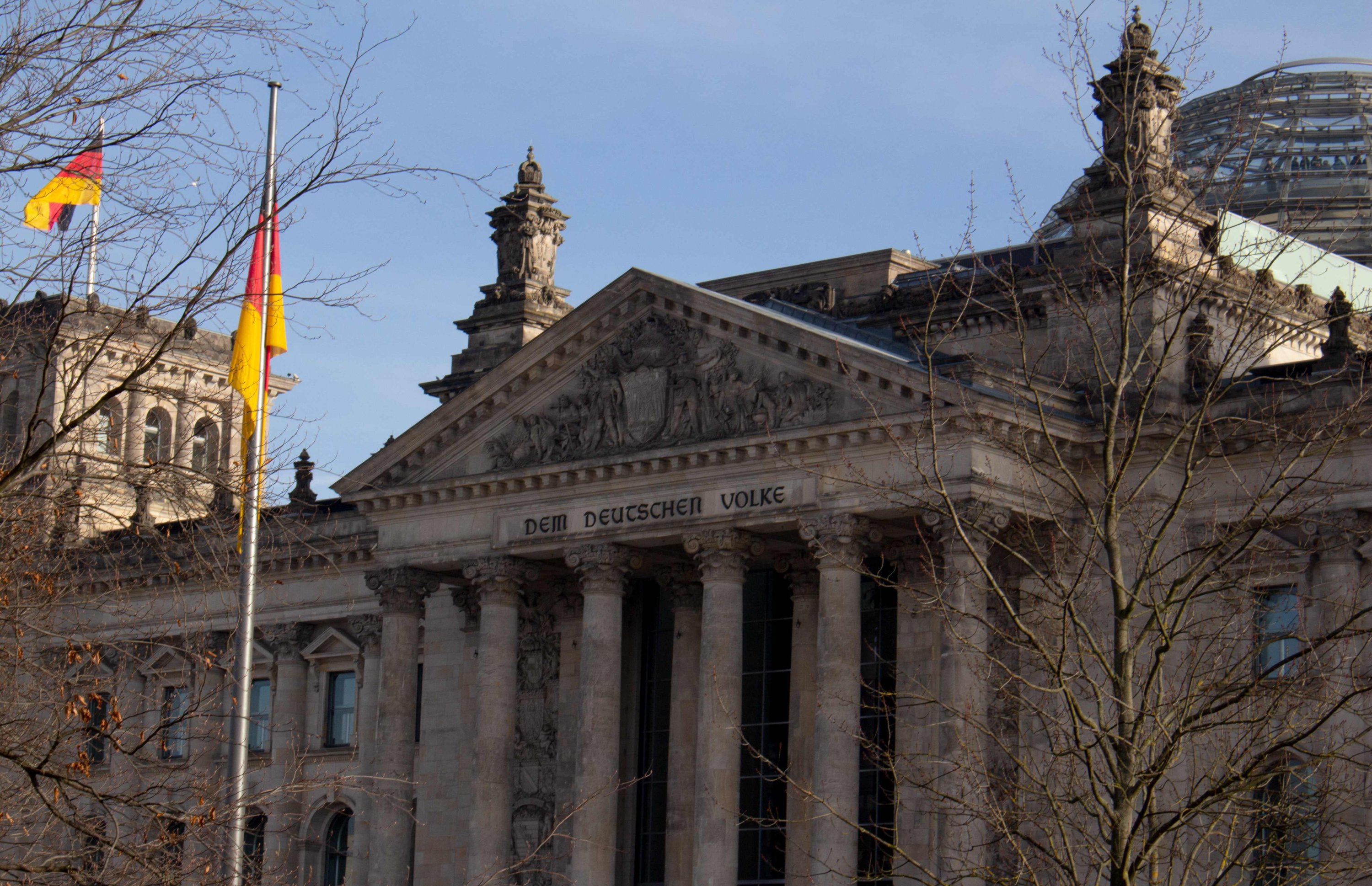
Germany and France have long been regarded as the twin engines of Europe. While France is mired in political problems, many key issues are also on the back burner in Germany as the country ramps up for elections. Could hard-nosed chancellor hopeful Friedrich Merz bring the fresh wind Germany needs?
One month from now, on Feb. 23, Germany is electing a new parliament.
While the European Union's largest economy is busy with campaigning, there is not much bandwidth for pressing European topics. Depending on the outcome of the polls, difficult and drawn-out coalition talks might follow – leading to further paralysis and distraction from EU affairs.
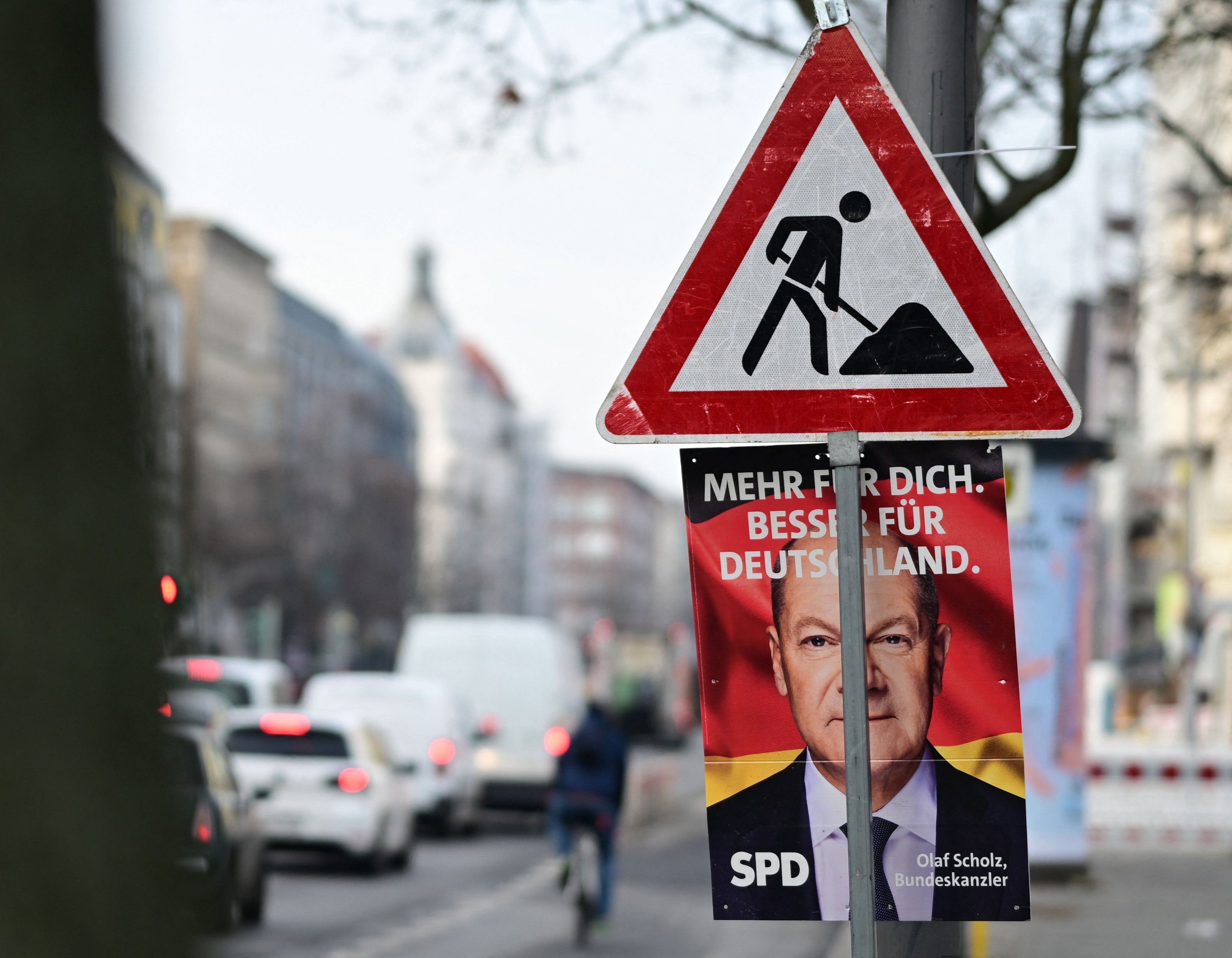
Clashes between Chancellor Olaf Scholz and his governing partners over Germany's best course of economic revival were at the heart of the coalition's collapse in November. It consisted of Scholz's Social Democrats (SPD), the Greens and the liberal Free Democrats (FDP).
Germany's economy shrank for a second straight year in 2024, with little hope of a speedy recovery.
Gross domestic product (GDP) fell 0.2% last year, according to preliminary figures from federal statistics agency Destatis, following a 0.3% contraction in 2023.
Berlin finds itself unusually toward Europe's tail end in terms of growth – the European Commission has predicted the overall eurozone economy to grow by 0.8% in 2024, well above Germany's result.
The country's structural problems are manifold, according to Timo Wollmershauser, head of forecasts at the German economic think tank Ifo.
"Compared to other locations worldwide, the burdens on companies due to taxes, bureaucracy and energy costs are high, the renewal of the digital, energy and transport infrastructure is progressing more slowly, and the skilled-labor shortage is more pronounced," Wollmershauser said in mid-January.
After Feb. 23, Germany is sure to end up being ruled by another coalition government, yet a return of the coalition of the SPD, the FDP and the Greens is unlikely.
Rebooting the German economy will be one of the main tasks for the new government, which – judging from current polling – could be led by the conservative bloc of Christian Democrats (CDU) and their Bavarian sister party, the Christian Social Union (CSU).
A YouGov poll released on Wednesday gives the CDU/CSU a clear lead at 28% despite being down two percentage points from the previous week.
While the SPD has been trailing the far-right Alternative for Germany (AfD) in recent polls, YouGov has them tied at 19% after Scholz's party gained a point and the AfD lost two.
The Greens saw a slight increase in Wednesday's poll, to 15% – their highest level since last April, according to YouGov – while the FDP, the Left Party and the populist Sahra Wagenknecht Alliance all remained close to the 5% threshold usually required to enter parliament.
A conservative-led coalition between the CDU/CSU and the SPD is considered the most likely scenario since all parties have ruled out forming a government with the AfD.
CDU frontrunner Friedrich Merz is campaigning on tax cuts for companies and households, arguing that the German economy is stifled by a heavy tax burden. He would seek to make work more attractive – in part by cutting welfare benefits – and has pledged to take an axe to the country's notoriously thick bureaucracy.
Whoever takes over in Berlin will face a massive to-do list. Along with fixing the economy and the country's crumbling infrastructure, Germans are clamoring for lower energy costs, even as the country needs to further reduce its dependence on fossil fuels.
One question is whether the new government will subsidize the construction of gas-fuelled power stations to serve as backup when wind and solar energy generation is insufficient.
Prospective chancellor Merz is expected to change Germany's course on several key policies; environmentalists fear steps backward.
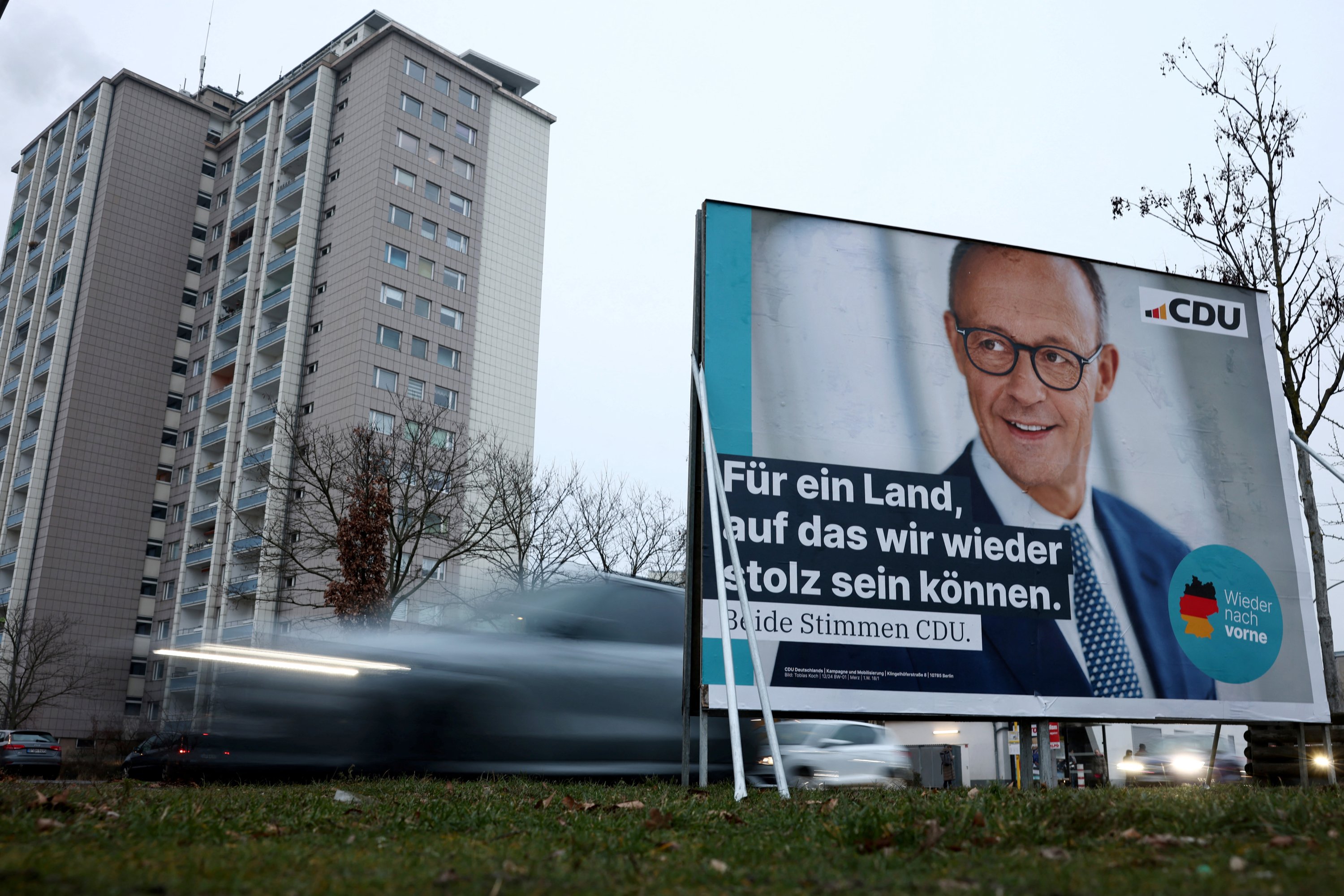
Merz is skeptical, for example, about Germany's energy transition to climate-friendly "green" steel, and his party has promised to re-introduce fuel subsidies for farmers.
But while recently calling Germany's phase-out of nuclear power regrettable, he said it was probably too late now for a reversal. Merz stressed that he remained committed to Germany's energy transition away from fossil fuels.
The German approach is not universally welcome across Europe.
"It's one thing that Germany doesn't want nuclear energy for themselves, but a different thing when they are stopping others from using funds for it. It's hypocrisy," Swedish Energy Minister Ebba Busch fumed in Brussels last month.
The conservative party leader regards himself as better placed to negotiate with U.S. President Donald Trump than Scholz, who has been more critical of the new U.S. administration – in particular regarding Trump ally Elon Musk's recent interventions in the German election campaign.
This relationship could become crucial if the U.S. president fulfills his promise of implementing new tariffs. Germany fears it could be on the front line in a new EU-U.S. trade war, which would hit its export-oriented economy hard.
"As long as European member states are united, they will be respected in the world, including in the United States. And as long as they are divided, no one will take us seriously," Merz told a gathering of the European People's Party (EPP) in Berlin on Jan. 18.
Trump will also expect Germany – and the EU – to take a clearer position against China amid the prospect of a full-blown trade war that Europe has tried to stay out of. Berlin's new leaders will have to figure out how to handle this and other demands from Washington.
Merz stressed that Germany must assume leadership responsibility with others in Europe.
This extends also to Ukraine, where Merz remains vocal in his support for increased military support, an issue Scholz's government has been split on.
The conservative challenger accused Scholz of electioneering last week after he refused to sign off on a further 3 billion euros ($3.13 billion) of arms deliveries to Ukraine.
Merz believes that aid can be financed as an "extraordinary expenditure" without taking on new debt, while Scholz says it would require additional borrowing that would affect the so-called debt brake – Germany's constitutional restrictions on ordinary borrowing.
It is now expected that Ukraine will have to wait for a decision until after the Feb. 23 polls.