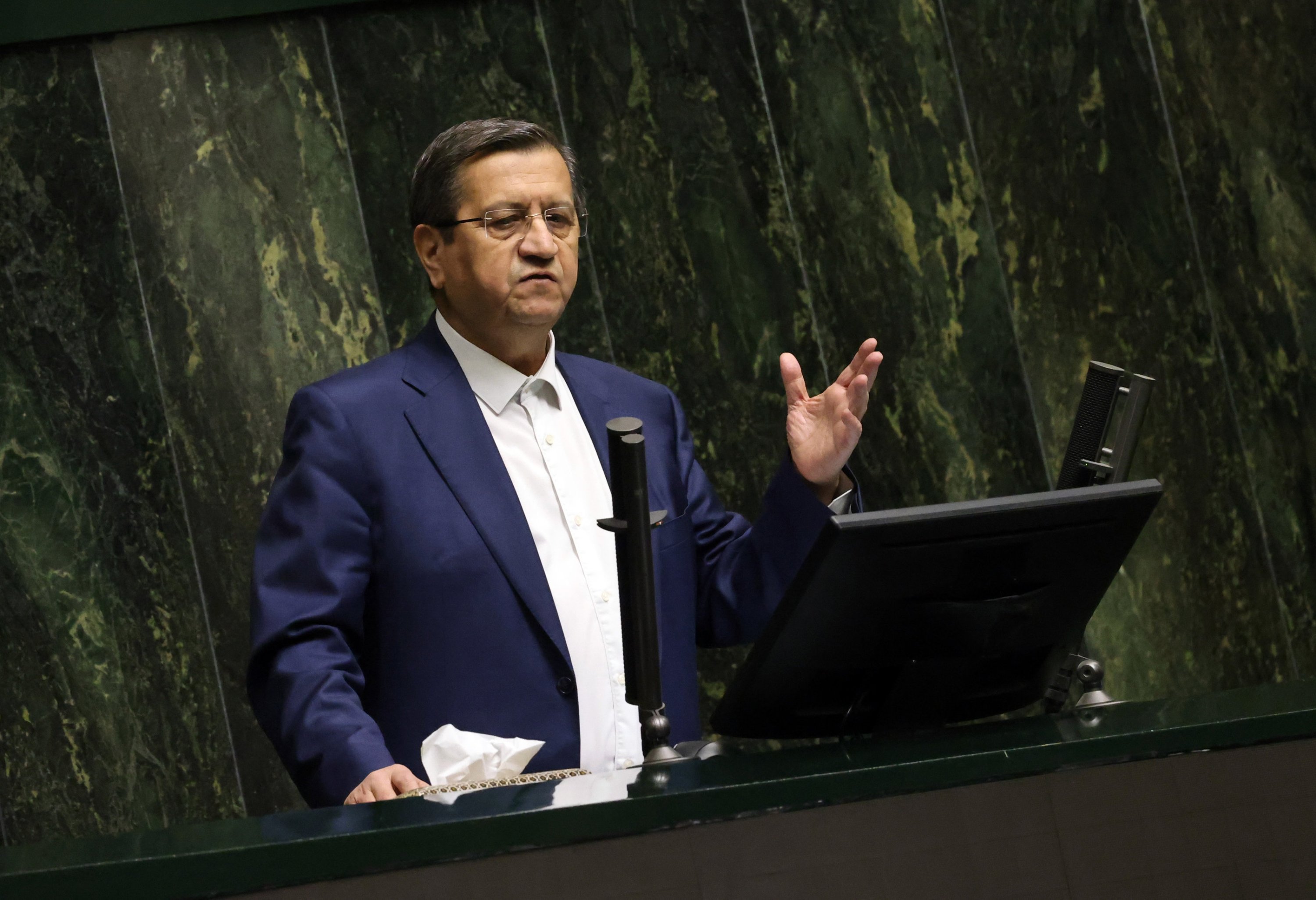
Iran’s parliament moved to impeach the country's economy minister Sunday, state media reported, only months after President Masoud Pezeshkian’s Cabinet was formed.
Parliament Speaker Mohammad Bagher Qalibaf said 182 out of 273 lawmakers voted against Abdolnasser Hemmati. The chamber has 290 seats.
The ousting of the minister followed sharp depreciation of rial in recent months and high inflation.
On the black market on Sunday, the Iranian rial was trading at more than 920,000 to the U.S. dollar, compared with less than 600,000 in mid-2024.
Pezeshkian offered lawmakers his defense of Hemmati, who previously held the post of governor of the Iranian Central Bank.
"We are in a full-scale (economic) war with the enemy," Pezeshkian said, adding that in this situation, "We must take a war formation."
"The economic problems of today's society are not related to one person and we cannot blame it all on one person."
Many lawmakers raised their voices as they took turns angrily censuring the economy minister, who they believe is responsible for the dire economic situation.
"People cannot tolerate the new wave of inflation; the rise in the price of foreign currency and other goods must be controlled," said one parliamentarian, Ruhollah Motefakker-Azad.
"People cannot afford to buy medicine and medical equipment," said another, Fatemeh Mohammadbeigi.
Pezeshkian took office in July with the ambition of reviving the economy and ending some Western-imposed sanctions.
But the depreciation of the rial has only intensified, especially since the fall in December of Iran ally Bashar Assad of Syria.
The day before his government's fall in Damascus, a dollar traded on Iran's black market for around 717,000 rials.
"The rate of the foreign exchange is not real; the price is due to inflationary expectations," Hemmati said in his defense.
"The most important problem of the country's economy is inflation, and that is chronic inflation, which has plagued our economy for years," the economy minister added.
Decades of U.S.-led sanctions have battered Iran's economy, with double-digit inflation causing an increase in consumer prices since Washington pulled out of a landmark 2015 nuclear deal in 2018.
The deal, formally called the Joint Comprehensive Plan of Action, provided for an easing of sanctions and the return of Western investment to Iran in return for increased limits on the country's nuclear activities.
U.S. President Donald Trump, who returned to the White House in January, has revived his policy of "maximum pressure" on Iran, further tightening restrictions on the Islamic republic.
The Iranian economy has since 2018 been under pressure from high inflation, serious unemployment and the depreciation of its currency, which weighs heavily on everyday Iranians.
Since 2019, inflation in Iran has been above 30% annually, according to figures from the World Bank.
In 2023, it reached a whopping 44%, according to the Washington-based institution's last report.
According to the Iranian Constitution, a dismissal of the minister would be effective immediately, with a caretaker appointed until the government chooses a replacement.
In April 2023, members of parliament voted to dismiss then-Minister of Industry Reza Fatemi Amin due to a surge in prices linked to international sanctions.