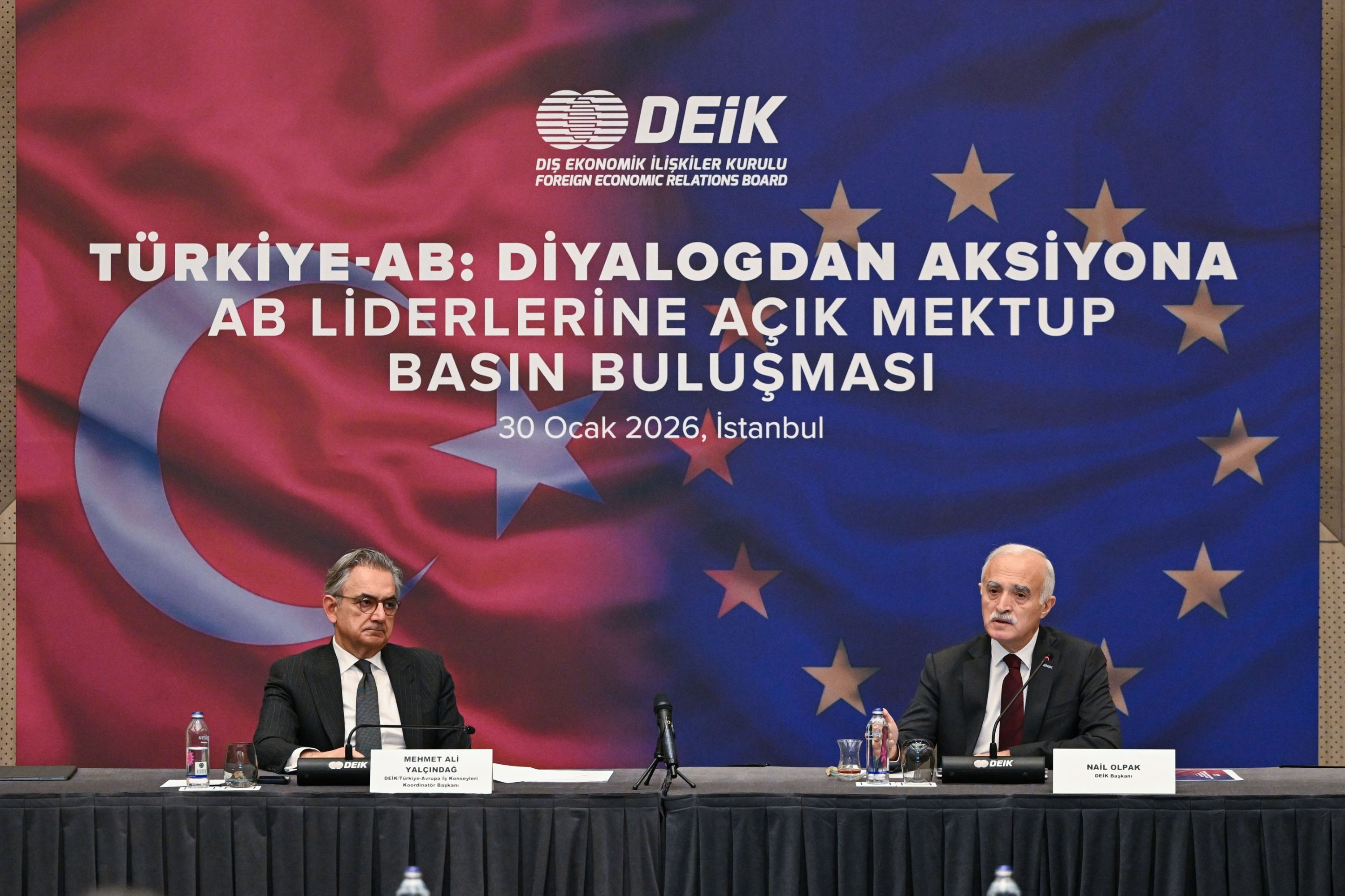
Senior figures from Türkiye's business community on Friday urged the European Union to reassess its long-stalled relationship with Ankara, arguing that deeper integration has become a strategic necessity as Europe confronts mounting security, energy and competitiveness challenges.
That's what Foreign Economic Relations Board (DEIK) calls for in an open letter to be sent to EU leaders and due to be published in the Financial Times.
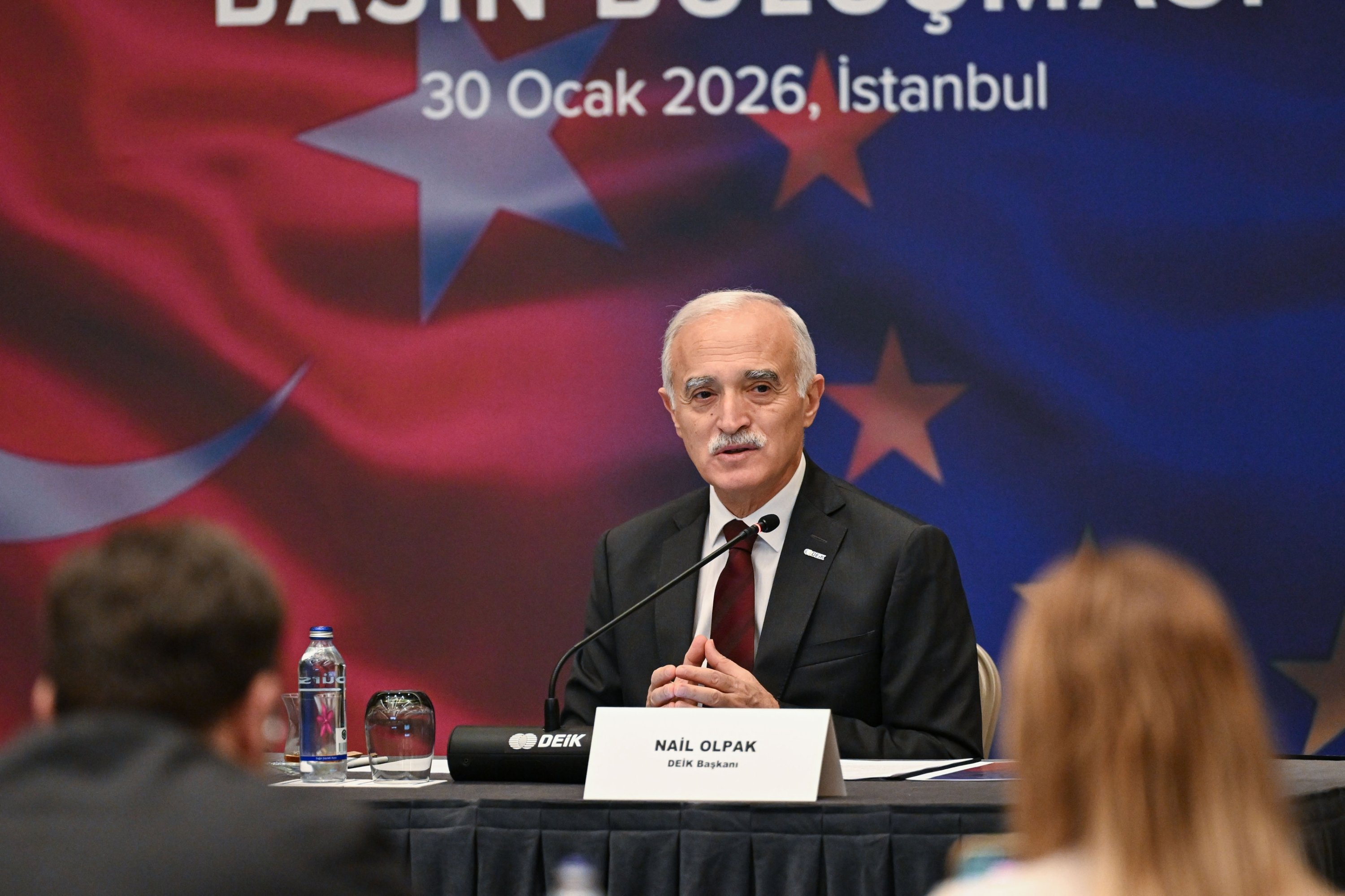
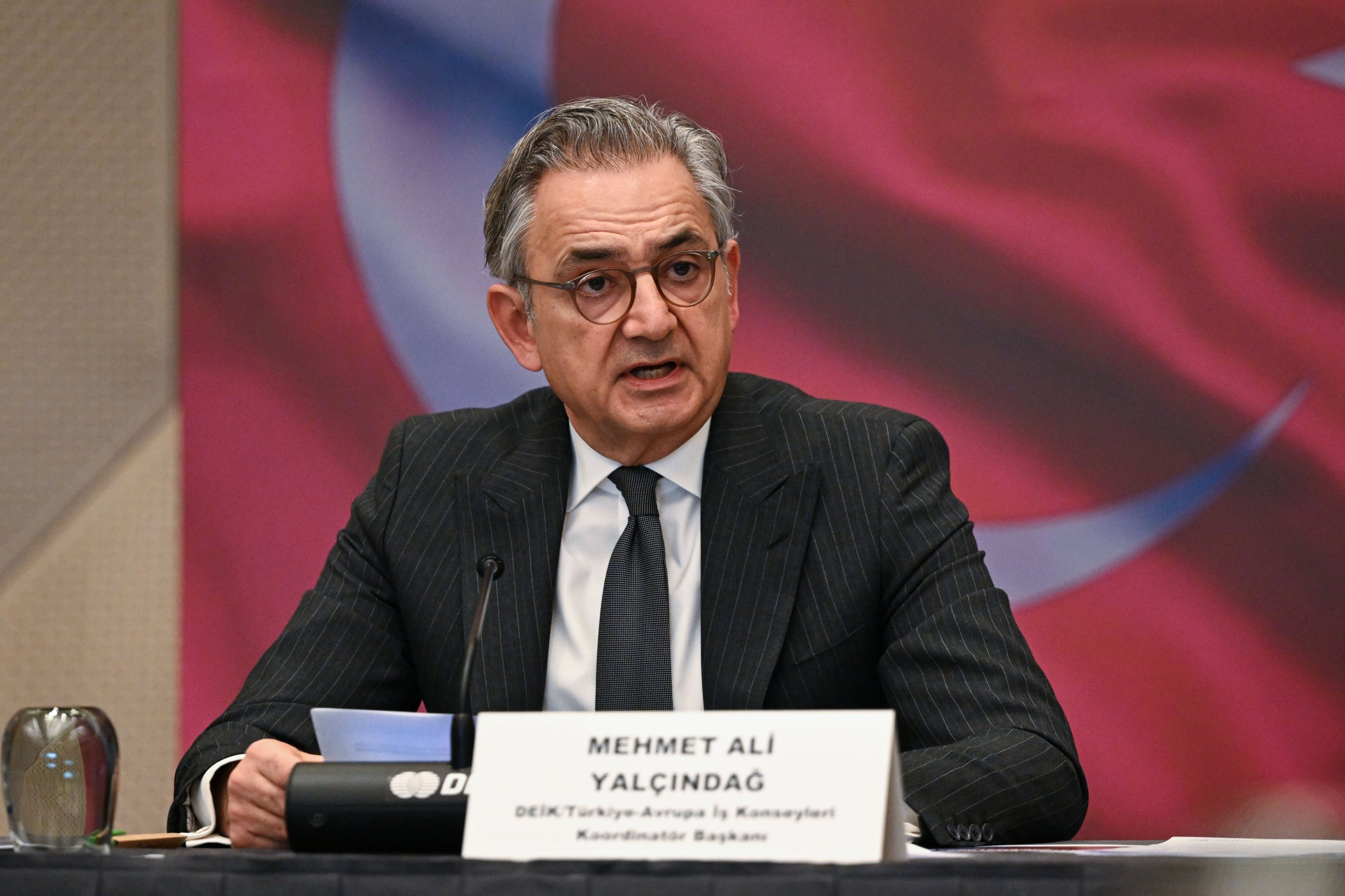
DEIK President Nail Olpak and Mehmet Ali Yalçındağ, coordinator chair of DEIK Türkiye-Europe Business Councils, framed Türkiye not as a peripheral partner but as an integral component of Europe's economic and geopolitical future.
Now is "exactly the right time," Olpak and Yalçındağ told a news conference in Istanbul. "Our message is very clear: Türkiye is an integral part of Europe's future," said Olpak.
With the letter, Yalçındağ said they "clearly demonstrate the business world's support for Türkiye's full membership, the potential in joint projects and concrete areas for cooperation."
"The relationship between Türkiye and the European Union is not only a diplomatic headline; this relationship also signifies economic integration, joint production and mutual interdependence," he stressed.
Ankara and Brussels have long enjoyed transactional cooperation, particularly on migration, trade and security, but political barriers amid disagreements have led to a deadlock when it comes to Türkiye's membership process.
Türkiye has long voiced frustration over the lack of progress on the modernization the customs union agreement. The deal was struck in 1995, before the European Commission formally proposed revamping the pact in 2016. But the Council of the EU never gave it a mandate to start negotiations amid a host of disagreements.
Turkish officials and businesses have long argued that the current agreement is outdated and no longer reflects global trade realities or the depth of today's economic relationship.
The pact was the first substantial customs union between the EU and a non-member country, covering industrial goods and processed agricultural products. A modernized agreement would expand the scope to services, agriculture in full and public procurement.
Olpak said the current process is exactly what the business world "dislikes," stressing that "we are at a standstill on the political dimension."
"Uncertainty and unpredictability. We are going through a period of unpredictability, and we cannot foresee how long it will last," he stressed.
Olpak particularly referred to the free trade deals the EU recently agreed with the South American bloc Mercosur and India, saying such pacts "are working against us."
"While the agreements are being signed, we cannot be a party at the table, yet we are in a position directly affected by the outcomes of those agreements," he said.
"This reduces my bargaining power at the table," he noted. "This is a matter we seriously need to reflect upon."
DEIK's call appears to reflect growing confidence within Turkish industry that global shifts are strengthening Ankara's leverage after years of strained political ties with Brussels.
The EU faces pressure to reinforce its defense capacity, secure alternative energy supplies and stabilize industrial value chains, particularly amid the war in Ukraine, tensions with Washington, the intensifying U.S.-China rivalry and the accelerating impact of artificial intelligence and green technologies on economic competitiveness.
"For Türkiye, Europe is not just a geography. Europe signifies shared values. It signifies economic integration and progress. This is because global power balances are shifting rapidly," said Yalçındağ.
"Europe is making efforts to regain its position, which has weakened in recent years, amid the military, financial and technological power balances centered around the U.S. and China," he noted.
Olpak and Yalçındağ argue that Europe's strategic autonomy efforts risk falling short without closer alignment with Türkiye, which they say already plays a central role in manufacturing, logistics and energy transit.
Türkiye is the EU's fifth-largest trading partner, while the bloc remains Ankara's largest export market. Turkish companies are deeply embedded in European value chains across sectors, including automotive, machinery, textiles and electronics.
Executives also pointed to Türkiye's growing defense-industrial base, its role as a NATO member with the alliance's second-largest army, and its position as a hub for gas, electricity and emerging renewable energy routes.
The business community's focus on defense cooperation comes amid heightened urgency in Europe, where governments are accelerating military spending but face long timelines to build domestic capacity.
"In the field of defense, Türkiye is no longer merely a buyer. It is also an actor that produces and develops," said Yaçındağ. The expertise it has gained over the past two decades "enables high-tech, sophisticated and large-scale collaborations with European countries," he noted.
"Europe is today aiming to reach the level Türkiye has already achieved. However, it is evident that this is a long and challenging process," he added.
If the need is urgent, Yalçındağ says measures must be taken urgently. "Defense industry breakthroughs for the security of the European continent can only be implemented rapidly and qualitatively through partnerships established with Türkiye," he stressed.
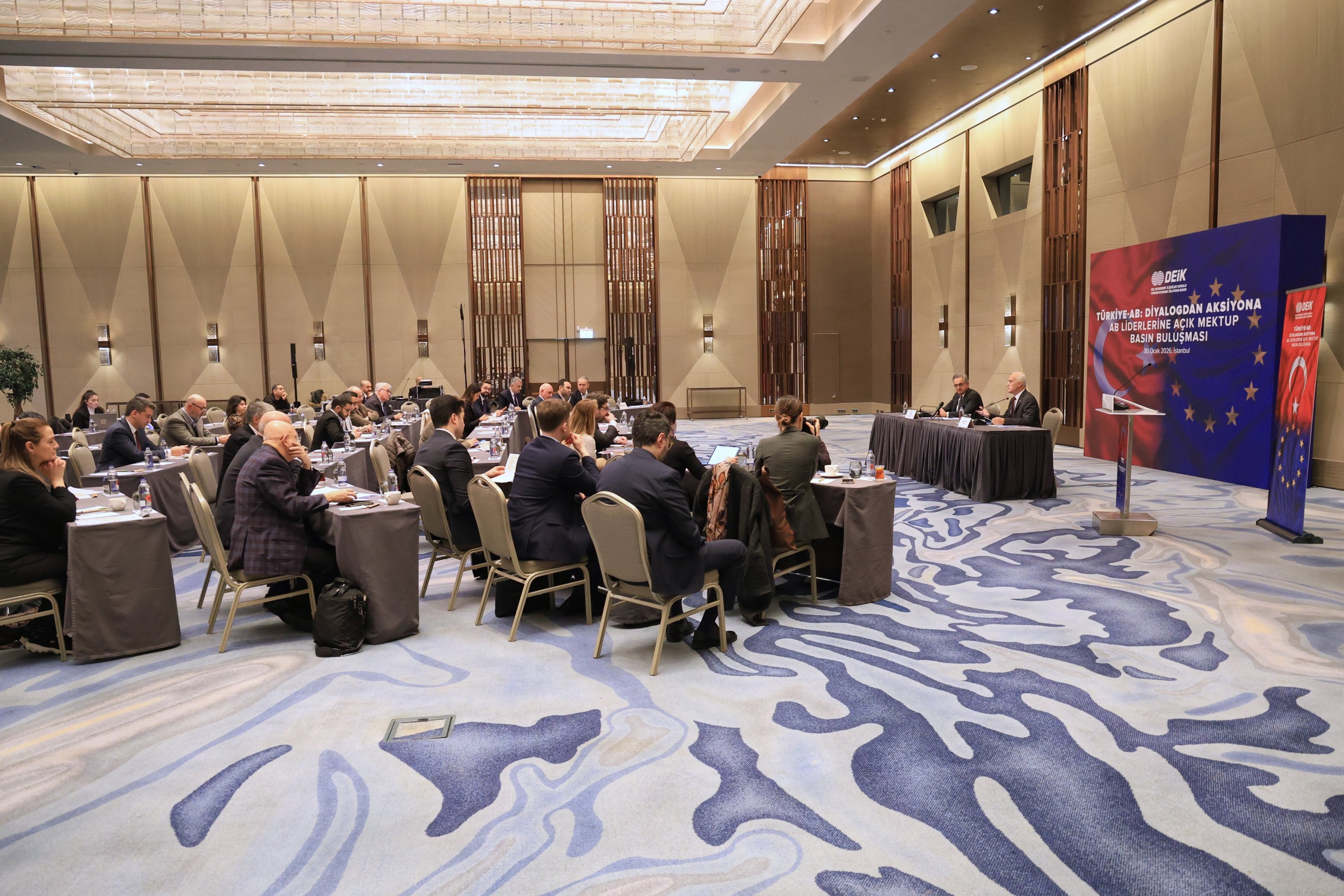
Turkish officials and executives also argue that joint production and technology partnerships could offer faster and more cost-effective solutions, particularly as European leaders debate how to reduce reliance on U.S. security guarantees.
"In such an environment, it has become an open necessity, no longer just a preference, for Europe to bolster its strategic integrity and pivot toward a deeper integration with its near abroad," Yaçındağ said.
"At this very juncture, Türkiye stands out as an indispensable partner in addressing the global challenges that Europe faces," he added.
Energy security is another central pillar of the argument, according to Yalçındağ.
With EU countries planning to phase out Russian gas from 2027, Türkiye's role as a transit and connectivity hub linking Europe to alternative suppliers in the Caspian, Middle East and Eastern Mediterranean has gained prominence, he said.
The message, Yalçındağ says, is clear.
"The world needs a new Europe. Let us build this new Europe together," he said. "Europe needs Türkiye. Türkiye needs Europe. And the world needs such a Europe."
Yalçındağ stressed that they don't believe that Europe can establish economic and strategic autonomy by excluding Türkiye.
"It is imperative that the EU and the influential leaders of member states rid themselves of the strategic blindness that excludes Türkiye and recognize the benefits that Türkiye's full membership will bring."