Money leaving the investment funds now being liquidated in Türkiye has largely moved into bank deposits, the country's central bank chief said Tuesday, adding that the risk of the turmoil spreading to the wider financial system remained limited so far.
Regulators last month ordered the liquidation of over 130 investment funds managed by seven asset managers following warnings by some that they could not meet redemption payments.
Authorities have widened their investigation into suspected market manipulation in stocks and fund markets. Eighty-five suspects have been arrested so far in the probe, Justice Minister Akın Gürlek said Tuesday.
The funds ordered to be wound down had reached more than $20 billion in assets over just three years. About half a million investors have been affected.
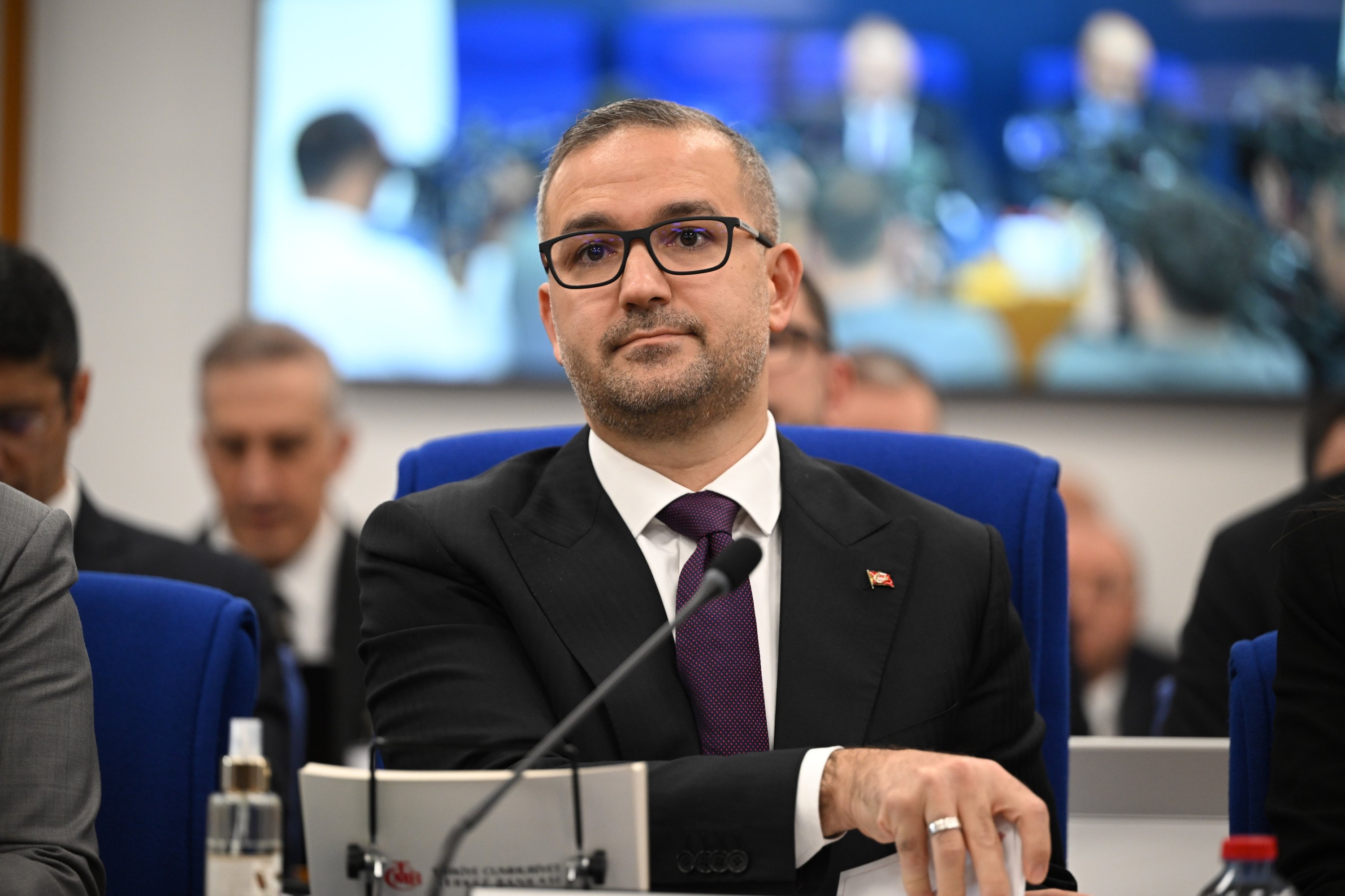
There have been sharp outflows from funds undergoing liquidation, and part of it came from foreign-resident investors, Central Bank of the Republic of Türkiye (CBRT) Governor Fatih Karahan said Tuesday.
He was answering lawmakers' questions at Parliament's Planning and Budget Commission.
For domestic residents, Karahan said, where the money goes matters for dollarization.
"We see that a significant portion of this amount has moved into deposits," he said. He added that total commercial and savings deposits rose by more than TL 800 billion ($16.27 billion) over the same period.
Karahan said there had also been outflows from foreign-currency funds, and that some of that money could be expected to flow into foreign-currency deposit accounts. Even so, he said, overall deposit preferences were in line with the current Turkish lira share.
He put the lira share of investment funds at about 61% to 61.4%, and said it was holding steady.
Karahan said the link between the funds in liquidation and the rest of the financial system was critical for assessing contagion risk, and that current data pointed to a weak connection.
“We can say that the shift toward the Turkish lira in the financial system is continuing in some form, at least based on the data we have at the moment,” Karahan said.
He credited coordinated measures by the central bank and other institutions for keeping the risk of contagion limited so far.
He said the impact so far was mostly confined to the portfolio management companies concerned and their investors.
"We assess that the contagion risk is under control based on the data," Karahan said. "But this does not mean everything is over. If we see the need, we will continue to take the necessary steps in every way."
He said there had been a risk of volatility and disruption in lira markets, which was why a number of measures had been taken.
Karahan said the liquidation process was only at its start, and that a firm assessment of its macroeconomic effects would need to wait to see how it unfolds.
He said the central bank would track the impact in three areas: wealth, reserves and the real sector.
Karahan said financial wealth could decline somewhat, but that the effect on spending was expected to be smaller than that of the recent fall in gold prices.
For reserves, he said, what matters is where investors leaving the funds put their money. So far the data show a strong preference for the lira.
The third area is indirect effects through household and corporate balance sheets. Karahan said the central bank's first analyses showed that real sector companies hold only a limited share of the liquidated funds, and that these are mostly large firms with strong liquid assets.
Any balance-sheet impact would therefore be expected to feed less strongly into the real economy. He stressed that these were initial findings and would be updated as data come in.
In his presentation before the commission, Karahan also said that disinflation is expected to regain momentum provided that supply pressures ease
He stressed that the bank would keep a cautious monetary policy to preserve gains achieved so far in lowering inflation.
Türkiye's annual inflation dipped below 30% for the first time in almost five years in September, official data showed Monday.
Consumer price growth eased more than expected to 29.73% from 31.51% in August.
That marked the fourth consecutive month of decline, after the downward trend that started in mid-2024 stalled earlier this year following a sharp rise in energy prices caused by the Iran war.
Monthly price growth also came in below expectations at 1.84%, the same as in August.
Some analysts said the September reading raises the prospect of an interest rate cut at the Oct. 22 meeting.
The bank has kept its benchmark one-week repo rate at 37% this year, as it monitored the inflation impact of the Iran war.
Karahan said a slowdown in the disinflation process had been caused by war-related energy price volatility. But he added that "the main trend in inflation remains below annual inflation," signaling that disinflation would continue if supply pressures fade.
He noted that upside risks to energy prices are being evaluated and that tight policy is seen as important in limiting the inflationary impact of supply shocks.
Karahan said a weaker-than-expected improvement in inflation expectations poses a risk to the disinflation process.
On the other hand, a slowdown in services inflation is continuing despite supply shocks, with weaker domestic demand also contributing, he noted.
Leading indicators show that a slowdown in rent inflation is expected to continue, Karahan said.
A slowdown in domestic demand has become marked, with indicators confirming a weakening of consumption activity, he noted.
Karahan also said the current account deficit-to-GDP ratio in 2026 is seen below long-term averages.