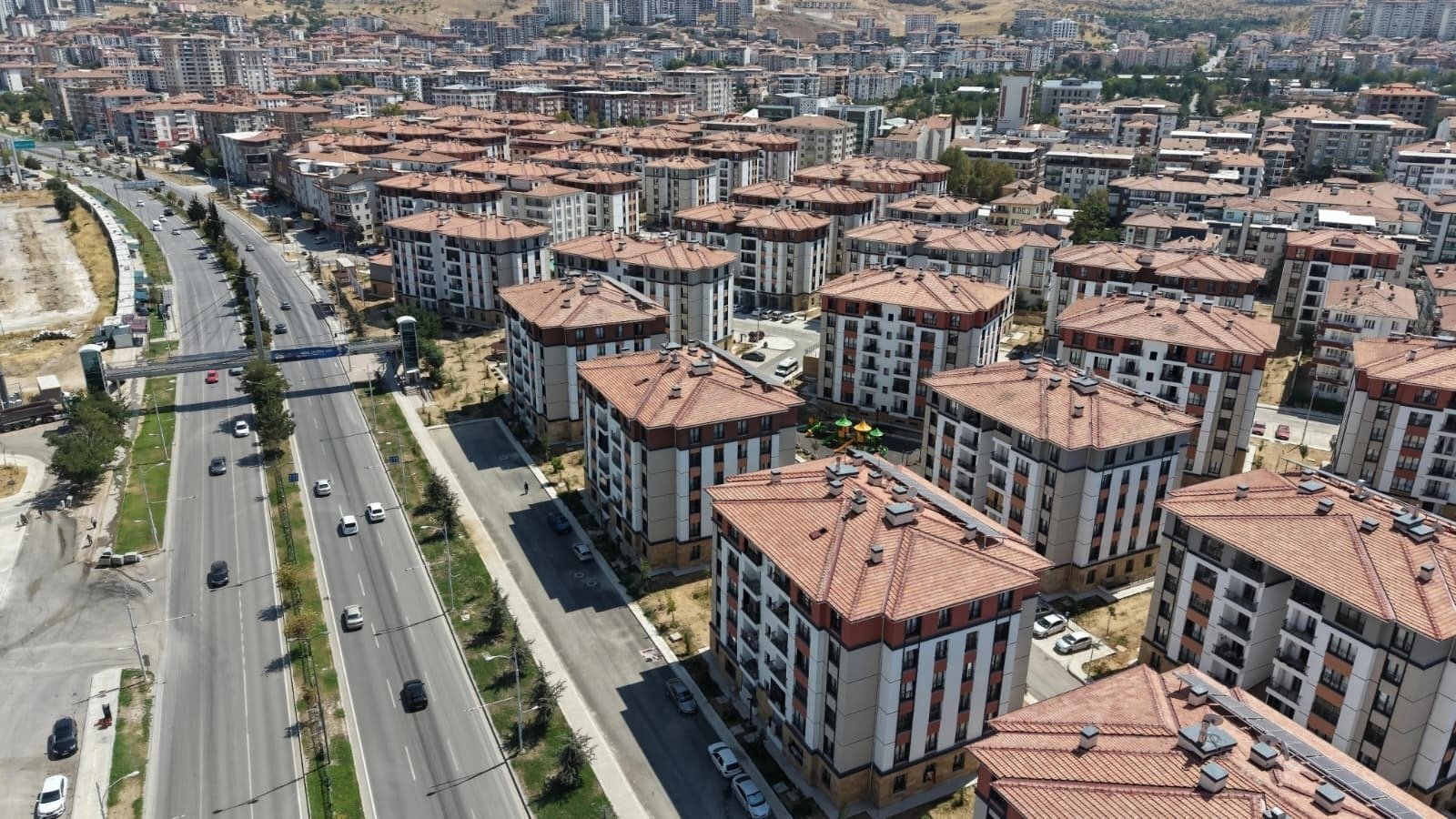
A rise in housing supply and the return of residents to areas hit by Türkiye's devastating 2023 earthquakes have begun to ease rent inflation, a study by the country's central bank said Wednesday.
The quakes early on Feb. 6, 2023, were among Türkiye's worst disasters that destroyed or damaged hundreds of thousands of buildings across 11 provinces, leaving more than 53,000 dead.
Government-led reconstruction efforts ever since have sharply increased housing supply in the affected provinces that were home to nearly 15 million people.
More than 36,930 buildings in the region collapsed, while about 311,000 were rendered unusable.
The region's share of building occupancy permits issued across Türkiye rose to more than 20% in 2025, from an average of around 12% before the earthquakes, the Central Bank of the Republic of Türkiye (CBRT) said.
The increase in housing supply has been reflected in rental prices. Rent inflation in quake-hit provinces was significantly higher than in other regions in 2023 and 2024, but began to slow in 2025 as housing deliveries accelerated.
The impact is also spreading beyond the earthquake zone, according to the CBRT study.
Rent inflation in provinces that were indirectly affected by the disaster remained broadly in line with other provinces in 2024 and 2025, but was significantly lower in 2026.
The report attributed the divergence in part to a gradual decline in rental demand in provinces that had received people displaced by the earthquakes, as residents began returning to the affected areas as housing stock recovered.
The remigration is therefore helping ease pressure on rental markets not only in the quake zone but also in surrounding provinces.
The reconstruction effort is also beginning to reshape the distribution of construction activity across Türkiye.
As major earthquake-housing projects near completion, employment in the construction sector in the affected region has started to decline, while construction employment in provinces outside the earthquake zone has increased rapidly, the report said.
The shift suggests that construction capacity developed during the reconstruction effort could increasingly be deployed elsewhere, potentially supporting a broader increase in housing supply.
The CBRT expects the increase in housing supply in the earthquake region to continue putting downward pressure on rent increases both directly in affected provinces and indirectly in surrounding areas.
The easing of rental inflation could also provide support to Türkiye's broader disinflation process, the central bank said.
Turkish annual consumer price inflation cooled to 31.75% in July. The decline had stalled following a sharp rise in energy prices caused by the Iran war.