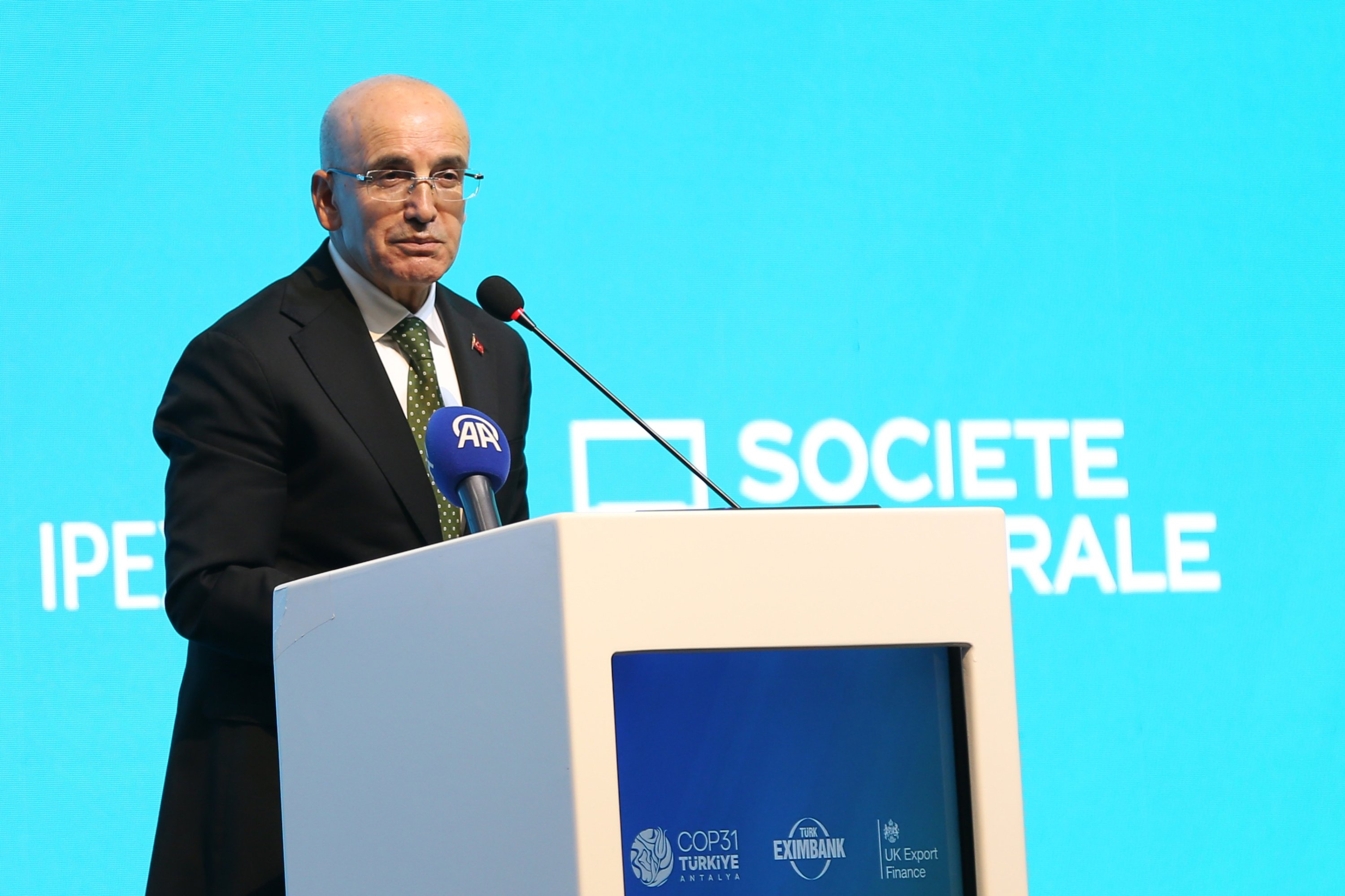
Türkiye has spent about $1 trillion on oil and natural gas imports over the past 20 years and could face a similar bill over the next two decades if necessary steps aren't taken, Treasury and Finance Minister Mehmet Şimşek said Thursday.
Addressing an event on the sidelines of the COP31 climate summit in southern Antalya, Şimşek said decarbonization directly affects international competitiveness and that the green transition is at the heart of Türkiye's economic program.
The minister noted that the green transition is not a choice but a necessity, emphasizing that it requires significant funding at both the global and local levels.
Şimşek said the global economy faces geopolitical tensions and fragmentation in trade. The world needs fewer new pledges and more concrete, financed projects that create jobs and growth, he said. He listed decarbonization and the restructuring of supply chains among the global economy's priorities.
Şimşek noted that the EU's Carbon Border Adjustment Mechanism, which puts a carbon cost on certain imports, has come into force and pointed to the Turkish economy's close links with European value chains.
About 55% of Türkiye's exports go to Europe and 43% to EU countries, he said. If carbon emissions are not reduced, some products will not be able to compete in international markets, he added.
He said the green transition is not only an environmental matter. It also bears on productivity, competitiveness, the modernization of industry and energy security, he said. It will cut the energy import bill and strengthen macroeconomic stability, he said.
Şimşek said the need for global and local financing for green investment is high. There is enough capital in the market, he said, but the main obstacle is the lack of a suitable investment climate.
Financing clean energy projects in emerging economies can cost at least twice as much as in advanced economies, he said, with much of the gap due to perceived risk. Multilateral development banks, export credit agencies and commercial banks acting together can lower financing costs, he said, and sharing risk can draw in private capital.
He said Türkiye has set the framework for sustainable finance through its National Green Finance Strategy and Action Plan, and that its Climate Law gives legal backing to a 2053 net-zero emissions target.
He also pointed to a new initiative launched at COP31 called the Climate Implementation Bridge, or BRIDGE. It is meant to help countries turn their priorities into projects ready for financing and connect them with investors.