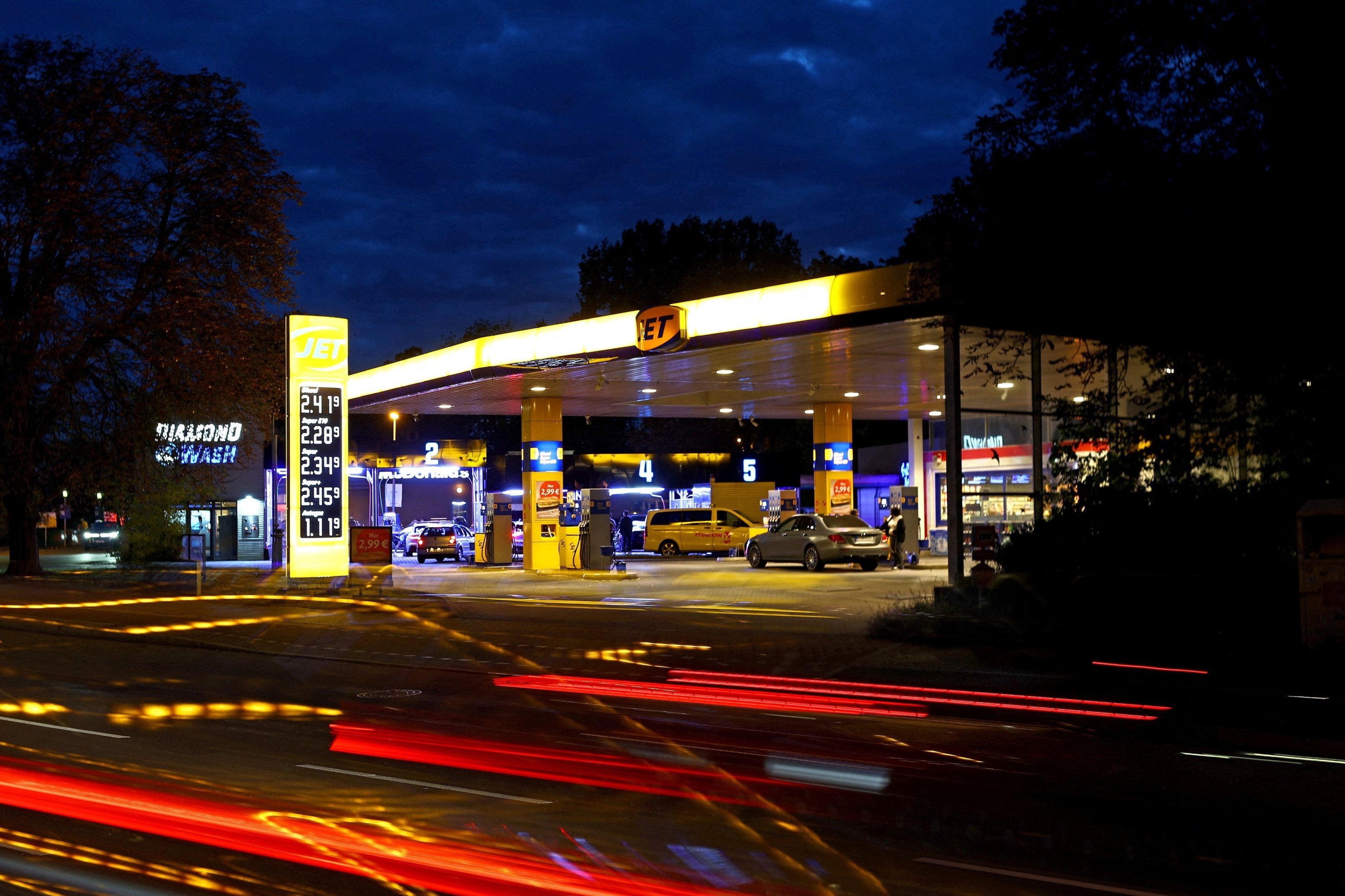
Inflation rose far quicker than expected in some of the eurozone's biggest economies in September, as energy costs soared because of the Middle East war, official data showed Wednesday, boosting expectations for further interest rate hikes.
The annual rate hit 3.3% in Germany, Europe's biggest economy, the fastest pace since December 2023, according to preliminary data from the statistics agency Destatis.
In France, consumer prices rose 3% in the month compared to a year earlier, the highest since February 2024 and a sharp increase from 2.4% in August, the statistics office Insee said.
In Italy, inflation jumped to 4.2%, nearly a full percentage point above the 3.3% recorded in August, the Istat agency reported.
In Spain, the inflation rate rose to 5% in September from 4.6% in August, data showed on Tuesday.
Energy inflation appears to have surprised on the upside in all countries that have reported so far, as has food inflation, although much more modestly, Mariana Monteiro from JPMorgan said.
The price hikes are well above the European Central Bank's (ECB) inflation target of 2%, raising the likelihood it will raise interest rates further.
The ECB had expected inflation to accelerate from 3.3% in the third quarter to 3.6% in the final three months of the year, but economists say the actual peak is likely to be closer to 4%, given sky-high energy costs.
Diesel prices in particular have hit record highs in Germany, France, Italy and several other eurozone countries in recent weeks, a result of the Middle East war that has slowed shipments of both crude oil and refined fuels from the Gulf.
"With very few signs of a resolution of tensions in the Middle East on the horizon and winter approaching, a correction in energy prices is unlikely any time soon," Rory Fennessy, senior European economist at Oxford Economics, said.
That has raised expectations among analysts that the ECB will tighten monetary policy further in the coming months to rein in inflation, potentially dampening the eurozone's economic growth.
The central bank raised its benchmark rate to 2.5% earlier this month.
Inflation data for the full eurozone will be released Friday.
Because this year's inflation surge has yet to generate dangerous second-round effects across the eurozone, a moderate policy response from the European Central Bank remains appropriate, ECB chief Christine Lagarde said Monday.
Jack Allen-Reynolds, an economist at Capital Economics, said the inflation readings "suggest that the indirect effects of higher energy costs are beginning to feed through" to the wider economy.
But he added that "this is unlikely to tip the balance for the ECB" and he expects policymakers to keep rates steady at their next meeting in October, before hiking again in December.
His view was shared by other analysts who said the central bank would wait until December, when it also releases updated economic forecasts.
Some analysts also noted that core inflation in Germany, which excludes volatile food and energy costs, was steady at 2.4% in September.
"This should ease the immediate pressure on the ECB to implement further monetary tightening at its next meeting," said Dirk Schumacher, chief economist at the German public lender KfW.
Still, Rory Fennessy of Oxford Economics said the latest inflation readings could shift the debate at the ECB.
"The fact that inflation has surprised to the upside in September will only strengthen the case among the hawks in the [ECB governing council] for a more aggressive pace of tightening," he said.
Analysts at ING meanwhile said the French figures "suggest that inflation is likely to remain above 3% for the rest of 2026 before gradually declining in 2027."
That will weigh on household purchasing power "at a time when consumption is weakening and rising interest rates are exacerbating France's fiscal difficulties," they said.
Consumer spending fell 0.5% in France in August, Insee also reported Wednesday, and the country's public debt stood at 119% of GDP in the second quarter, nearly double the eurozone limit of 60%.