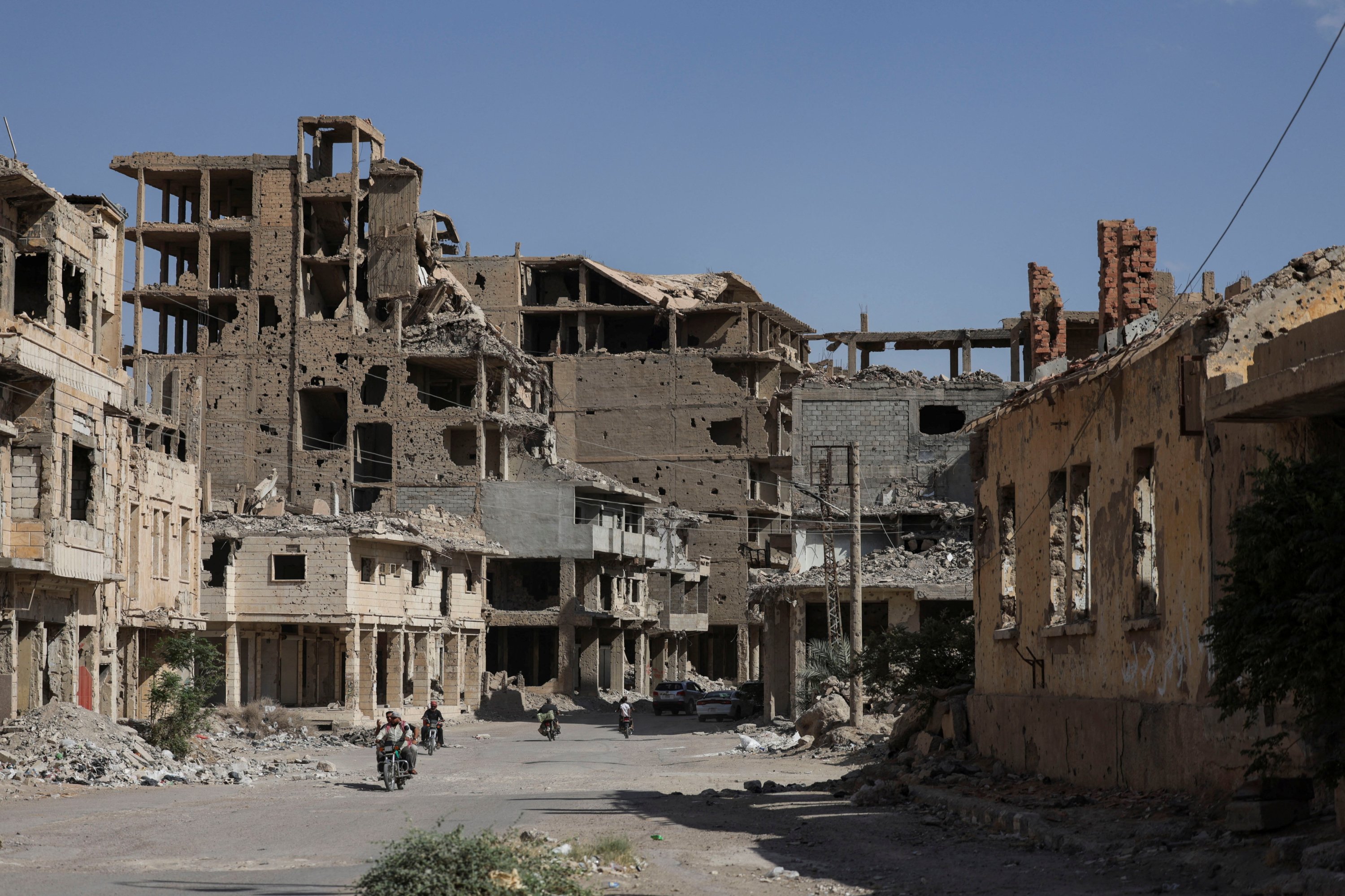
About $216 billion is expected to be needed to rebuild Syria after over a decade of civil war, the World Bank said in an assessment on Tuesday.
Reconstruction is one of the most significant challenges facing Syria's new authorities after the overthrow of longtime dictator Bashar Assad last December.
"Syria's reconstruction costs are estimated at $216 billion after more than thirteen years of conflict," the World Bank said in its latest report, which it said assessed "infrastructure and building assets, covering the period from 2011 to 2024."
The Syrian civil war, which erupted in 2011 with Assad's brutal repression of anti-government protests, killed over half a million people and devastated the country's infrastructure.
"The conflict has damaged nearly one-third of Syria's pre-conflict gross capital stock, with direct physical damages to infrastructure, residential buildings, and non-residential buildings estimated at $108 billion," the report said.
Among the categories assessed, infrastructure was the hardest hit, accounting for 48% of total damage, equivalent to $52 billion.
The report estimates costs of physical assets to range between $140 billion and $345 billion, "with a conservative best estimate" of $216 billion.
Aleppo province and the Damascus countryside, major opposition strongholds subjected to heavy bombardment during the early years of the war, bore the brunt of most of the destruction.
"The challenges ahead are immense, but the World Bank stands ready to work alongside the Syrian people and the international community to support recovery and reconstruction," said Jean-Christophe Carret, World Bank Middle East division director.
The World Bank estimates reconstruction costs to be ten times greater than Syria's projected 2024 gross domestic product (GDP).
Since Assad's ouster, Syria's new authorities have worked to attract investment for reconstruction.
They have reestablished diplomatic relations with the West and signed agreements worth billions of dollars with several companies and governments, including Gulf countries.
Syrian Finance Minister Mohammed Barnieh said the report "provides a critical baseline of the massive scale of the destruction and of the reconstruction costs ahead."
"Now, more than ever, it is imperative for the international community to mobilize support and partnership to help Syria restore essential infrastructure, revitalize communities, and lay the foundation for a more resilient future for its people," Barnieh added.
Syria is still struggling financially.
While the United States and Europe have lifted many of the sanctions imposed during the Assad regime, the impact on the ground has so far been limited.
Cuts to international aid have worsened living conditions for many. The United Nations estimates that 90% of Syria's population lives in poverty.