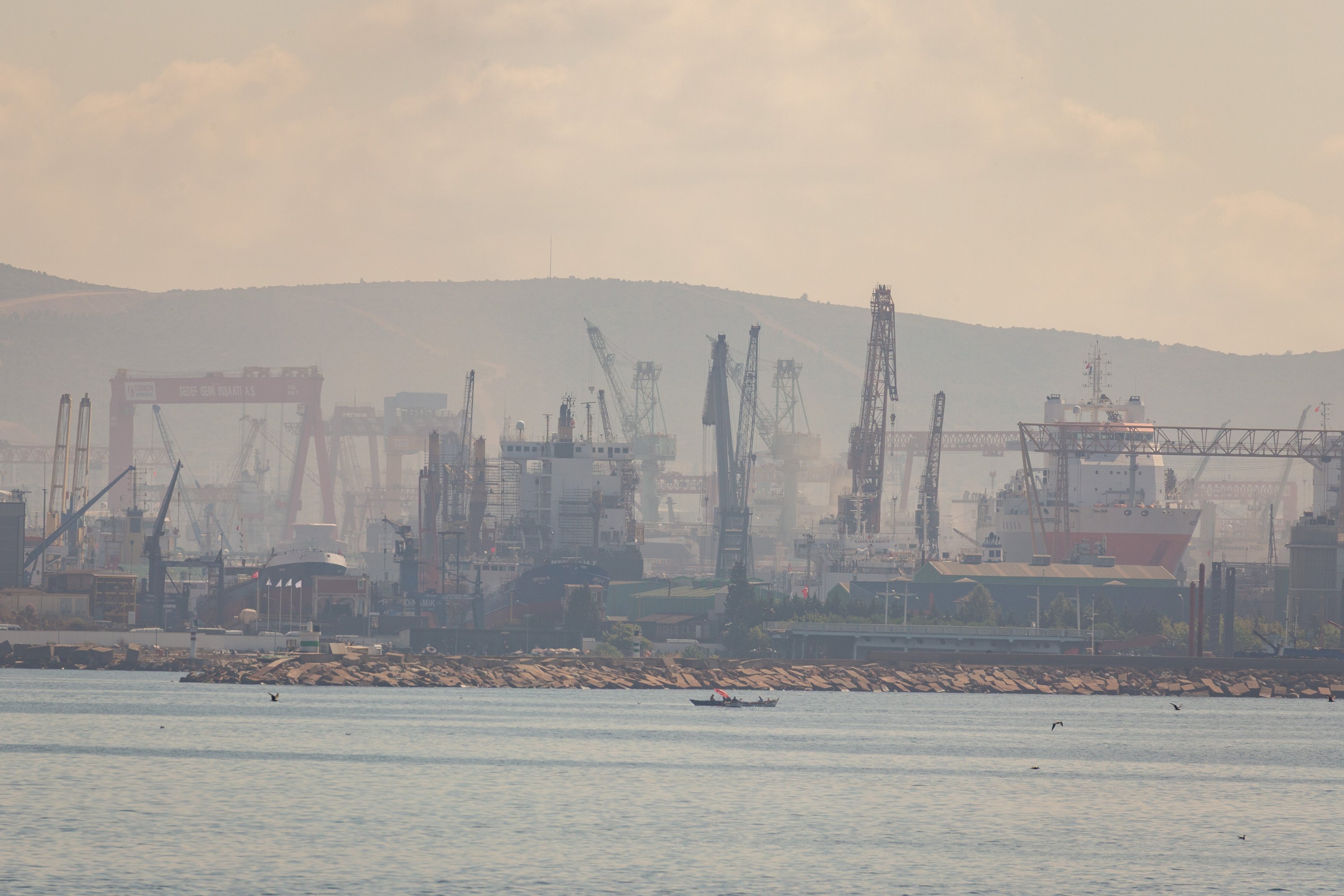
Türkiye's fast-growing shipbuilding industry is seeking to get a larger role in Nigeria's maritime modernization push, as the two countries are said to move toward joint production, technology transfer and long-term industrial cooperation.
Nigerian authorities are looking to position Turkish shipyards not only as suppliers of vessels but also as strategic partners capable of helping develop the country's domestic shipbuilding capacity, Anadolu Agency (AA) said on Wednesday, citing information compiled from industry and government sources.
The initiative was discussed during a government and industry dialogue organized with technology provider DAMISE and the Nigeria-Türkiye Business Council, where participants focused on joint manufacturing, technology transfer, fleet modernization, inland waterway transportation, workforce development and financing models.
The council aims to translate government-level engagement into concrete investment partnerships and production projects between Turkish and Nigerian companies.
In a statement, Nigeria's Marine and Blue Economy Ministry highlighted the country's approximately 853-kilometer (530-mile) coastline and more than 10,000 kilometers of inland waterways, inviting Turkish shipbuilders to view Nigeria not only as an export market but also as a potential manufacturing hub for the African Continental Free Trade Area (AfCFTA).
Türkiye's shipbuilding industry has expanded rapidly in recent years.
According to Trade Ministry data, the country's ship exports rose from around $900 million in 2018 to $3 billion in 2025, lifting Türkiye's global ranking in ship exports from 28th to 10th.
During the same period, Nigeria's ship imports declined from $3.4 billion to around $500 million, reflecting a shift away from an import-dependent model toward developing domestic production capabilities and technical expertise.
Commercial ties between the two countries have gained momentum following Nigerian President Bola Ahmed Tinubu's visit to Türkiye earlier this year, with both sides stepping up efforts to expand bilateral trade and industrial cooperation.
The emerging partnership is expected to extend beyond shipbuilding to include technology transfer, specialized vessels, ferries, ship maintenance and repair, and broader maritime infrastructure projects.
Nigeria's National Inland Waterways Authority has also invited Turkish shipyards and maritime technology companies to participate in developing vessels, ferry terminals and public-private partnership projects across the country's roughly 3,000 kilometers of navigable inland waterways.
Türkiye's maritime sector includes around 85 active shipyards, a Turkish-owned fleet of more than 2,270 vessels and an extensive maritime education network, providing opportunities for cooperation in engineering, training, maintenance and technology transfer.
Industry officials see production and maintenance facilities established in Nigeria serving not only domestic demand but also neighboring West African markets.
Nigeria's Cabotage Act, which provides incentives for vessels built, owned and operated locally, is viewed as an additional factor encouraging Turkish companies to establish local partnerships rather than rely solely on exports.
Analysts say a strategy centered on joint production, maintenance and operational partnerships with Nigerian firms could provide Turkish shipbuilders with a more sustainable long-term presence in the market.
Fishing vessels, offshore support ships, fleet renewal, ship repair and inland waterway transport are expected to offer the strongest near-term opportunities for cooperation.
Over the longer term, discussions are expected to expand to include green shipping, maritime decarbonization, technical workforce development and joint financing mechanisms.
The next round of talks, focusing on matching Turkish shipyard capabilities with Nigeria's fleet modernization needs, is scheduled for the coming days, while a separate session on financing and workforce capacity is planned for Aug. 5.
The framework for a 2027 Maritime Cooperation Road Map is expected to be unveiled following the discussions.