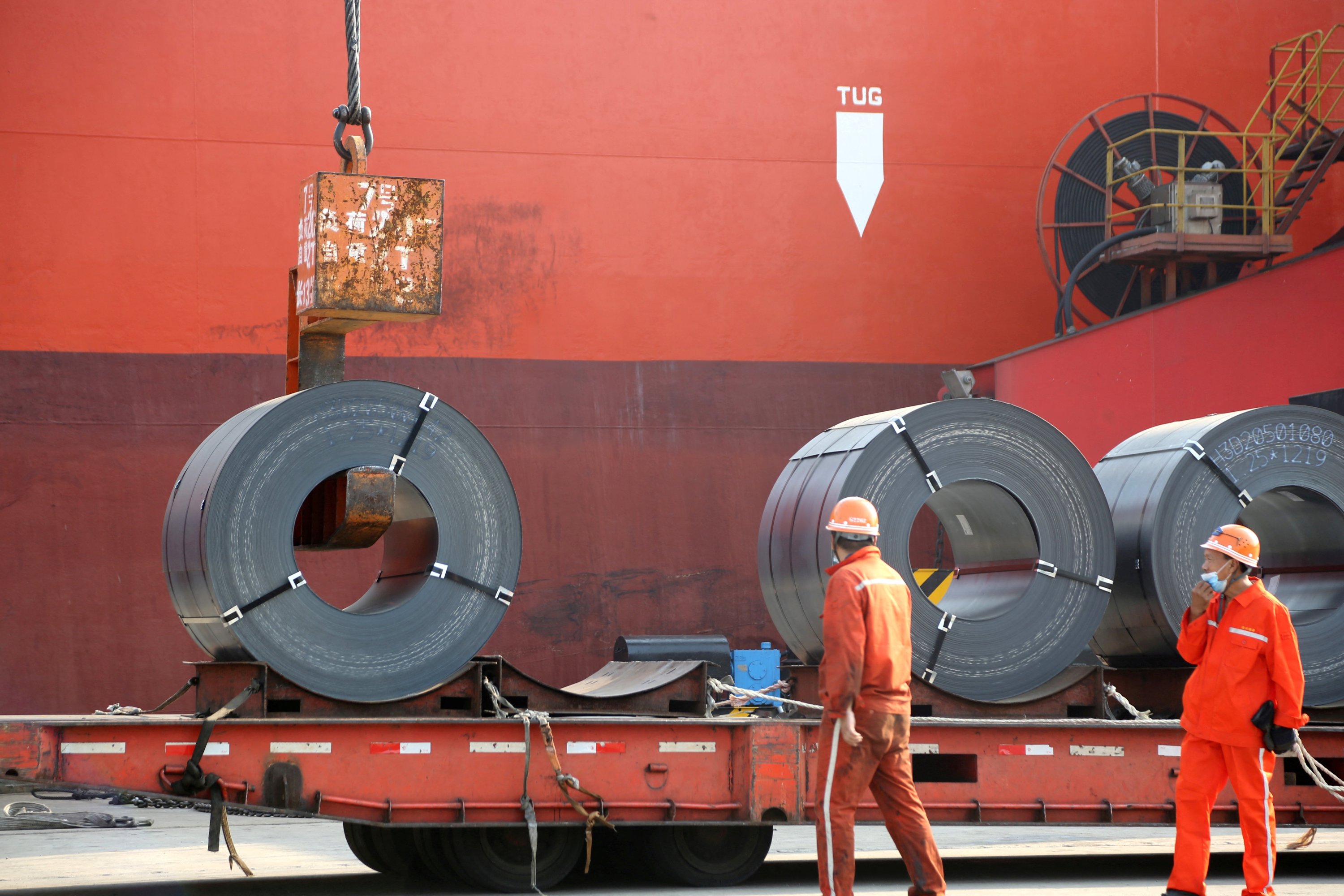
The United States on Tuesday said it was hiking steel and aluminum tariffs on more than 400 products including wind turbines, mobile cranes, appliances, bulldozers and other heavy equipment, along with railcars, motorcycles, marine engines, furniture and hundreds of other products.
The Commerce Department said 407 product categories are being added to the list of "derivative” steel and aluminum products covered by sectoral tariffs, with a 50% tariff on any steel and aluminum content of these products plus the country rate on the non-steel and non-aluminum content.
Evercore ISI said in a research note the move covers more than 400 product codes representing over $200 billion in imports last year and estimates it will raise the overall effective tariff rate by around 1 percentage point.
The Commerce Department is also adding imported parts for automotive exhaust systems and electrical steel needed for electric vehicles to the new tariffs as well as components for buses, air conditioners as well as appliances including refrigerators, freezers and dryers.
A group of foreign automakers had urged the department not to add the parts, saying the U.S. does not have the domestic capacity to handle current demand.
Tesla unsuccessfully asked Commerce Department to reject a request to add steel products used in electric vehicle motors and wind turbines, saying there was no available U.S. capacity to produce steel for use in the drive unit of EVs.
The new tariffs take effect immediately and also cover compressors and pumps and the metal in imported cosmetics and other personal care packaging like aerosol cans.
"Today’s action expands the reach of the steel and aluminum tariffs and shuts down avenues for circumvention – supporting the continued revitalization of the American steel and aluminum industries," said Under Secretary of Commerce for Industry and Security Jeffrey Kessler.
Steelmakers including Cleveland Cliffs, Nucor and others had petitioned the administration to expand the tariffs to include additional steel and aluminum auto parts.
Since returning to the presidency, President Donald Trump has imposed a 10% tariff on almost all U.S. trading partners, alongside varying steeper levels on dozens of economies such as the European Union and Japan.
Certain sectors have been spared from these countrywide tariff levels but instead were targeted under different authorities by even higher duties.
In the case of steel and aluminum, Trump initially unveiled a 25% tariff on imports of both metals before doubling this to 50% in June.
Though the impact of Trump's tariffs on consumer prices has been limited so far, economists warn that their full effects are yet to be seen.
For now, some businesses have coped by bringing forward purchases of products they expected will encounter tariffs. Others have passed on additional costs to their consumers, or absorbed a part of the fresh tariff burden.
But analysts note that importers and retailers will unlikely be able to eat these costs indefinitely, and could eventually raise more consumer prices.
Some economists argue that the inflation hit will be one-off, but others are wary of more persistent effects.
The latest Commerce Department additions came after a window for the public to submit product inclusion requests.