European natural gas futures surged by almost 50% on Monday following the suspension of operations by a key seaborne gas supplier, as escalating conflict in the Middle East disrupts energy flows.
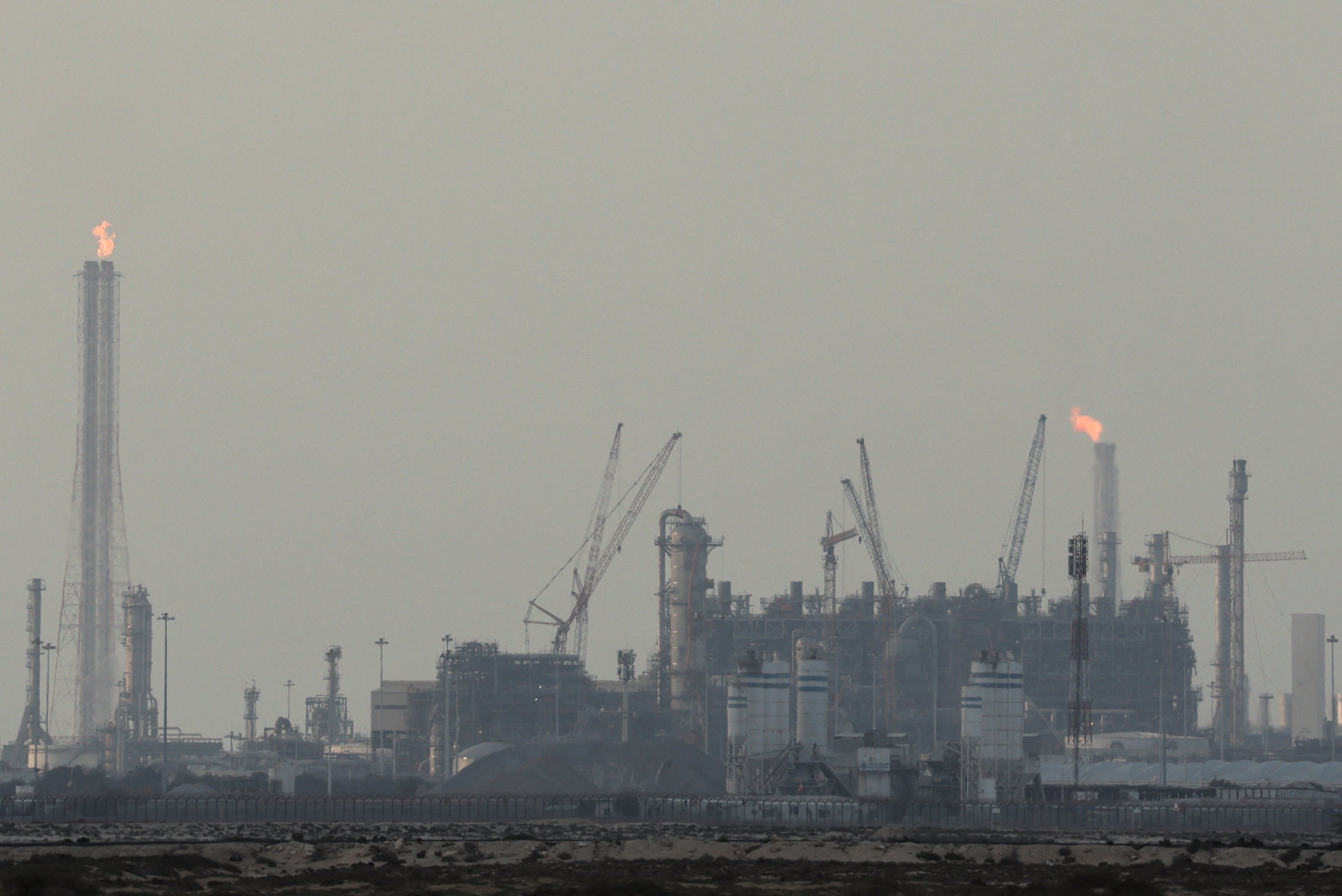
The jump came after QatarEnergy said it would stop its production of liquified natural gas as Israeli and U.S. strikes against Iran and Tehran's retaliation prompted precautionary shutdowns of oil and gas facilities across the Middle East.
The state-owned firm blamed the war for the decision.
Qatar, soon to cement its role as the world's second-largest LNG exporter after the United States, plays a major role in balancing both Asian and European markets' demand of LNG.
Shipping has been disrupted in the Strait of Hormuz, a key route for LNG tankers from the Persian Gulf.
A source with knowledge of the matter told Reuters QatarEnergy is set to declare force majeure on shipments of LNG.
Europe has increased imports of LNG over the past few years as it seeks to phase out Russian gas following Russia's invasion of Ukraine.
Around 20% of the world's LNG transits through the Strait of Hormuz and a prolonged suspension or full closure would increase global competition for other sources of the gas, driving up prices internationally.
"Disruptions to LNG flows would reignite competition between Asia and Europe for available cargoes," said Massimo Di Odoardo, vice president, gas and LNG research at Wood Mackenzie.
The Dutch front-month contract at the TTF hub, seen as a benchmark price for Europe, was up almost 50%, or 15.976 euros at 47.935 euros per megawatt hour (MWh), (around $16.40/mmBtu), by 1355 GMT, ICE data showed.
Prices were already some 25% higher earlier in the day but extended gains after QatarEnergy's production halt.
Benchmark Asian LNG prices jumped almost 39% on Monday morning with the S&P Global Energy Japan-Korea-Marker (JKM), widely used as an Asian LNG benchmark, at $15.068 per million British thermal units (mmBtu), Platts data showed.
"If LNG/gas markets start to price in an extended period of losses to Qatari LNG supply, TTF could potentially spike to 80-100 euros/MWh ($28-35/mmBtu)," Warren Patterson, head of commodities strategy at ING, said. The British April contract was up 43.96 pence at 122.53 pence per therm, ICE data showed.
Europe is also relying on LNG imports to help fill its gas storage sites which have been depleted over the winter and are currently around 30% full, the latest data from Gas Infrastructure Europe showed.
A European Commission spokesperson told Reuters on Monday that the EU's gas coordination group, which includes representatives from member state governments will meet on Wednesday to assess the impact of the widening conflict in the Middle East.
It monitors gas storage and security of supply in the EU and coordinates response measures during crises. In the European carbon market, the benchmark contract was down 1.10 euro at 69.17 euros a metric ton.