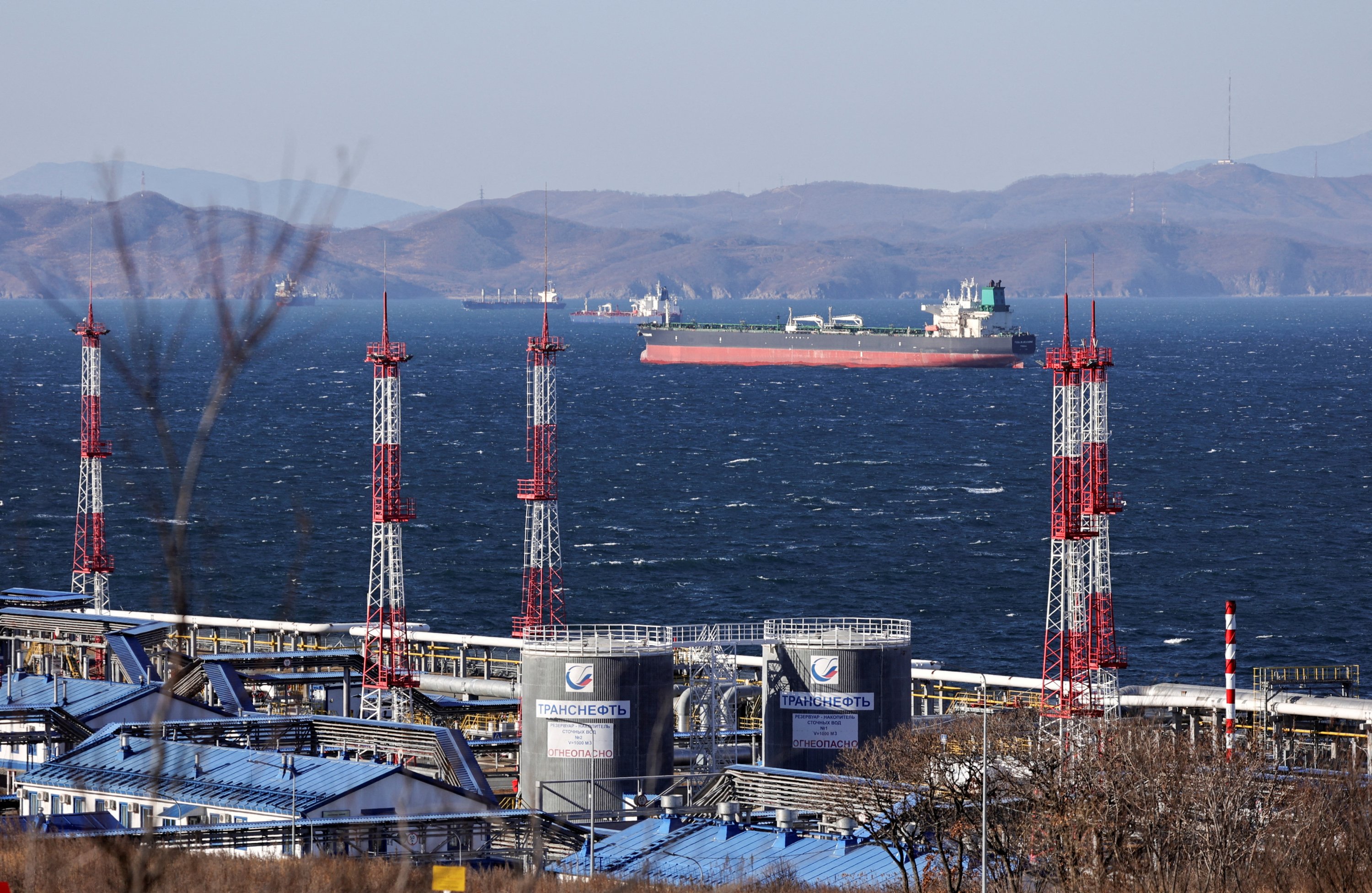
The war in Iran has driven a sharp rise in demand for Russia's oil and gas, the Kremlin said Friday, helping lift exports that have been hit in recent years by sanctions tied to Moscow's invasion of Ukraine.
The Iran conflict, which started last weekend, has left the Strait of Hormuz, a critical shipping chokepoint, all but shut, cutting countries off from a fifth of global oil and liquefied natural gas supplies.
"We are seeing a significant increase in demand for Russian energy resources in connection with the war in Iran," Kremlin spokesperson Dmitry Peskov told reporters on Friday, saying Russia "remains a reliable supplier" of both oil and gas, including LNG.
On Thursday, the U.S. Treasury issued a 30-day waiver allowing India to buy Russian oil currently stuck at sea, following months of U.S. pressure on New Delhi not to purchase Russian barrels.
Peskov declined to disclose possible volumes that could be shipped to India under the waiver.
Traders are selling Russian Urals crude to India at a $4 to $5 a barrel premium to Brent on a delivered basis for March and early-April arrival, three sources told Reuters.
The grade's discount to Brent in the Russian Baltic Sea port of Primorsk narrowed by some $5 per barrel to around $20 per barrel on the FOB (free on board) basis, which does not take into account transportation and some other costs for the seller, Reuters calculations showed on Friday.
"Thus the conflict in the Strait of Hormuz is creating favorable conditions for the growth of Russia's revenues from energy exports," said Igor Yushkov, an analyst at Russia's government-run Financial University.
International Energy Agency (IEA) Executive Director Fatih Birol said on Friday that looking to Russia for gas supplies would be economically and politically wrong, given incoming global LNG supply.
After Russia launched its war against Ukraine in February 2022, the West moved quickly to cut its reliance on Russian oil and gas, the backbone of Moscow's economy.
The European Union has imposed various import and export restrictions on several products, resulting in a 61% decline in exports to Russia and a 90% drop in imports from Russia between early 2022 and the end of 2025.
Russia's pipeline gas exports to Europe sank by 44% in 2025 to their lowest since the mid-1970s following the closure of a major transit route via Ukraine, and as the EU phases out fossil fuel imports from Russia.
Brussels has also worked out a plan to stop Russian LNG imports by the end of 2026 and pipeline gas by Sept. 30, 2027, while President Vladimir Putin has suggested that Russia might cut LNG and gas exports to Europe itself.
"The EU's energy strategy – premised on the idea that Russian volumes could be permanently replaced by a combination of U.S., Qatari and other LNG, plus accelerated renewables – is now in serious question," said Christopher Weafer, an analyst at the Macro-Advisory consultancy.