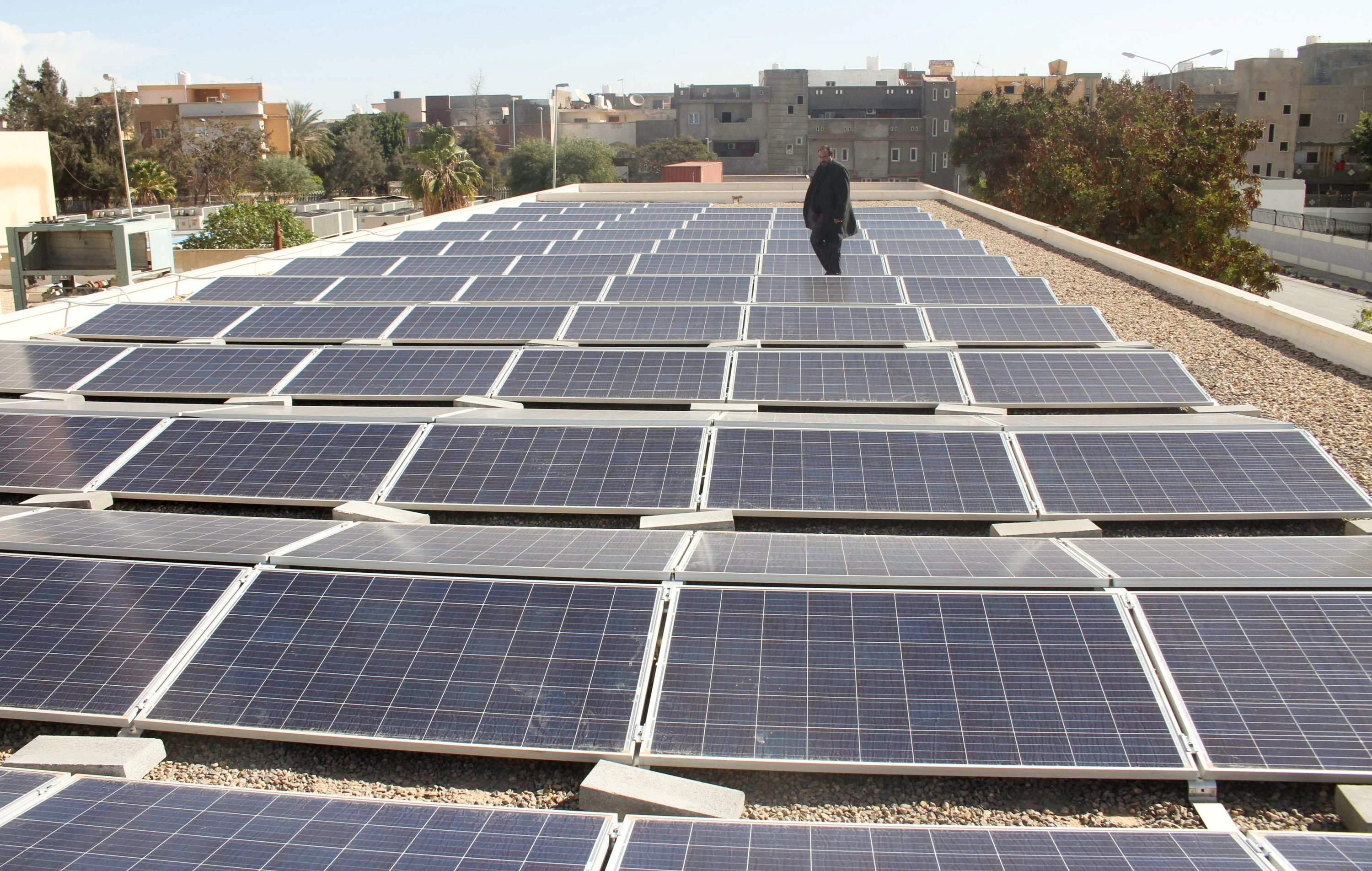
Libya aims to reduce its long-standing reliance on hydrocarbons and tap into its vast renewable energy potential with the support of Türkiye's experience and investment, its officials said on Wednesday, as the North African country accelerates efforts to diversify its energy mix.
Africa's oil-rich nation currently generates most of its electricity from oil- and natural gas-fired power plants. Despite having strong solar and wind potential, years of subsidies for hydrocarbons have slowed the development of the renewable energy sector.
Under its National Renewable Energy Strategy, Libya targets raising the share of renewables in its energy mix to 20% by 2035.
Abdusselam al-Ensari, chair of the Renewable Energy Authority of Libya, said the country's renewable energy landscape is gradually improving and offering new opportunities for international companies.
He noted that a comprehensive renewable energy law, designed to regulate the sector and facilitate cooperation between the private sector and public institutions, is currently under review in Libya's House of Representatives.
Highlighting the depth of ties with Türkiye, al-Ensari said Turkish companies are expected to play a significant role in developing capacity, setting priorities and launching pilot projects in Libya's renewable energy sector.
"They will be involved in construction and investment processes," he told Anadolu Agency (AA).
Al-Ensari said they believe Türkiye's private sector can establish partnerships and successfully carry out these collaborations with institutions and companies in Libya, emphasizing that the country's door is always open to Turkish companies.
After his talks in Tripoli last month, Energy and Natural Resources Minister Alparslan Bayraktar said 2026 would be a "landmark year" in Türkiye-Libya cooperation. "It will be the energy year, and trade volume will reach much higher levels," he said.
Companies from Türkiye have meanwhile shown strong interest as the North African nation plans its first bidding round for oil exploration in more than 17 years. The results are expected to be announced this month.
Oil and Gas Minister Khalifa Abdulsadek said Türkiye could play a "key role" in offshore energy development in Libya.
Libya is one of Africa's biggest oil producers and a member of the Organization of the Petroleum Exporting Countries (OPEC).
Foreign investors have been wary of putting money into Libya, which plunged into chaos since a NATO-backed uprising toppled and killed longtime dictator Moammar Gadhafi in 2011.
It remains divided between the U.N.-recognized government in the west and its eastern rival, backed by military commander Khalifa Haftar.
Asil Younes Ertime, CEO of Libya Renewable Energy Company, said Libya possesses vast land resources, strong solar potential and a capable electricity grid operated by the General Electricity Company of Libya.
He reiterated the government's goal of raising renewables' share in the energy mix to 20% by 2035 through new projects, noting that the National Renewable Energy Strategy is being further developed in coordination with government and energy institutions.
"Through cooperation between Libya and Türkiye, we will be able to prepare concrete projects that provide mutual benefits for both countries," Ertime said.
"Türkiye has been a pioneer and has played a significant role (in the energy sector in Libya)."
Government backs stronger Turkish participation
Ertime said Libyan officials visited Türkiye in December 2025 to closely examine the country's renewable energy experience, including private sector investments, electricity distribution systems, coordination with government bodies and production facilities.
Contracts with some of these facilities will be signed through Libya's Renewable Energy Authority, he added, aiming to deliver high-quality renewable energy projects.
Libyan officials are also expected to attend a major renewable energy exhibition in Türkiye in April, where they plan to explore ways to deepen cooperation with Turkish partners.
"The Government of National Unity supports the participation of the Turkish side," Ertime said, emphasizing the strong economic ties and geographic proximity between the two countries.