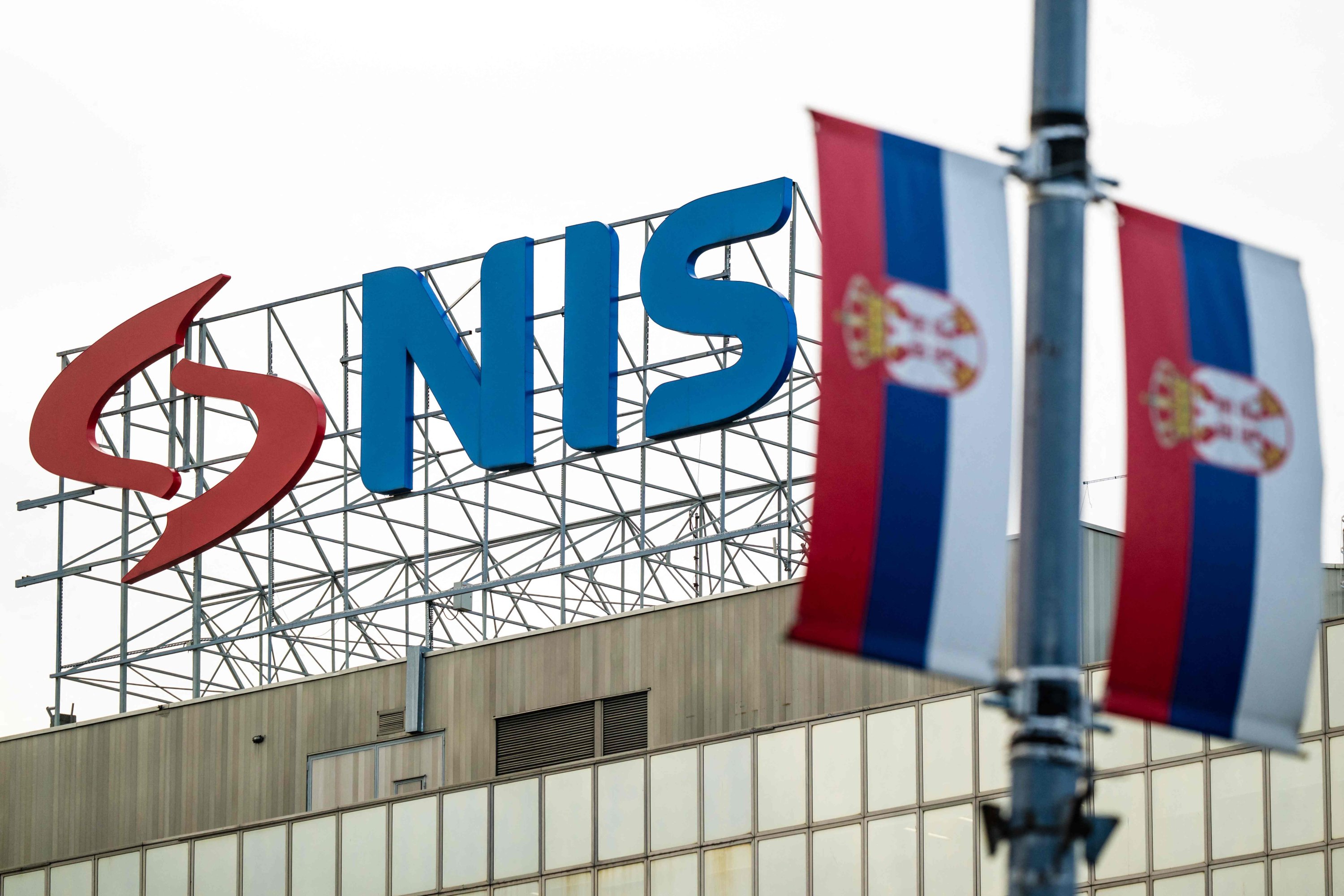
Hit by sanctions, Serbia's only oil refinery, which supplies much of the country's fuel needs, faces a complete shutdown in a matter of days due to a lack of crude supplies, Serbian President Aleksandar Vucic said Tuesday.
"It has not been shut down yet, but it is already running at a reduced level compared to normal," Vucic said at a press conference in Belgrade.
The president said the Pancevo refinery's operations had scaled back to "warm circulation" and were four days away from a "complete halt." Industry sources told local media that oil production had ceased.
Belgrade-based NOVA.RS TV reported on Tuesday that operations have been halted.
Since last month, the Russian majority-owned Petroleum Industry of Serbia (NIS) has been hit with sanctions as part of Washington's crackdown on Russia's energy sector after the 2022 invasion of Ukraine.
The long-delayed sanctions, first flagged in January under former President Joe Biden, were enforced starting on Oct. 9 after several waivers, leaving Belgrade scrambling to find a solution to a looming energy crisis.
Vucic said NIS had stockpiled enough fuel to last until the end of the year, with further reserves held by the government.
But he had set a 50-day deadline for a deal to be reached between the Russians and a potential buyer, which includes bidders from Hungary and the United Arab Emirates (UAE).
If that failed, his government would be forced to buy the company.
"We will have no choice. We will bring in our own management and offer the highest possible price."
Experts told Agence France-Presse (AFP) earlier that the refinery supplies around 80% of the country's fuel, and importing oil was a temporary solution that couldn't save NIS.
"You can prolong the agony for a few months through additional imports, but NIS will go bankrupt if it can no longer operate," said Belgrade-based economist Goran Radosavljevic.
With Russians holding a NIS controlling stake, Serbian officials have had to hope their counterparts in Moscow were willing to sell their majority stake.
Last week, NIS filed a new request with the U.S. for a temporary exemption from the sanctions while negotiations were underway, but there has been no movement from Washington yet.
Serbia sold a 51% stake in NIS to Gazprom and Gazprom Neft in 2008 for 400 million euros ($462 million), as part of a broader deal – including the construction of energy infrastructure, which was only partially realized.
The Serbian state holds nearly 30% of NIS, with minority shareholders owning the rest.
The Russians entered the talks with almost 45% of NIS held by Gazprom Neft, separately holding an 11.3% stake through its St Petersburg-based sister company, Intelligence.
Serbian officials have repeatedly warned that a solution for NIS must be found, increasingly raising the possibility of a state takeover if no other option emerges.
But for Vucic, who has close ties to Moscow, the option of seizing a Russian asset is particularly unpalatable. He has so far rejected the idea.
On Tuesday, he said his country had been left in an "increasingly difficult position" as Washington and the Kremlin clashed.
"Through no fault of our own, we have become the target of intense attacks and blackmail," he said.
"For nine months, we simply followed everything our Russian friends demanded of us."
"I just want to tell you that there are no easy solutions," he told the media, warning of huge flow-on effects on the economy if a solution was not found.
Serbia, also heavily reliant on cheap Russian gas, remains among the few European countries not to impose sanctions on Moscow over the war in Ukraine.
Parallel talks on gas supplies are also underway, as Russia has been offering only short-term contracts in recent months – a tactic Vucic has said was aimed at dissuading Serbia from seizing NIS.