Spain aims to become Europe’s top producer of green hydrogen, using its ample sun and wind resources to decarbonize heavy industries. However, some energy experts are cautious, warning that this would require a significant increase in zero-carbon electricity availability.
Ecological Transition Minister Teresa Ribera hosted a significant conference for global renewable energy players earlier this month. It focused on measures “to guarantee our energy security” as the European Union refocuses on intra-bloc supply chains for energy needs.
The Spanish government announced a hydrogen roadmap in 2020, but the sector has become more important in Europe since Russia invaded Ukraine. Russia is the world’s second-largest producer of natural gas, which powers most global hydrogen production. The International Energy Agency (IEA) said in December that Spain would account for half of Europe’s growth in dedicated renewable capacity for hydrogen production.
Green hydrogen is created when renewable energy sources power an electrical current that runs through the water, separating its hydrogen and oxygen molecules through electrolysis. According to the IEA, the process doesn’t produce planet-warming carbon dioxide, but less than 0.1% of global hydrogen production is currently created in this way.
The separated hydrogen can produce steel, ammonia and chemical products, all requiring more complex industrial processes to wean off fossil fuels. Hydrogen can also be used as a transportation fuel, which could one day transform the highly polluting shipping and aviation sectors.
“Renewable energy, including renewable hydrogen, is a central pillar of the REPowerEU Plan, which is the EU’s strategy to get rid of Russian fossil fuels as soon as possible,” said EU Commissioner for Energy, Kadri Simson, in an email. Spain already has 15.5 gigawatts of electrolyzer capacity earmarked for green hydrogen, far higher than the target of four gigawatts in the road map for 2030.
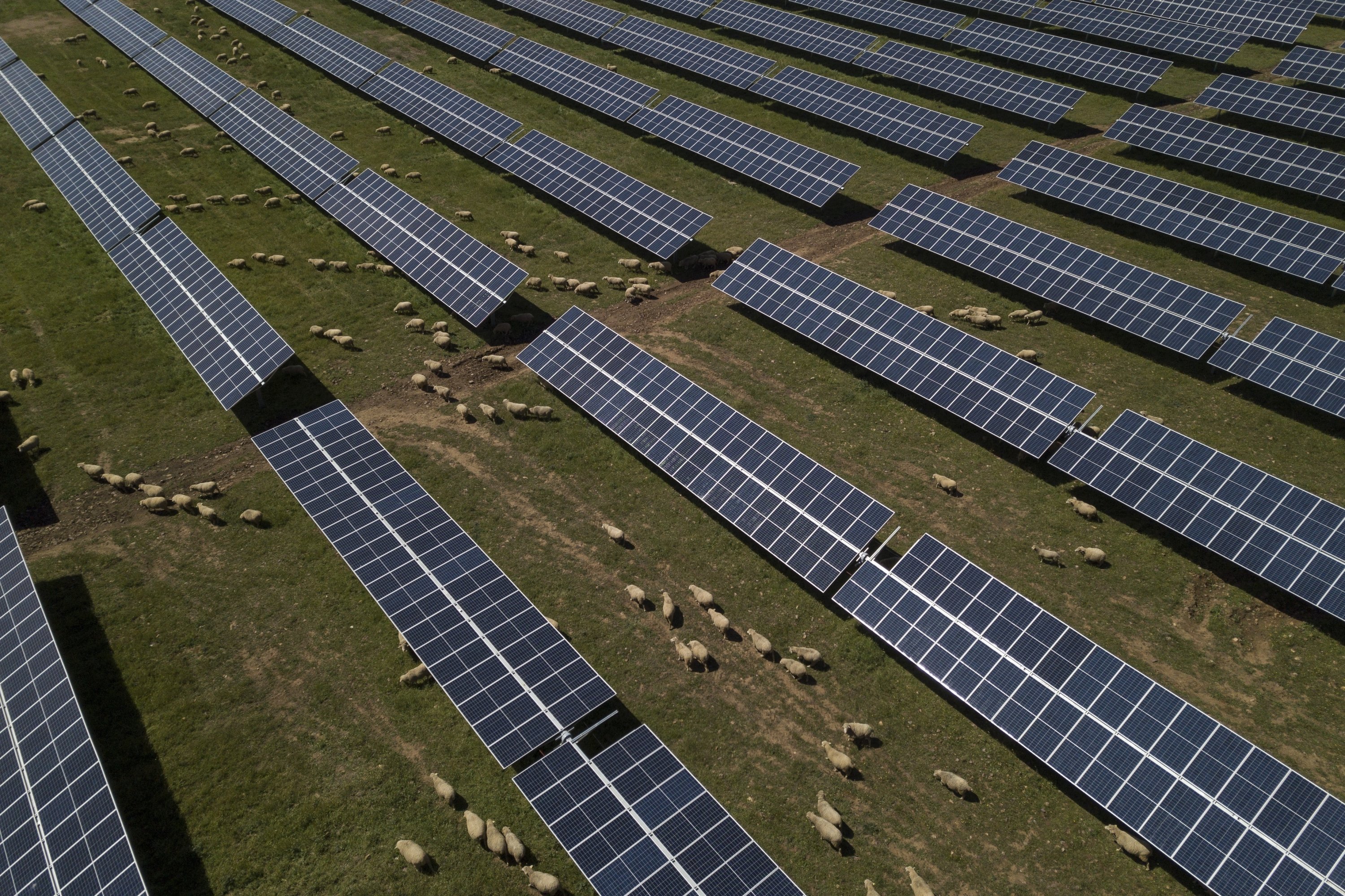
Spain’s large, windswept and sparsely populated territory receives more than 2,500 hours of sunshine per year, according to the state weather agency, providing ideal conditions for wind and solar energy and, therefore, green hydrogen production.
“If you look at where hydrogen is going to be produced in Europe in the next million years, it’s in two countries, Spain and Portugal,” said Thierry Lepercq, the founder and president of HyDeal Ambition, an industry platform bringing together 30 companies. “Hydrogen is the new oil.”
Lepercq is working with companies like Spanish gas pipeline corporation Enagas and global steel giant ArcelorMittal to design an end-to-end model for hydrogen production, distribution and supply at a competitive price. Criticism has centered on green hydrogen’s higher cost compared with highly polluting “gray hydrogen” drawn from natural gas. However, Lepercq argues that solar energy produced in Spain is priced low enough to compete.
While cars and heating solutions for buildings are increasingly electric, other sectors are harder to crack. Globally, Lepercq said: “Electricity, power, is 20% of energy consumption. What about the 80% not electrified? ... You must replace those fossil fuels. Not in 50 years. You need to replace them now.”
HyDeal aims to replace high-emitting processes like coking coal and blast furnaces in steel manufacturing and natural gas in ammonia production for fertilizers. However, it must first build solar farms and electrolyzers in northern Spain, joining other green hydrogen plants recently inaugurated in central Spain and Mallorca.
The European Commission has proposed that the bloc produce 10 million metric tons of renewable hydrogen by 2030 and import 10 million metric tons more. Hydrogen consumption in Spain is around 500,000 metric tons annually, mainly produced from natural gas and used in refineries and chemical production. By 2030, the EU is attempting to cut emissions in the bloc by 55% compared to 1990 levels.
Spain, France, Germany and Portugal have agreed to build a hydrogen pipeline by 2030 to transport some 2 million metric tons of hydrogen to France annually – 10% of the EU’s estimated hydrogen needs. However, hydrogen presents challenges for transportation as it is highly flammable and can corrode metals.
Ribera knows green hydrogen requires an upfront investment that will only pay off in the long term.
Slashing emissions “needs an initial stage that can be covered with renewable energies,” she said in an interview with The Associated Press (AP), adding that for sectors like heating and transport, “it’s fundamental to electrify.” Spain, she continued, would also need to cut fossil fuels for “end uses for which electricity is not so simple.”
A considerable amount of renewable power will be required to build a green hydrogen future. The IEA says the world will need 50 gigawatts of renewable capacity dedicated to green hydrogen production by 2027 – a 100-fold increase.
Some industry experts argue the push for green hydrogen is the wrong focus at a delicate tipping point for renewables following the fallout of the Ukraine war for the energy sector.
“In Europe in particular, there’s been a huge push for hydrogen, which in my point of view is unjustifiable,” said Antonella Battaglini, CEO of the Renewables Grid Initiative. The EU target of 20 million metric tons of green hydrogen by 2030 requires electricity “that we don’t have the renewable resources to produce,” she added.
Current demand for hydrogen far outstrips the EU’s planned supply, Battaglini argues, posing “the risk that we have driven away from direct electrification into a hydrogen bubble.”
Experts like Battaglini fear companies could argue that when sufficient renewable power isn’t available, they must keep relying on fossil fuels.
“There could be a very high cost. In economic terms but also environmental terms. You may end up with higher emissions than you have today,” she said.