

Türkiye plans to develop at least 6 gigawatts of offshore wind power capacity by 2040, with its first tender scheduled for April 2027, a senior energy official announced at the COP31 climate summit in Antalya.
Ahmet Özkaya, director-general of energy affairs at the Energy and Natural Resources Ministry, said Türkiye had identified four potential offshore wind sites, primarily in the Aegean Sea, and would release technical specifications for an initial 1-gigawatt tender by the end of November.
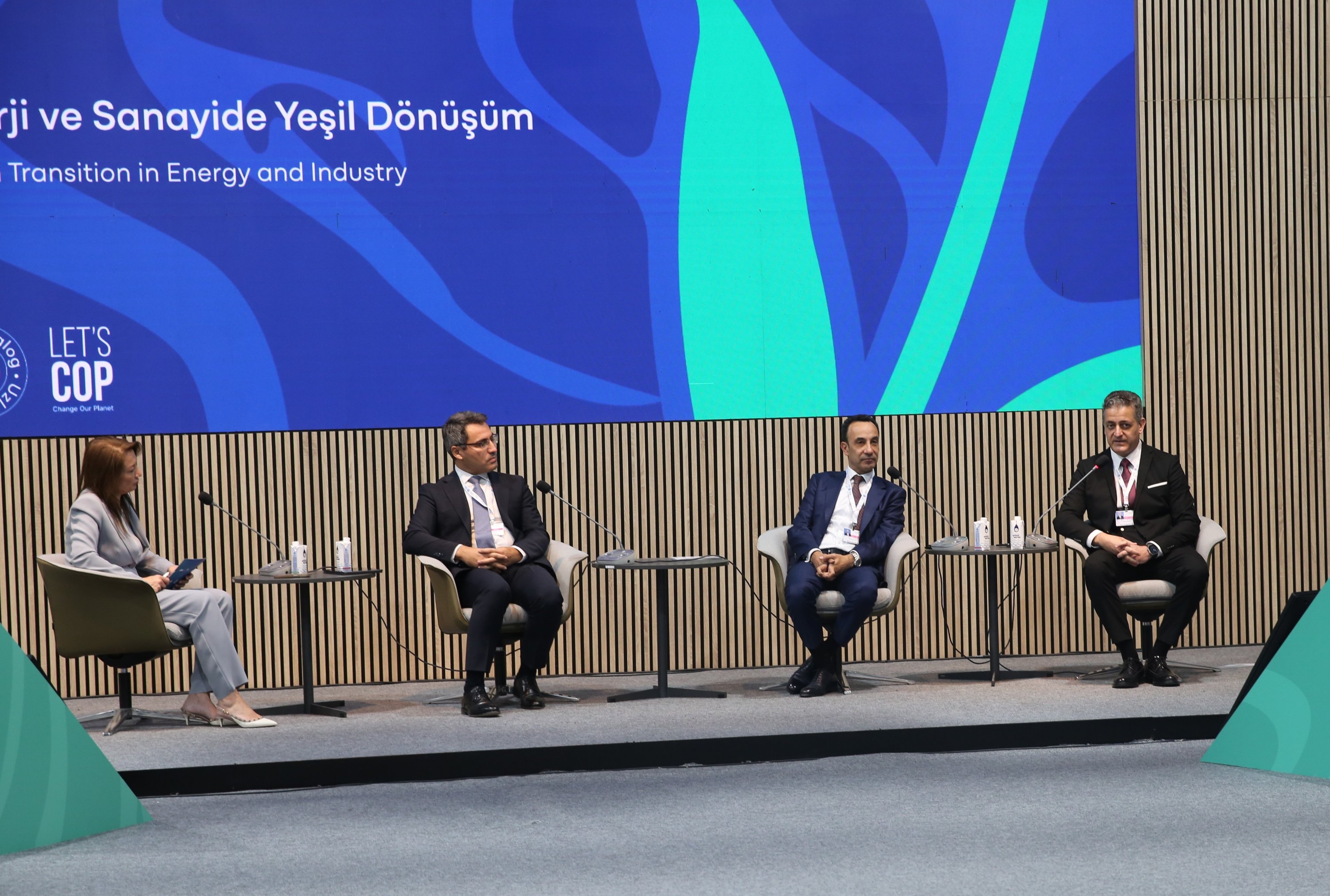
Speaking at a panel on green transformation in energy and industry organized by Turkuvaz Media, Özkaya emphasized that expanding domestic energy production was critical to reducing Türkiye's dependence on imports, which cost the country more than $70 billion annually.
He also unveiled an ambitious target to increase Türkiye's combined solar and wind power capacity to 175 gigawatts by 2040, up from a previous goal of 120 gigawatts.
Achieving that target would require installing at least 10 gigawatts of new wind and solar capacity annually, alongside substantial financing and streamlined permitting procedures, he said.
Özkaya also highlighted plans to expand nuclear energy capacity, including small modular reactors, and develop a national mining strategy focused on critical minerals and rare earth elements.
Private sector accelerates green investments
Kalyon Holding CEO Mustafa Koçar said the company was supporting COP31's carbon offsetting efforts through certified credits generated by its Karapınar solar power project.
Koçar estimated the summit's carbon footprint at approximately 400,000 tons and said Kalyon planned to commission nearly 500 megawatts of additional solar capacity in December.
Meanwhile, Rönesans Energy Group President Emre Hatem outlined the company's 1,400-megawatt energy portfolio, including renewable generation and battery storage projects.
Hatem said the company was upgrading wind turbines at its Osmaniye facilities to increase capacity from 130 megawatts to 200 megawatts, while also developing a 35-megawatt wind farm in Izmir.
He also highlighted the potential for carbon capture and storage technologies in Türkiye, stressing that effective carbon pricing would be essential to encouraging industrial investment.
The panel underscored Türkiye's efforts to strengthen energy security, accelerate renewable investments and support the transition toward a low-carbon economy.

