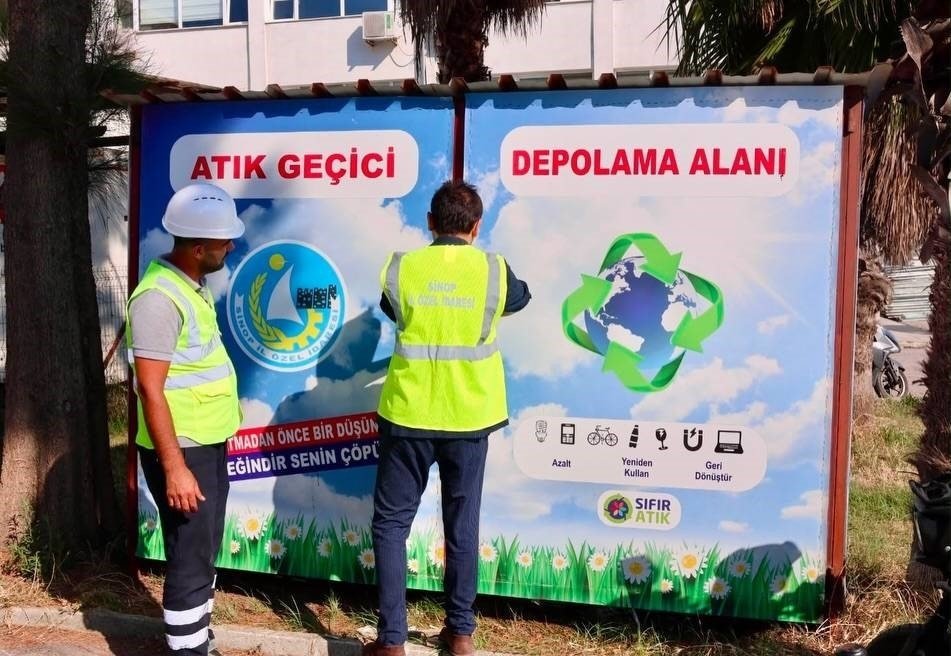
Zero waste policies will be featured for the first time on a larger global scale during the upcoming U.N. climate conference to be held in the Mediterranean city of Antalya, Türkiye, this November.
The Zero Waste Initiative, launched under the patronage of first lady Emine Erdoğan nearly a decade ago – which has since evolved into a global brand – will be brought onto the agenda of the U.N. climate process for the first time at COP31, the president of a leading climate directorate said.
Speaking to Anadolu Agency (AA), Halil Hasar, the president of the Climate Change Directorate under the Ministry of Environment, Urbanization and Climate Change, provided assessments regarding preparations for COP31, Türkiye's priorities on the action agenda, and the issues expected to come to the forefront in climate negotiations.
Recalling that less than two months remain until COP31, Hasar said they have been conducting intensive diplomatic engagements with the countries participating in the preparations.
He explained that they have held various discussions with Murat Kurum, minister of environment, urbanization and climate change and president-designate of COP31, and said that, alongside diplomatic efforts concerning which issues will be discussed at the summit, preparations for the event's logistical infrastructure are also continuing.
Hasar noted that COP processes consist of two main components: the “negotiation agenda” and the “action agenda,” adding that more than 60 decisions will be addressed at COP31.
He said that during the first week of COP31, the technical delegations of all countries will come together to conduct negotiations, while in the second week, ministers will become involved and efforts will be made to reach consensus on common ground.
Hasar stated that “adaptation finance,” the “mitigation work program” and “fair transition” are among the important issues on the COP31 negotiation agenda.
He said that one of the issues exciting him most is adopting decisions to implement a fair transition mechanism, adding that such decisions could become one of the important legacies that COP31 leaves for future COPs.
He also emphasized that zero waste is a particularly important issue for Türkiye.
“Zero waste is a very important item on the agenda. Zero waste is being incorporated into a COP process for the first time. Its contribution to emissions reduction will be brought to the table.”
He explained that reducing methane emissions originating from organic waste would be addressed in this context, and said that discussions would cover ways of capturing methane before it is released into the atmosphere and converting it into a useful energy source.
Hasar stated that the zero-waste approach also contributes to resource conservation, adding that the reuse of secondary raw materials in industrial and manufacturing processes would be included on the COP31 agenda.
Noting that countries have different priorities and expectations from COP31, Hasar said he expects countries’ specific circumstances to be taken into account in the decisions adopted.
Hasar said that one of the issues expected to come to the forefront at COP31 is the “loss and damage fund,” drawing attention to the fact that contributions provided to developing countries in need through the fund have not yet reached the desired level.
He said adaptation finance is also among the important agenda items and emphasized the importance of adopting decisions aimed at increasing the scale and amount of adaptation funding.
Hasar also pointed out that decisions aimed at taking measures against the adverse effects of climate change would be important at COP31, and said that a target has been set to reach a global electrification rate of 35% by 2035.
“The 35% electrification target by 2035 is a global target; it is not a separate target set for each country,” he said, referring to the earlier unveiled initiative, backed by the COP31 host, Türkiye.
“While electrification rates are already high in some parts of the world, there are also communities in other regions that do not have access to electricity. Therefore, achieving the 35% target globally and ensuring that all countries take ownership of it is important,” he added.
Hasar also said they have positioned COP31 as an “Implementation COP,” noting that the Paris Agreement is entering its second 10-year period.
He recalled that during the first 10 years, countries made their commitments and numerous decisions were adopted.
“Implementation now needs to begin during the second 10-year period of the Paris Agreement. But the most important issue for implementation is finance. Alongside financing, we also need to develop the necessary technology," Hasar said.
Hasar stated that securing important decisions on finance and technology would not only constitute a success for COP31, but would also be significant for the future of the world.