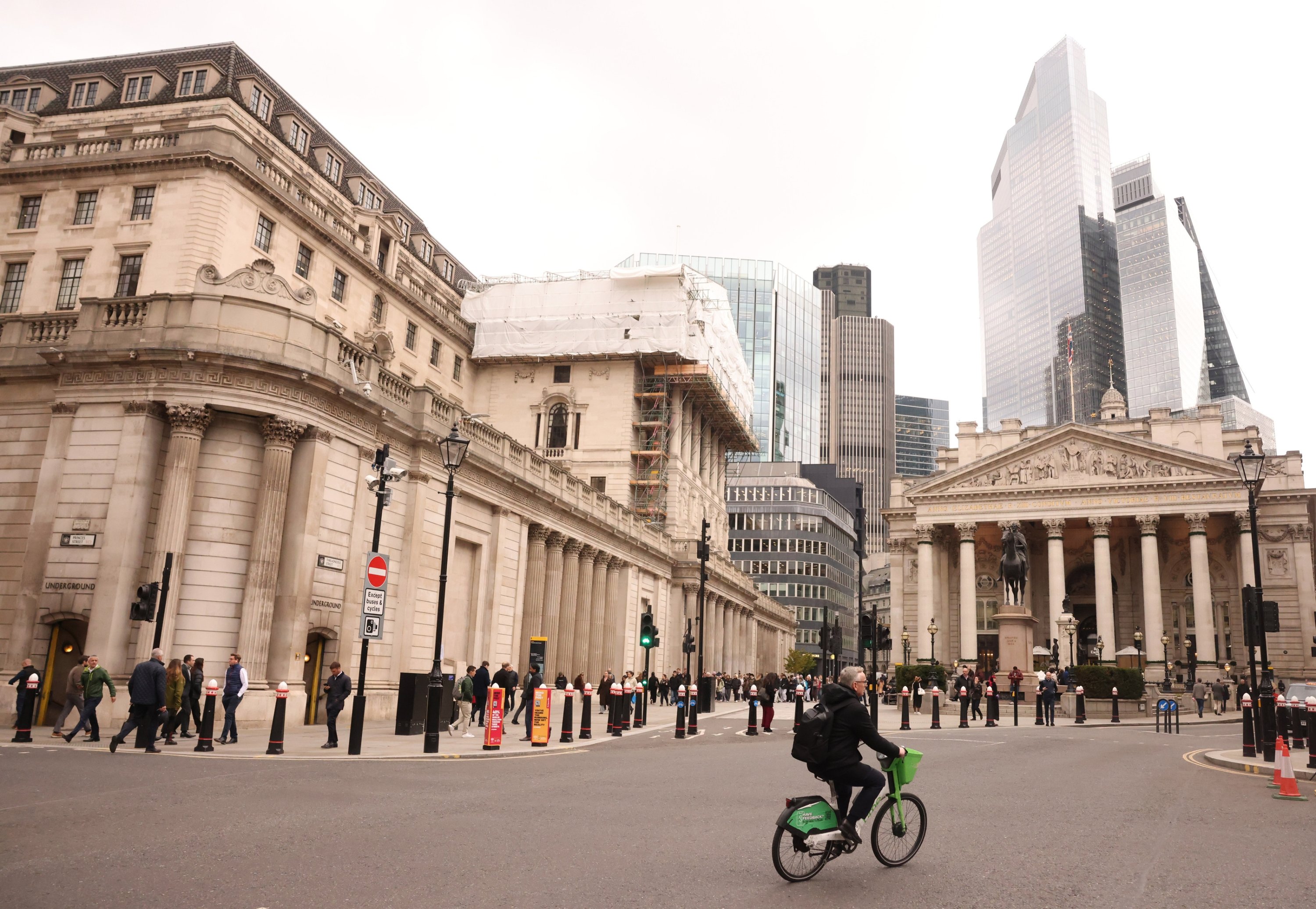
The Bank of England (BoE) raised interest rates for the first time in more than three years on Thursday in a bid to tackle the surge in prices amid the Iran war, as it signaled more hikes are on the way if the conflict is not resolved.
The Monetary Policy Committee (MPC), in an 8-1 vote, decided to increase the bank’s base rate to 4% from 3.75%.
It is the first time that borrowing costs have gone up since August 2023.
All members of the nine-person committee voted for a hike – although one member, Catherine Mann, preferred a bigger jump of 0.5 percentage points.
The MPC said it needed to take action to control rising inflation in the U.K. economy, which was being pushed higher by the impact of the U.S. and Israel’s ongoing conflict with Iran on global energy and fuel prices.
BoE Governor Andrew Bailey said that there "is now enough inflationary pressure in the pipeline caused by the rise in energy prices, that an increase in bank rate is warranted."
"Today’s increase shouldn’t be seen as the first in an inevitable long sequence of hikes," Bailey said.
"But, unless the conflict in the Middle East is resolved, neither does it seem likely to be the last increase.”
It marks a strong signal from the bank’s boss that borrowers are heading for a bigger squeeze at a time when the cost of living is rising.
The MPC said many companies had so far been absorbing higher energy costs into their profit margins or had hedged against large spikes since the war began around nine months ago.
But it warned that such "buffers would only prove temporary and these cost pressures would eventually pass through into higher consumer prices if the energy shock persisted.”
Still, the bank also raised its forecasts for U.K. economic growth in 2026 and 2027, despite surging inflation.
The central bank now estimates gross domestic product (GDP) to hit 1.6% this year and 1.3% next year.