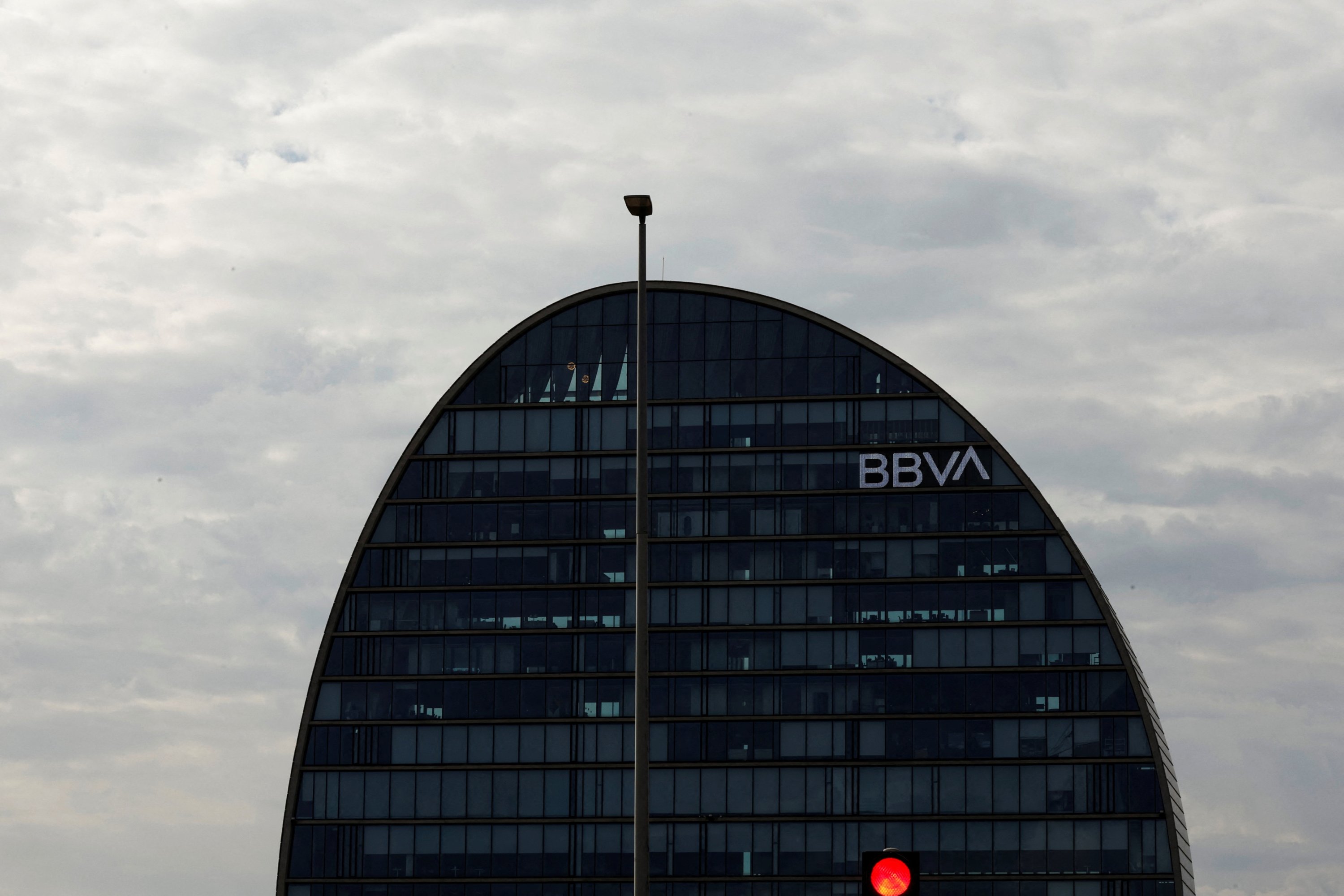
Spanish banking giant BBVA's hostile takeover attempt of Sabadell has failed, ending its bid to create a new heavyweight in the European banking sector, the country's stock market regulator said on Thursday.
The failure put an end to an almost 18-month attempt by BBVA to acquire its smaller rival. It's a blow for BBVA Chair Carlos Torres Vila, the architect of the offer, though he has said he would not resign if it failed.
The offer gained acceptance from 25.33% of Sabadell's shares and fell short of the minimum 30% threshold of voting rights needed for a possible second bid, the CNMV said in a statement on Thursday.
"As a result, the public offer has had a negative outcome" and "is rendered null and void", the CNMV said, announcing the result a day earlier than expected.
Most analysts had doubted that BBVA, Spain's second-largest bank which has a large footprint in Türkiye and Latin America, would secure more than 50% of Sabadell's shares, a threshold needed for outright control.
Shares in BBVA in the U.S. rose around 7% following the failure of the bid.
The leadership of Sabadell, Spain's fourth-largest bank, had persistently rejected BBVA's advances and recommended its plethora of small shareholders reject the bid.
BBVA reacted to the defeat by saying it would resume payouts to its shareholders and share buybacks during October and November.
"At BBVA, we look towards the future with confidence and enthusiasm," Vila said in a statement.
"I would like to thank the Banco Sabadell shareholders who showed their support for the merger plan, BBVA shareholders for their constant backing, and our team," he said.
The offer, which had valued Sabadell at around 17 billion euros (around $20 billion), aimed to forge a European banking powerhouse capable of competing with heavyweights such as Santander, BNP Paribas and HSBC.
BBVA first made its move on Sabadell in April 2024, and the bid turned hostile a month later in what has become one of the most bitter M&A battles in Spain in recent years.
That bid sparked a wave of government opposition and warnings about job losses, leading to a months-long competition review. Eventually, the government intervened and imposed conditions on the deal, blocking BBVA from merging fully with Sabadell for at least three years.
BBVA aimed to become one of the largest lenders in Europe, with about 1 trillion euros in assets to refocus on its home market after years of rapid expansion abroad.
The potentially huge consolidation had sparked opposition from the Socialist-led government over concerns about competition and the politically sensitive impact of the possible geographical restructuring of activity.
Sabadell was founded in 1881 near Barcelona in Catalonia, a prosperous northeastern region whose influence on national politics is significant – not least due to a historic independence movement.
The region's Socialist leader Salvador Illa welcomed the outcome on social media platform X, saying it "confirms what we have always maintained: a banking system adapted to the reality of Catalonia and its business fabric."