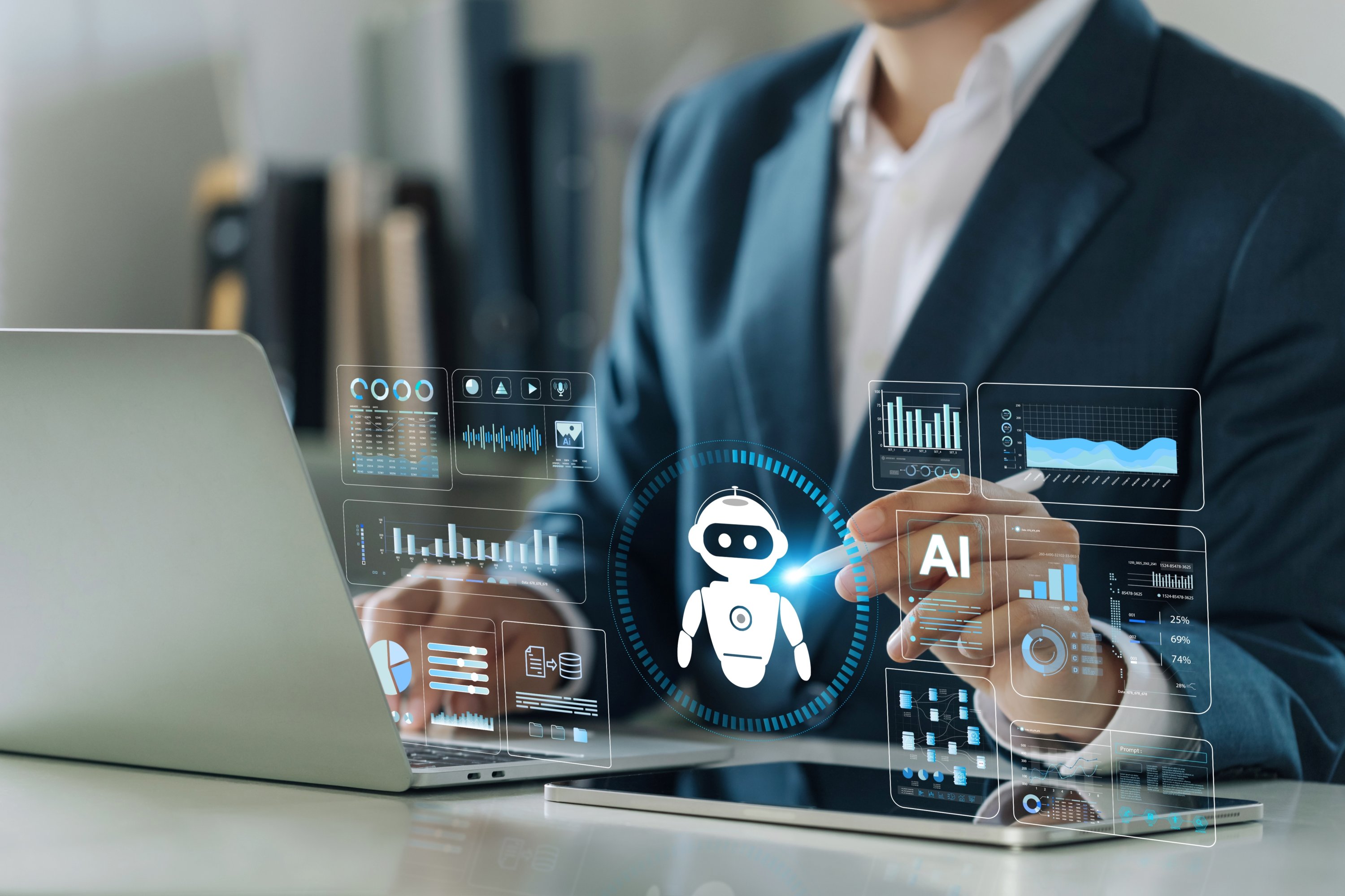
Artificial intelligence-powered customer experience technologies are reshaping how companies compete worldwide. Gartner forecasts that by 2026, more than 75% of customer interactions will be managed through AI-enabled systems.
One of the strongest Türkiye-based examples of this shift is Etiya's Agentic AI-focused digital transformation model developed in partnership with Amazon Web Services (AWS).
Etiya, which specializes in AI-driven customer experience solutions, integrated AWS's generative AI and cloud services into its platforms, delivering a 34% increase in operational efficiency.
Through its Agentic AI architecture, the company more than doubled, by 2.35 times, the share of customer interactions fully resolved via chatbots, while significantly reducing the workload on live support channels.
Globally, customer experience technologies are moving beyond traditional chatbots toward autonomous digital agents.
According to recent McKinsey research, generative AI and agent-based systems can reduce customer service costs by up to 30% while lifting customer satisfaction by double-digit percentages.
Etiya's AWS-based architecture reflects this broader trend. Built on Amazon Bedrock, Amazon SageMaker and Amazon Titan models, the system enables digital agents that can understand context, make decisions and complete multistep processes without human intervention.
Founded in 2004, Etiya operates across three continents and seven countries, serving clients in sectors ranging from telecommunications and finance to retail and digital services with a workforce of around 1,600 specialists.
AWS's scalable cloud infrastructure allows the company to deliver AI solutions globally with high security and performance.
The integration has also reduced system maintenance requirements and delivered operating cost optimizations of up to 30%, enabling teams to focus more on innovation and higher value-added product development.
Etiya co-founder and CEO Aslan Doğan stressed the importance of the strategic partnership.
"With our Agentic AI approach, we are transforming systems from tools that just respond into digital agents that learn, act proactively and interact naturally with users," Doğan said, adding that AWS's generative AI services make this vision scalable and secure.
AWS Türkiye General Manager Berrin Özselçuk described the collaboration as "a strong example of how cloud, generative AI and Agentic AI can move organizations ahead in global competition."
Global research increasingly shows that customer experience is no longer just a support function but a direct driver of revenue growth and brand loyalty.
Etiya's Agentic AI model, developed with AWS, underscores how technology companies from Türkiye can play an active, agenda-setting role in this global transformation rather than simply following it.
Türkiye's largest integrated telecommunications operator, Türk Telekom, has taken a major step in network management by deeply integrating artificial intelligence and automation technologies into its operations.
The company's AI-powered systems are delivering significant efficiency gains across field operations and network analytics, positioning Türk Telekom as a local reflection of a broader global transformation underway in the telecom industry.
Türk Telekom is leveraging AI and computer vision technologies, particularly in field inspection processes, achieving dramatic productivity gains.
According to analysis by the GSMA Foundry, the company has reduced site inspection times by up to 98% using AI-based visual analysis tools, translating into substantial savings in both time and labor costs compared with traditional methods.
Beyond operational efficiency, the deployment is enabling faster service delivery, shortening fault detection and resolution times and strengthening overall network reliability. AI-driven automation is also making network management more predictive, enhancing resilience and long-term sustainability.
Türk Telekom's investment forms part of a wider global wave of AI adoption across the telecom sector.
Operators worldwide are increasingly deploying AI to manage 5G and next-generation networks, optimize energy consumption, improve customer experience and strengthen cybersecurity.
In India, for example, Jio Platforms has partnered with global technology players such as AMD, Cisco and Nokia to develop the Open Telecom AI Platform, aiming to enhance network automation and security at scale, according to CNBC-e.
Industry reports from GSMA and other bodies indicate that AI and automation are set to account for a growing share of telecom investment and research and development (R&D) spending in the coming years, as operators move toward autonomous network management and lower operating costs.
At Türk Telekom, the AI-enabled infrastructure is also reshaping customer experience. By proactively managing rising data traffic and detecting potential failures in advance, the system can optimize network performance with minimal human intervention.
This approach aligns with the general trend in the industry.
As customer expectations continue to rise, telecom operators face mounting pressure to deliver faster and smarter services. In this context, AI and automation are no longer optional technologies but core capabilities that define competitive advantage in the telecom sector.
Microsoft has stepped up its push in the artificial intelligence race with Maia 200, a new in-house AI inference accelerator designed to raise performance while lowering operating costs, underscoring the company's ambition to become a serious player in AI hardware as well as software.
Manufactured using TSMC's 3-nanometre process, Maia 200 chip targets faster token generation for large language models and improved cost efficiency at scale. The chip is said to pack more than 140 billion transistors and delivers over 10 petaflops of performance in 4-bit precision and around 5 petaflops at 8-bit precision.
What sets Maia 200 apart from rivals is its memory architecture and efficiency.
The accelerator integrates 216GB of HBM3e memory, offering bandwidth of 7 terabytes per second, alongside 272MB of on-chip SRAM. This configuration is designed to eliminate bottlenecks in high-speed AI inference workloads.
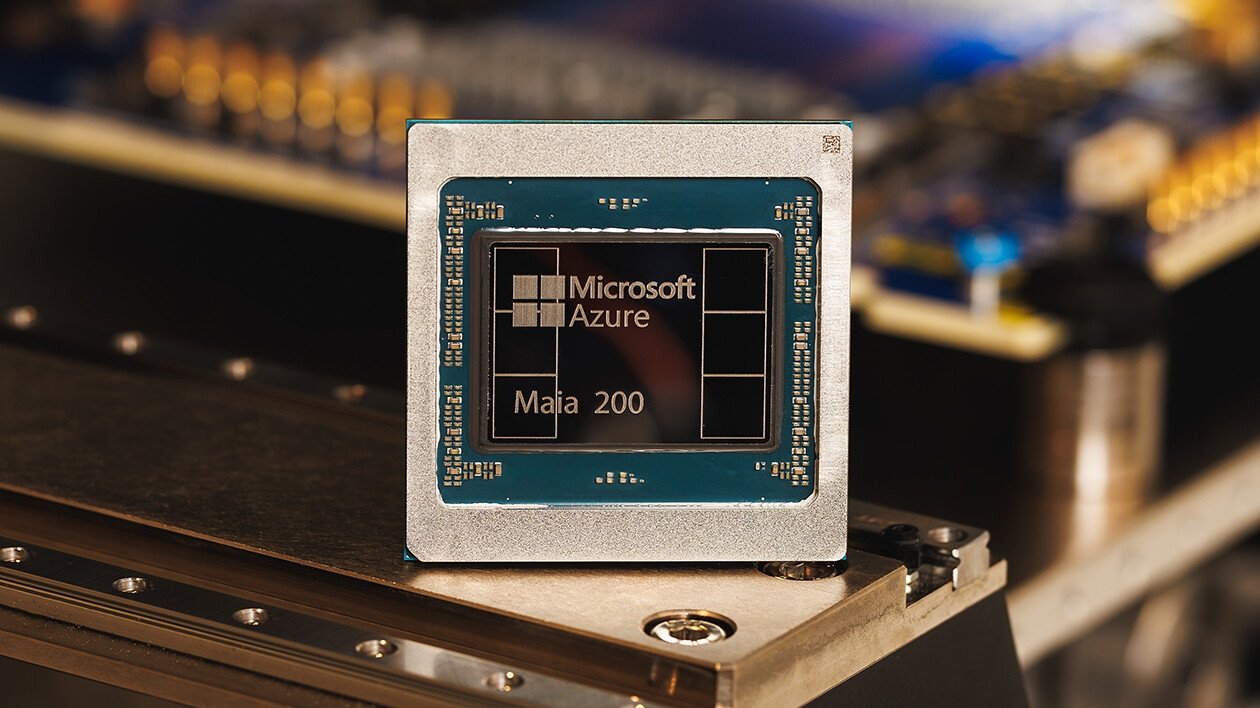
Microsoft says Maia 200 is the most efficient inference system it has ever deployed.
Scott Guthrie, executive vice president for Cloud and AI at Microsoft, said Maia 200 positions the company competitively among hyperscale cloud providers. According to Guthrie, the chip delivers roughly three times the FP4 performance of Amazon's third-generation Trainium and outperforms Google's seventh-generation TPU in FP8 workloads.
The new generation chip will not remain as only an infrastructure investment. It will underpin a broad range of Microsoft's AI services, including enterprise Copilot products, advanced OpenAI models such as GPT-5.2 and synthetic data generation and reinforcement learning projects led by Microsoft's Superintelligence team.
Maia 200 has already been deployed in Microsoft's Iowa data center, with expansion to facilities in Arizona planned in the near term. The company says the new chip delivers a 30% improvement in performance per dollar.
Industry analysts view Maia 200 as a clear signal that Microsoft is aiming for greater independence and strategic depth in AI hardware, reinforcing its position not just as a software and cloud leader, but as an increasingly integrated AI platform company.
Apple has updated its AirTag tracker for the first time in five years, introducing longer detection range, louder alerts and more precise location tracking, while keeping prices unchanged.
The updated AirTag is powered by Apple's second-generation Ultra Wideband (U2) chip, the same technology used in the iPhone 17 lineup as well as the Apple Watch Ultra 3 and Apple Watch Series 11. Apple says the new chip significantly improves location accuracy and tracking performance.
A redesigned Bluetooth system allows lost items to be detected from up to 50% farther away compared with the first-generation AirTag. The built-in speaker has also been upgraded, delivering alerts that are up to 50% louder.
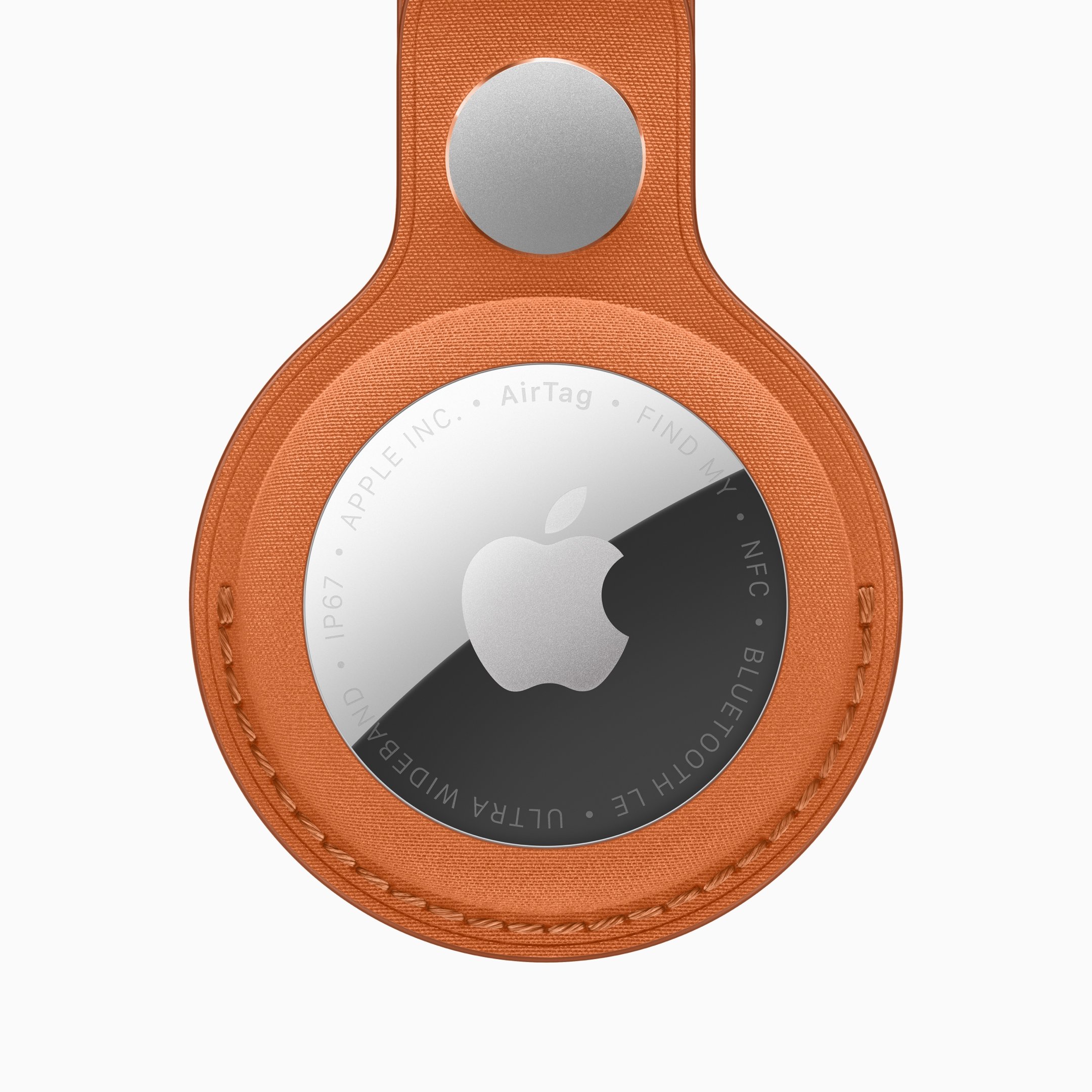
Apple said the new, more distinctive alert sound works in tandem with enhanced Precision Finding to make locating misplaced items easier.
For the first time, Precision Finding is now available directly on Apple Watch. Users with Apple Watch Series 9, Apple Watch Ultra 2 and later models can track AirTags from their wrist, without relying solely on an iPhone.
The second-generation AirTag requires an iPhone running iOS 26 or later, or an iPad with iPadOS 26 or later.
The new AirTag continues to operate on Apple's Find My network, which leverages nearby Apple devices to relay location data even when the AirTag is outside Bluetooth range of its owner's device.
It also supports the Share Item Location feature introduced in 2024, allowing users to securely share an AirTag's location with trusted third parties such as airline customer service teams when tracking lost luggage.
Apple kept its pricing unchanged. A single AirTag is priced at $29, while a four-pack sells for $99. Pre-orders opened on Jan. 26 via Apple's website and the Apple Store app.