Last year marked a breakthrough year for generative AI in the mobile ecosystem. That's according to the latest report that showed generative AI apps expanded at a faster pace in 2025, with growth in downloads and in-app purchase revenue surpassing the high bar set in 2024.
Worldwide, AI app downloads doubled compared to the previous year to 3.8 billion, while in-app purchase revenue saw even sharper growth, more than tripling from the previous year to over $5 billion, according to market intelligence platform Sensor Tower.
The data indicates a transition from the period when users downloaded AI just out of curiosity to a period where they have integrated it into their daily routines.
In 2025, the total time spent in generative AI applications reached 48 billion hours, Sensor Tower's 2026 State of Mobile report suggested. That's approximately 3.6 times the 2024 total and nearly 10 times the 2023 level.
A similar increase was observed in session counts.
In 2025, the session volume in these applications surpassed 1 trillion. The fact that the growth in sessions is faster than the growth in downloads proves that these applications are focusing on building deeper engagement with existing users rather than just acquiring new ones.
By category, AI assistants were by far the most popular segment. All of the world's top 10 most-downloaded AI apps in 2025 fell into this category, highlighting intensifying competition among major technology firms.
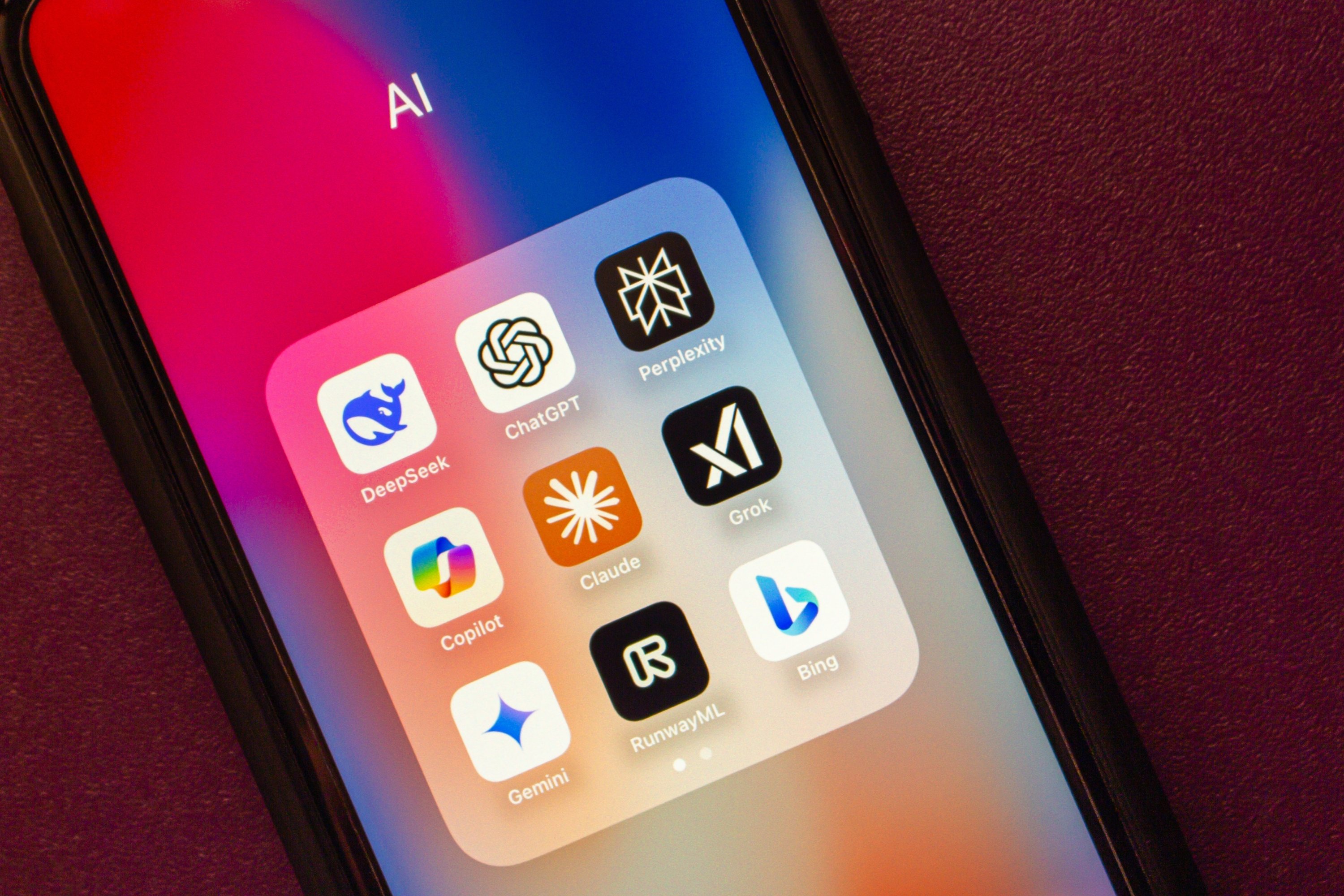
Companies including Google, Microsoft and X continued investing heavily in AI assistants to challenge market leader ChatGPT.
U.S.-specific data also revealed a notable demographic split: generative AI apps were used predominantly by male users in the fourth quarter of 2025.
ChatGPT ranked ninth among the most-used apps by U.S. men, appearing alongside platforms such as YouTube, Instagram and Spotify.
In contrast, female users' Top 10 list featured apps such as Pinterest, TikTok and Venmo, with ChatGPT not making the ranking.
The top five most popular AI applications of 2025 by global downloads are ranked as follows:
Alongside these giants, Grok, Adobe Acrobat Reader and Microsoft Copilot also secured positions in the Top 10.
In other sub-genres, content creation apps such as Suno (music generation) and Jimeng AI (text-to-video generation) gained momentum in 2025, while the growth rate of "AI Companion" applications, such as Character AI, showed signs of slowing down.
According to Sensor Tower data, applications focused on music and video generation within the "AI Content Generators" category have begun to attract significant interest and have found space to grow in the market.
In the field of music generation, the Suno application stood out. Regarding text-to-video generation, the Jimeng AI application developed by ByteDance gained momentum in 2025.
These applications have managed to capture users' attention with their specialized capabilities in an industry dominated by general AI assistants like ChatGPT and Google Gemini.
One of Türkiye's leading telecoms and technology companies, Türk Telekom is sharpening its strategic focus for 2026 on digital health infrastructure, data-driven services and 5G-enabled smart solutions, as the operator seeks to strengthen its position as a technology "platform player" within the broader innovation ecosystem.
Türk Telekom's support for startups extends beyond capital. By opening its fiber network, cloud systems, data centers and research and development (R&D) capabilities to entrepreneurs, Türk Telekom enables real-world testing and scaling of new technologies.
This model enables startups to enter the market more rapidly and robustly, particularly in highly regulated and security-sensitive areas such as health technologies. According to experts, this approach positions Türk Telekom as a strategic business partner rather than a traditional investor.
In 2026, Türk Telekom plans to move AI-powered health solutions beyond individual applications, focusing instead on platforms that operate integrated with hospitals, insurance systems and public health infrastructures.
Remote patient monitoring, analysis of data from wearable devices and preventive health models are expected to form the backbone of this strategy.
With the expansion of 5G, the company is targeting new use cases in health care and smart-city technologies that require real-time data processing. Türk Telekom aims to deepen collaborations with startups on 5G-enabled smart ambulance systems, remote diagnostics and low-latency medical applications.
Data security and domestic technology development represent another leg of the 2026 vision.
Protection of sensitive health data, transparency in AI models and the use of locally developed software solutions are expected to shape the company's investment and partnership criteria going forward.
Artificial intelligence is no longer just a technology that recommends or analyzes. It is transforming into autonomous structures capable of making decisions, generating actions and managing processes on their own.
Softtech's 2026 Technology Report examines this new era of artificial intelligence, which consists of autonomous AI agents.
The report, published for the ninth time, outlines technology-driven transformations across a wide range of sectors from education and finance to industry and energy, arguing that AI has moved from being a passive tool to an active digital actor.
Prepared with contributions from 35 specialists, the study explores current technological impacts and post-2026 scenarios around three main themes.
It says the convergence of language models, enterprise data layers and orchestration platforms has paved the way for agentic systems as of 2026. However, the pace of technological change is not matched by organizations' capacity for transformation.
Data in the report show that 88% of institutions use AI in at least one business function, yet only 23% have been capable to implement it at enterprise scale. This reveals that in the era of agentic AI, it is not only technology investments that must be redesigned, but also governance, organizational structures, and human-machine collaboration models.
The Softtech 2026 Technology Report points out that agentic AI transforms not only business processes but also the relationship between humans and technology. This transformation, addressed under the heading "Human and Environment," is discussed within the framework of ethical boundaries, accountability and sustainability.
The report emphasizes that AI systems with increasing levels of autonomy can only create a lasting and socially acceptable impact through human-centered design and ethical governance principles.
According to the report, the fastest impact of agentic AI is being seen in commerce, finance and customer services, where consumers increasingly interact with AI agents across the purchasing and payment journey.
In sectors such as energy, manufacturing and logistics, digital twins, edge AI and real-time optimization are improving operational efficiency while reducing error rates. AI-driven infrastructure management is also playing a critical role in energy security and sustainability.
In this new phase, the human role is shifting from decision-maker to supervisor, guiding systems, overseeing outcomes and defining ethical boundaries.
The Softtech 2026 Technology Report positions itself not only as a trend analysis for technology leaders, executives, entrepreneurs and academia, but also as a strategic road map for the age of agentic AI, calling for technology to be shaped alongside human values and responsibility.