Recent controversies surrounding U.S. artificial intelligence companies have highlighted how debates over AI ethics remain largely shaped by American legal frameworks and national security priorities, leaving much of the world observing from the sidelines.
Discussions triggered by resignations at OpenAI and tensions involving Anthropic over cooperation with the U.S. Department of Defense underscore how ethical standards in the AI industry are often defined through the lens of U.S. law and policy.
In many cases, the underlying concern is the risk of legal liability under American law rather than demands from international regulators.
This debate including Anthropic and OpenAI raises a much larger question: Where does the rest of the world stand in this ethics debate?
While markets such as the European Union or other nations cannot be entirely ignored due to their economic weight, their regulatory expectations often remain a secondary priority.
For U.S.-based AI giants, the order of priority is clear: The law of the homeland takes precedence over demands from the global market.
The most concrete evidence of this is hidden in the user agreements. When defining jurisdiction, these agreements emphasize that U.S. courts have authority in any legal dispute. Regarding governing law, it is stressed that disputes will be resolved according to U.S. state laws.
In terms of sanctions compliance, it is consistent across all companies that services will not be provided to countries declared as enemies by the U.S. The sanctions imposed on Russia serve as a clear example.
Most American AI companies explicitly state in their terms of service that users located in countries under U.S. embargo cannot access their platforms. These typically include Cuba, Iran, North Korea and Syria.
Such provisions highlight how compliance with U.S. foreign policy and security frameworks remains central to the ethical and operational guidelines of major AI companies. These clauses stand as the most concrete evidence that the “ethics” understanding of these companies is fundamentally based on the interests and security policies of the United States.
In the crypto world, there is often a trade-off between ease of use and strong security. A recent acquisition aimed at reversing this relationship has drawn attention among crypto exchanges in Türkiye.
One of Türkiye’s leading cryptocurrency platforms, Paribu, has announced the acquisition of the London-based self-custodial smart wallet venture Clave, in a purchase that represents a broader strategic move than the product acquisitions commonly seen in the sector.
The agreement rests on three main pillars: technology, team and user growth. Clave’s infrastructure is built around “account abstraction,” a technology that is becoming increasingly important in the blockchain ecosystem.
This technology approach aims to eliminate one of the main usability challenges of crypto wallets, the “seed phrase,” or the 12- or 24-word recovery key, by replacing it with biometric authentication and passkey systems for a more user-friendly experience.
Features such as fingerprint or facial recognition access, social recovery mechanisms and gas fee abstraction are designed to address user experience challenges that have long limited blockchain applications from reaching broader audiences.
The Clave team also stands out as a key element of the deal. Founding members, including Baki Er, Rafi Ersözlü and Ulaş Erdoğan, have established technical reputations within the global crypto developer community.
The startup had also received backing from investors linked to major blockchain ecosystem players such as the Ethereum Foundation and Matter Labs.
In 2024, Clave completed an early-stage funding round of approximately $1.6 million. Within less than a year, the company surpassed 20,000 users and generated more than $10 million in total value locked (TVL).
The acquisition is viewed as a continuation of Paribu’s recent global expansion strategy. In December 2025, the company acquired CoinMENA, one of the leading crypto platforms in the Middle East and North Africa, gaining a licensed presence in Bahrain and Dubai.
Taken together, the CoinMENA and Clave acquisitions highlight Paribu’s ambition to evolve from a Türkiye-based crypto exchange into a multiregional financial technology platform.
By combining access to Türkiye, the MENA region and the global decentralized finance ecosystem, the company is pursuing a scale of expansion rarely seen among crypto firms in the region.
Globally, the decentralized wallet market is known to be highly competitive. The largest players in terms of user numbers include MetaMask, Trust Wallet and Phantom Wallet.
Clave’s passkey- and account abstraction-based approach is expected to provide differentiation in this crowded field.
The integration could also have direct implications for Paribu users. If Clave’s infrastructure is incorporated into the platform, users may gain access to decentralized finance tools without leaving the centralized exchange application.
Seventy-six entrepreneurs gathered in Istanbul for the local leg of Startup Weekend Women, an event held simultaneously in 40 cities worldwide, taking part in a 54-hour marathon to develop business ideas. Three projects were selected for awards and will move on to the global stage.
Startup Weekend Women Istanbul, organized with the main support of Garanti BBVA and in collaboration with Techstars Türkiye, took place at Salt Galata with the goal of helping women entrepreneurs turn their ideas into global ventures.
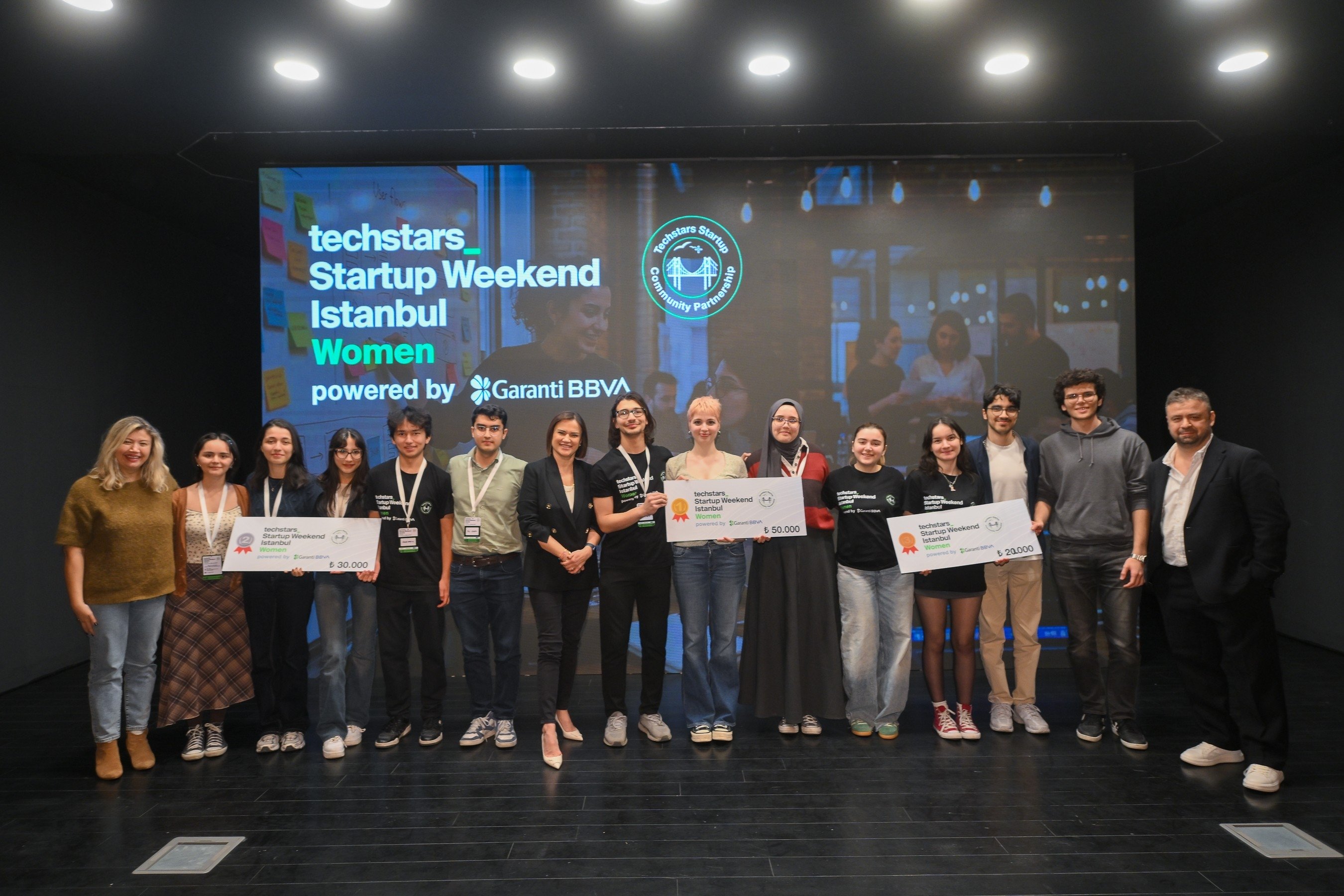
Mentors, investors and experts from the technology and entrepreneurship ecosystem supported the event, where 19 teams were formed. Over three days, participants went through stages including business model development, product design and preparation of investor presentations before presenting their projects to the jury.
Globally, the role of women entrepreneurs in the technology ecosystem has been growing rapidly. Today, there are more than 69,000 technology startups founded by women worldwide, attracting more than $309 billion in total investment. At the same time, the number of women participating in entrepreneurial activity has been increasing steadily. Over the past 20 years, the global rate of women launching new ventures has risen from 6.1% to 10.4%.
Garanti BBVA Deputy General Manager Sibel Kaya said the event plays an important role in strengthening women entrepreneurs on a global scale.
“As Garanti BBVA, we have contributed to the entrepreneurship ecosystem with a holistic approach for nearly 20 years and consider encouraging women entrepreneurs and enabling their access to global networks among our strategic priorities,” said Kaya.
“In the new digital-driven economy, stronger representation of women in technology and innovation is extremely valuable. We believe the ideas emerging from Startup Weekend Women Istanbul will turn into global success stories in the future.”
Techstars Türkiye chair of the board, Aylin Şahin, said the three-day marathon provided a strong starting point for women entrepreneurs.
“The Startup Weekend we organized on March 6-8 on the occasion of International Women's Day became an inspiring process in which women entrepreneurs transformed their ideas into concrete projects,” Şahin noted.
“The opportunity for the winning teams to present in front of Techstars’ global fund in May represents an important step in their journey from the local stage to the global arena.”
At the end of the event, three projects were awarded following the jury’s evaluation. The startup Boundtr won first place with its MusiConnect project and received a prize of TL 50,000 ($1,130). Novacore came second with its Fluessent project, earning TL 30,000, while Vertex placed third with the Unisell project and received TL 20,000.
The first-place team will also have the opportunity to present its project to one of the world’s leading technology funds and an international jury at the Global Pitch Competition scheduled for May 2026.
The commercial rollout of 5G around the world is expected to create not only a race over connection speeds but also a new competitive arena among telecom operators centered on unlimited data and digital service bundles.
The first full commercial launch of 5G took place on April 3, 2019, in South Korea. Operators SK Telecom, KT Corporation and LG Uplus simultaneously activated their 5G services.

In Europe, operators adopted a somewhat different approach. Deutsche Telekom opened 5G test networks in Germany while positioning its unlimited 5G plan, combined with voice services, at around 85 euros ($98.3) per month.
In Türkiye, operators are also accelerating preparations for the 5G era. One of the country’s leading telecoms and technology companies, Türk Telekom announced that it will introduce the new generation of 5G tariffs starting on April 1, with prices beginning at TL 850 ($19.3).
Offering only bundles is no longer considered sufficient in 5G launches. In South Korea, operators incorporated next-generation content and experiences, such as sports broadcasts, augmented reality, virtual reality and e-sports, into their packages to attract subscribers.
As a result, 5G has been positioned not only as a connectivity technology but as the center of a broader digital content and services ecosystem.
Türk Telekom said it is preparing for the 5G era with its “New Generation Tariffs.” Starting at TL 850, the packages will feature unlimited mobile internet for the first time in the company’s history.
In addition to data allowances, digital services occupy an important place in the new plans. Packages include services such as YouTube Premium, Tivibu Go and Muud Premium. Users will also be able to benefit from gift vouchers worth TL 500 that can be used in stores operated by Amazon, Apple or Google.
Türk Telekom Marketing and Customer Experience Deputy General Manager Zeynep Özden said the company’s strength in 5G is built on its strong fiber infrastructure, base stations connected to a nationwide fiber network and the highest capacity usage rights per customer.
She also noted that subscribers currently using existing tariffs will be able to benefit from 5G without paying additional fees, emphasizing that the company is adopting a “5G for everyone” approach.
Compared with the global landscape, Türk Telekom’s strategy resembles the unlimited data and digital service bundling model adopted by South Korean and European operators during their 2019 5G launches.
On the roaming side, however, while South Korean operators offer unlimited roaming across 185 countries, Türk Telekom appears to prefer a more limited but simpler model, allowing up to three days of international usage per month without additional charges.