Smartphone users in Türkiye use an average of two different finance apps per month, according to "Cash In! Finance Spotlight Report 2026" by Sensor Tower, a mobile analytics firm.
The study covers January to September 2026 and combines data from iOS, Apple's mobile operating system, and Google Play, the Android app store. It puts the global average at 2.1, so Türkiye sits slightly below it.
The report compares 22 markets, and Türkiye ranks 18th. Spain and Germany sit just ahead at 2.1, while Australia (1.9), Italy (1.7), India (1.6) and Canada (1.5) trail behind.
South Korea tops the list at 6.2, followed by Latin American markets such as Brazil (3.9) and Argentina (3.7), and by the United Arab Emirates (3.6) from the Gulf. The average South Korean user uses roughly three times as many finance apps as their counterpart in Türkiye.
The United States (2.8) and the United Kingdom (3.0) are also ahead of Türkiye. The gap between Türkiye and Germany or Spain is just 0.1. In other words, Türkiye's usage intensity is on par with developed European markets.
The number of finance apps in the country keeps growing through Pilot, the startup accelerator program run by Türk Telekom, one of Türkiye's leading telecoms and technology companies.
The fintech startups are also among the ventures selected for the 11th term of Pilot.
On the website of TT Ventures, Türk Telekom's corporate venture capital arm, the list of 2024 investments includes Finceptor, F-Ray, egaranti, Sensemore.io and Medialyzer. All five are also among the seven startups chosen for the 11th edition.
The report says mobile finance adoption continues to climb worldwide.
Finance app downloads are expected to grow about 6% in 2026 to 8.9 billion, while the number of sessions is up 10%. Given that overall mobile app downloads were flat over the same period, the finance category is breaking away from the broader trend.
The category's two largest subgenres are Banking and Digital Wallets and P2P (peer-to-peer) Payments. Together they reached roughly 1 billion downloads in the third quarter of 2026. Every major subgenre except cryptocurrency has seen download growth since 2023.
Another trend the report highlights is a shift toward short-term, on-demand borrowing. In the first nine months of 2026, downloads of Same-Day Loan apps rose 91% compared with the same period in 2023, Buy Now, Pay Later apps rose 72%, and Budget and Expense Tracking apps rose 66%.
The report attributes this to likely "purchasing power concerns and a desire to manage finances more actively." These trends reflect global data; the report includes no Türkiye-specific breakdown.
Another notable point is that banking and wallet apps equal roughly 72% of the average user's finance app repertoire. For the average user, then, "finance app" essentially means "my bank and my payment app." Other subgenres such as investing, crypto and credit remain more niche.
According to the report, the finance app market is largely regional, with local regulations and consumer preferences determining the winners.
In Banking, Credit and Lending, and Insurance, the top three apps each hold less than 10% of their subgenre's user share. Digital wallets and budget tracking are more concentrated. In banking, Nubank, a Brazilian digital bank, Sberbank, Russia's largest bank, and Revolut, a U.K.-based fintech, lead the top three, yet "others" account for 93.3% of the global banking market.
Digital ad spending by financial services is estimated to grow 18% in 2026 to reach $23.3 billion. Social networks, up 34% to about $10.8 billion, have overtaken TV and broadcast platforms. The report cites brands' push to reach young mobile audiences as the reason for the shift.
The overall TV market is growing slowly, but big-screen sales are rising. Brands are investing in the 100-inch-and-above segment, though high prices limit how widely these sizes spread. Giant screens in homes are becoming the control hub for all of the household's smart devices.
In Türkiye's television market, consumers are increasingly drawn to bigger screens, and competition is taking shape in the same direction. The arrival of large panels in the local market is also tied to Türkiye's position in manufacturing.
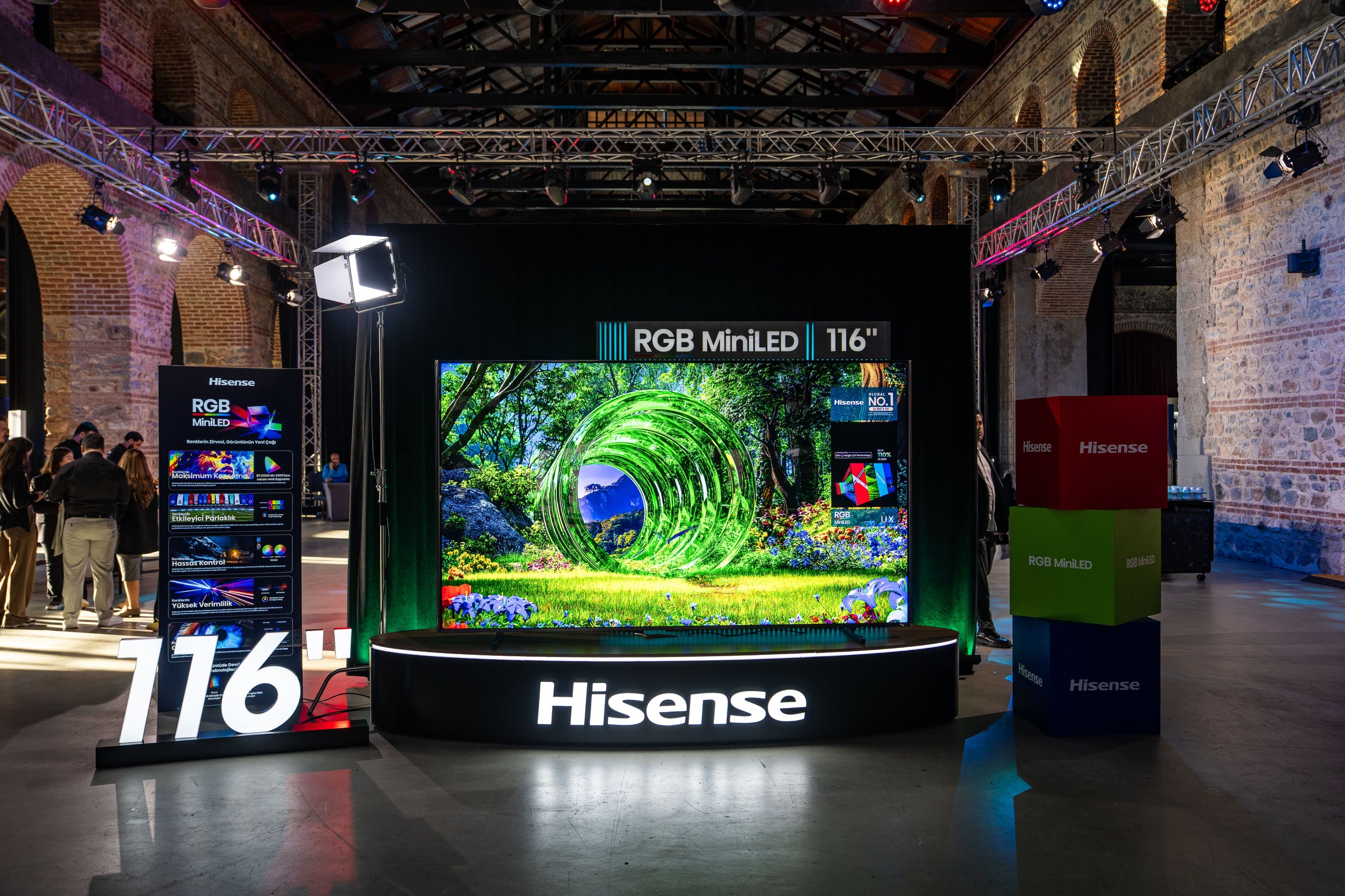
According to one compilation, around 55% of the televisions sold in the European market are produced in factories in Türkiye. The same source notes that 4K resolution has now become standard on models of 50 inches and above. Hisense, a Chinese consumer electronics maker, has begun its official operations in Türkiye with televisions and air conditioners.
Highlighting its global shipment leadership in the 254 cm (100-inch) and above segment, the company aims to raise the home cinema experience in Türkiye to a new level. According to first-half 2026 data by Omdia, a technology research firm, Hisense was reported to have maintained its global leadership in TVs of 100 inches and above.
TCL, another Chinese electronics maker, has also launched its new-generation SQD-Mini LED series in Türkiye. The C8L, C7L and Q7D Pro models offer high brightness, advanced local dimming, which darkens individual zones of the screen for deeper blacks, a 144Hz refresh rate and large screen options. Samsung, for its part, showcased a 130-inch Micro RGB television in its 2026 lineup.
However, screens of 100 inches and above do not yet appeal to the mass-market. Volume is expected to remain concentrated in smaller sizes.
An earlier piece of market data indicated that roughly half of the televisions sold in Türkiye fell in the 40-to-44-inch range. That distribution appears to be shifting in favor of larger screens today, but no current size-breakdown data could be found.
Industry data points to the big-screen trend continuing. Room size, viewing distance, price and alternatives such as projectors will determine how quickly 100 inches and above become widespread.
Hisense has launched its Hi-QLED and ULED MiniLED TV series in 55, 65 and 75-inch sizes as a first step. It will bring the 100-inch-and-above series, where it holds global market leadership, to Türkiye starting in 2027.
The company also plans to grow gradually through new product categories from the same year. Hanson Han, CEO of Hisense Europe, stressed his company's belief in the high potential of the Turkish market.
"That is why we entered this market with a long-term vision. Our story in Türkiye is only just beginning," he said.
Boštjan Vodeb, Hisense's sales director for Eastern Europe and general manager for Türkiye, said the priority is not merely selling products but building a solid foundation made up of a local team, sales and distribution partners, and an after-sales service network.
He said the strategy centers on an "Accessible Luxury" approach, adding that the company believes advanced technology should reach broader audiences, not just a select few.
Ekin Doğan Çomak, Hisense Türkiye's commercial director for sales and marketing, said the company positions technology "not ahead of life, but within life." She said the aim is to offer the same quality and trust at every touchpoint, from a consumer's first encounter with the brand to after-sales services.
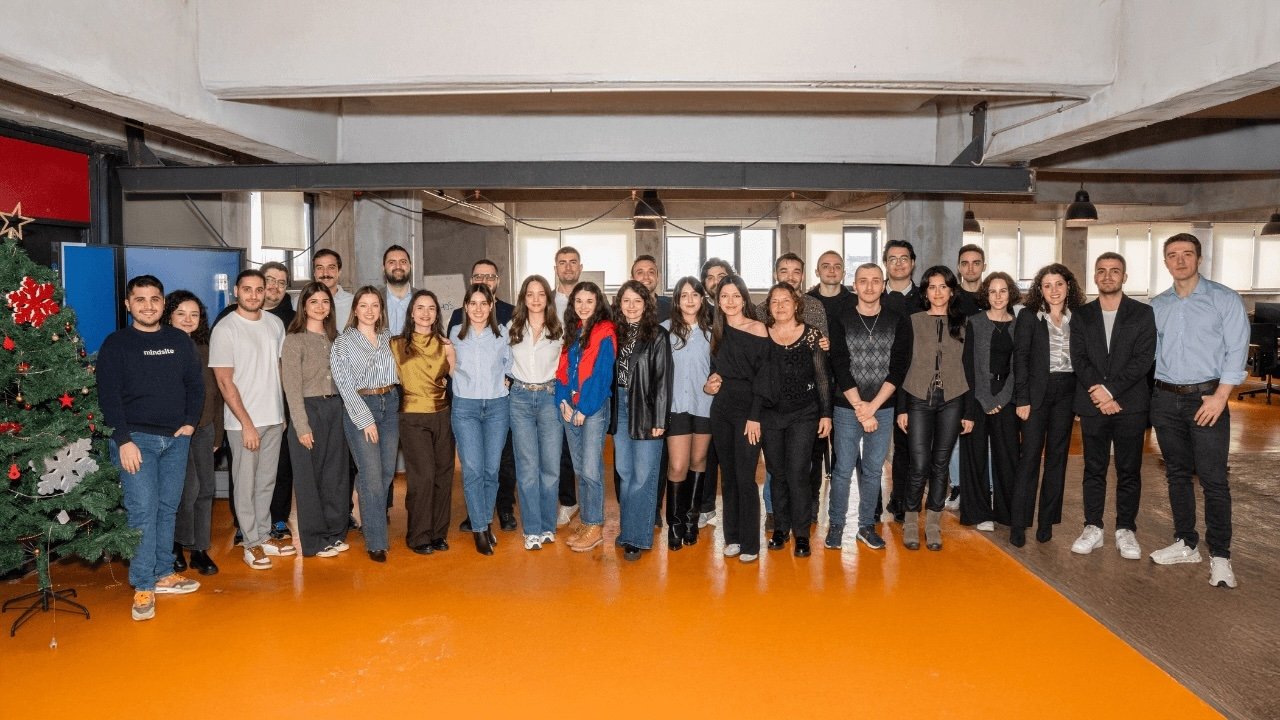
Mindsite, which operates in e-commerce and digital shelf analytics, has announced the completion of a new $2 million funding round.
Investors in the round include Teknoloji Yatırım, part of the Technology Development Foundation of Türkiye (TTGV); Sharks & Partners; Finberg; the Technology and Innovation Fund; Gelecek Etki Fonu (Future Impact Fund), managed in partnership by Vestel Ventures and Tacirler Portföy, an asset management firm; TT Ventures Venture Capital Investment Fund; Leap Investment; and Ömer Hayrı Erkmen.
Most existing investors also returned for the round.
Mindsite CEO and co-founder Ismail Arapzade says that from day one the company has positioned itself as a decision layer that doesn't merely monitor brands' digital shelf operations but manages them. The platform gives brands performance and market insights across e-commerce channels, enabling them to take action.
Behind this approach lies the breadth of its data. In 2022, the company announced it could report data from more than 150 e-commerce platforms in 13 countries. Mindsite's current coverage may exceed that figure.
Mindsite's funding journey began in 2020. The company was among the 14 startups selected for the sixth cohort of the Workup Entrepreneurship Program, and in January 2021 it received TL 2.8 million ($57,000) in an investment led by Maxis. It then raised $1.9 million in December 2022, and in 2024 it raised $1.5 million at a $15 million valuation.
According to CB Insights, the company's total funding has reached $5.78 million across four rounds.
The company's investors include a corporate venture capital fund (TT Ventures VCIF), state-backed funds (the Development and Investment Fund of Türkiye and TTGV) and individual investors.
According to reports, Mindsite is also weighing strategic acquisition opportunities, particularly among technology and data-focused startups. This suggests the round could open the door not only to organic growth but also to the company taking on a consolidation role within its category.
IBM's historic hard drive from 70 years ago, with a storage capacity of 5 megabytes (MB), looks like a "dinosaur" next to today's smartphones. Storing the contents of an iPhone 17 Pro with 70-year-old technology would take 2.5 million hard disks. In other words, a ship as heavy as the Titanic.
Today's phones comfortably hold thousands of photos and videos, but in 1956, simply moving 5MB of data took a truck and a crew. By that yardstick, an iPhone 17 Pro's storage would need 2,500 trucks to carry it using 70-year-old technology.
In 1956, IBM introduced the IBM 305 RAMAC, one of the first commercial computers to use a hard disk drive. Its storage unit, the IBM 350, weighed more than a ton and held about 5MB of data on 50 spinning disks.
Today, a single photo taken with a smartphone can take up more space than that machine's entire storage capacity. A memory card smaller than a fingernail can hold millions of times as much data as the machine could in its day. The journey from room-filling storage systems to chips smaller than a fingertip took just 70 years.
Comparison: how much space would the iPhone 17 Pro in your pocket have taken up in 1956?
The numbers are staggering. To match the capacity of an iPhone 17 Pro with 256 gigabytes (GB) of storage using 1956 technology, you would need roughly 51,200 IBM 350 units (256,000MB ÷ 5MB).
That comes to about 2.5 million disks (51,200 × 50). The total weight would exceed 51,000 tons, roughly that of the Titanic. Carried on 20-ton trucks, it would take more than 2,500 of them. Lined up one behind another, that convoy would stretch for tens of kilometers.
The larger 1 terabyte (TB) iPhone 17 Pro would weigh about 200,000 tons, or roughly 20 Eiffel Towers.