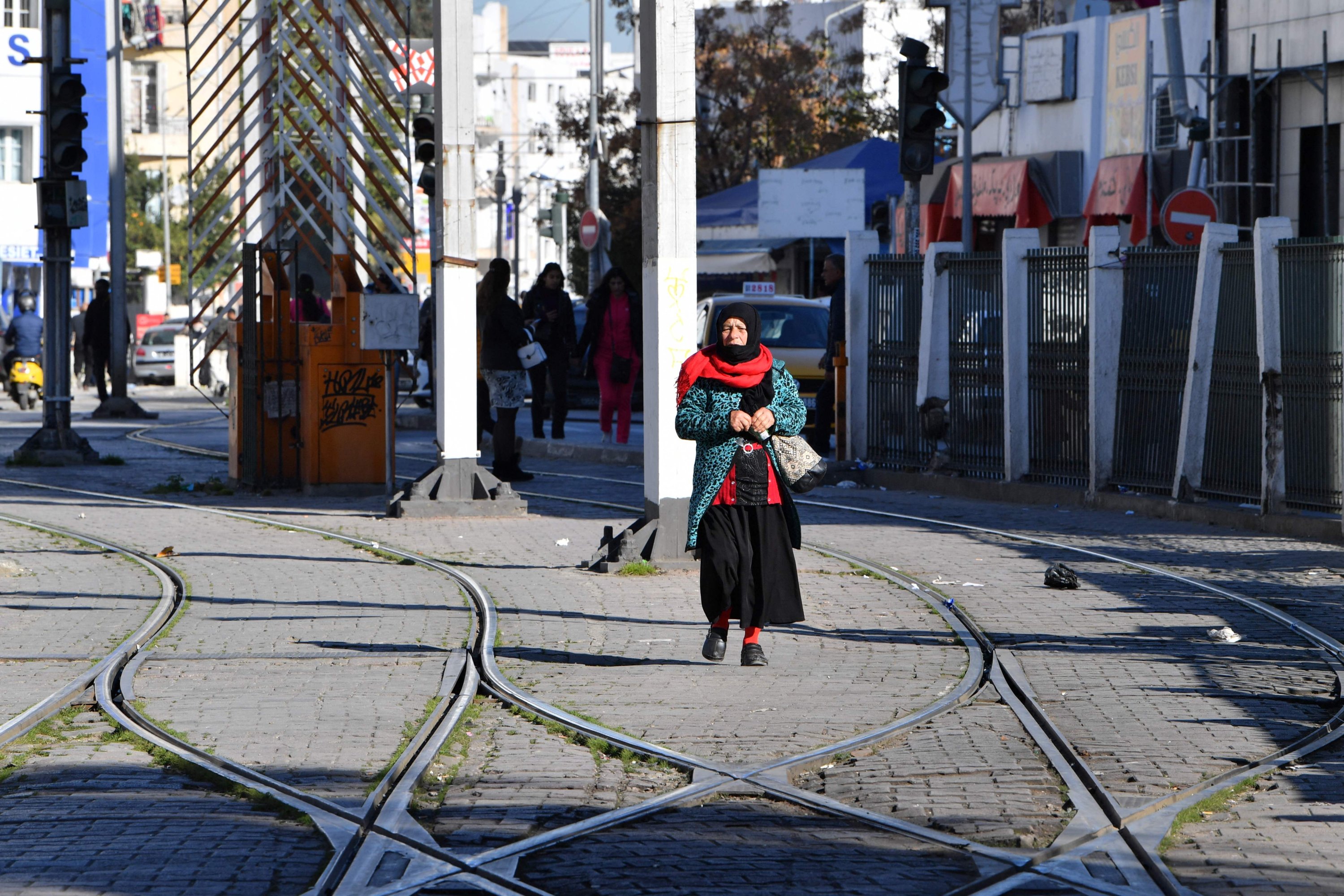
Metro and bus traffic in Tunisia's capital halted on Monday after employees of state transport company Transtu held a strike over delays in the payment of wages and bonuses.
The strike in Tunis highlights the financial problems public companies face on the verge of bankruptcy while President Kais Saied's government contends with its worst economic crisis.
"The financial situation in the company is tough," said Transtu spokesperson Hayat Chamtouri.
The industrial action is a show of strength for the powerful UGTT union, which has pledged to hold a series of protests.
The union, with 1 million members, has approved a two-day strike by air, land and sea transport workers on Jan. 25 and 26 to protest against what it called "the government's marginalization of public companies."
Hundreds of Transtu workers staged a protest in Kasbah Square, near the prime minister's office, demanding payment of money the company owes them.
They raised slogans such as "we want our rights ... we don't ask for an advantage."
Monday's strike is open-ended and will continue until the workers' demands are met, said UGTT official Wajih Zidi, adding that some employees have been left unable to pay their debts.
The travel chaos provoked an angry response from some among the thousands of people struggling to move around the capital.
"Today, we do not find milk, oil, sugar or coffee. Also, now we do not find buses that take us to work. As a result, Tunisia has become an unbearable hell," said Nejia, a woman waiting at a bus station.
In the poor Intilaka neighborhood, people blocked roads to protest against the strike.
Tunisia is seeking a $1.9 billion loan from the International Monetary Fund (IMF) in exchange for unpopular reforms, including spending cuts, restructuring public companies, and reducing energy and food subsidies.
Economy minister Samir Saeed said last month that Tunisia would face a challenging year, with inflation set to climb above 10%.
The strike will increase pressure on the government of President Saeed, who is facing growing opposition 17 months after seizing executive powers in a move his opponents described as a coup.