by Compiled from Wire Services
Jul 31, 2015 12:00 am
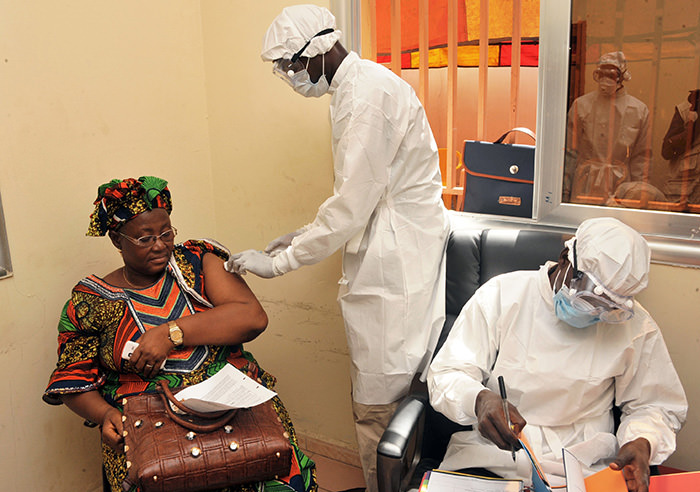
A Canadian Ebola vaccine provided 100-percent protection 10 days after it was administered in a field trial in hard-hit Guinea, researchers and officials said Friday, hopeful of "the beginning of the end" of the killer West African outbreak.
The world was "on the verge of an effective Ebola vaccine," the World Health Organization (WHO) said, hailing the results from the first efficacy test of the VSV-ZEBOV vaccine among people living in a high-danger zone.
The vaccine known as VSV-ZEBOV or VSV-EBOV was tested on 4,000 Guineans who had come into contact with Ebola patients, in a joint study by the Canadian health agency, the US pharmaceutical company Merck, the World Health Organization and others.
The highly contagious Ebola virus, which has killed almost 11,300 people in west Africa since December 2013 and has fuelled global alarm, is among the most dangerous ever identified.
Like AIDS, which began in Kinshasa in the 1920s before spreading worldwide, according to a recent study, Ebola was first identified in central Africa.
The tropical virus was named after a river in the Democratic Republic of Congo -- then known as Zaire -- where it came to light in 1976.
Five species have been identified to date (Zaire, Sudan, Bundibugyo, Reston and Tai Forest), the first being the most virulent with death rates that have reached 90 percent among humans.
The death rate in the current epidemic of haemorrhagic fever is thought to be around 67 percent according to the World Health Organization (WHO), although experts concede that many deaths, especially early in the epidemic, may have slipped under the radar.
The virus' natural reservoir animal is probably the bat, which does not contract the disease itself.
Chimpanzees, gorillas, monkeys, forest antelope and porcupines are also suspected of having transmitted Ebola to humans.
Only one certified contact with an animal has been recorded in the current outbreak, however, early on in Guinea, following which it has been passed among humans.
Ebola is transmitted by contact with the blood, body fluids, secretions or organs of an infected or recently deceased person, but not by air.
Those infected do not become contagious until the symptoms appear. They then become more and more contagious until just after their death, which poses great risks during funerals.
Following an incubation period of between two and 21 days, five being the average according to a Swiss study, Ebola develops into a high fever, weakness, intense muscle and joint pain, headaches and sore throats.
That is often followed by vomiting and diarrhoea, skin eruptions, kidney and liver failure, and internal and external bleeding.
Another candidate vaccine, made by the British pharmaceutical group GlaxoSmithKline with the American Institute of Allergy and Infectious Diseases (NIAID), has been undergoing tests in Liberia since February.
Because there is no approved drug treatment at present, patients are essentially re-hydrated.
A series of experimental treatments have nonetheless resulted in positive results among several patients.
The best known is ZMapp, a cocktail of three monoclonal (single cell) antibiotics developed through a Canadian/US partnership.
The US National Institutes of Health announced in February the commencement of a randomised controlled trial of ZMapp to be conducted in Liberia and the United States.
Early results from an Ebola trial using Avigan (favipiravir) showed in February it was somewhat effective at saving lives if given early in the illness, but not later.
The antiviral treatment is being developed by the Japanese company Toyama Chemical, and has been shown safe and effective against some other viruses including influenza, West Nile and yellow fever.
In the absence of a confirmed vaccine or cure, it is recommended that preventive measures be taken to stop the spread of Ebola -- notably through hand-washing and using gel or alcohol-based disinfectants.
A distance of several metres (yards) should also be kept from infected people or bodies, and healthcare providers must wear disposable protective clothing that includes masks and gloves. Sites that have been contaminated must be disinfected.
Keep up to date with what’s happening in Turkey,
it’s region and the world.
You can unsubscribe at any time. By signing up you are agreeing to our Terms of Use and Privacy Policy.
This site is protected by reCAPTCHA and the Google Privacy Policy and Terms of Service apply.